SouthernWorldwide.com – Major League Baseball (MLB) hitters aged 35 and over are experiencing the most significant decline in production in decades, a trend that has accelerated over the past ten years.
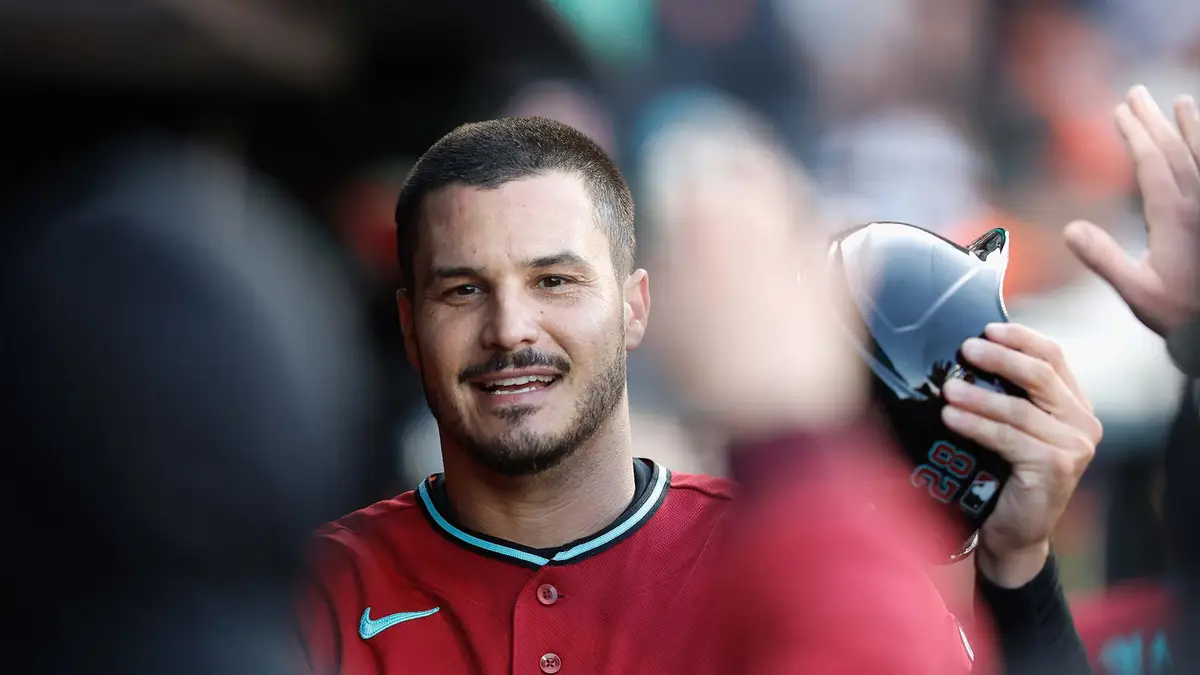
Nolan Arenado, a third baseman for the Arizona Diamondbacks, recently experienced a familiar ache that comes with aging in professional sports. While playing in May, he woke up with back pain, not severe enough to sideline him, but a reminder of the physical toll of being a Major League Baseball player, especially as he approaches his mid-to-late 30s.
“There are more aches and pains,” Arenado commented. “It requires a bit more work in the gym to get ready for a game compared to before. That’s part of the learning curve.”
He added, “I’ve always been committed to the gym and my conditioning, but there’s definitely more maintenance involved now.”
Despite this minor setback, Arenado is having a strong bounce-back season. As of Monday’s games, he was batting .256 with eight home runs and 30 RBIs. He is part of a select group of players aged 35 and older who are still delivering solid offensive performances. This group includes Los Angeles Dodgers veterans Freddie Freeman and Max Muncy, as well as Houston’s Christian Walker.
However, this group of veteran hitters has significantly diminished in size over the last decade.
According to FanGraphs, MLB hitters aged 35 and older have collectively contributed just 5.6 WAR (Wins Above Replacement) through approximately the first third of the current season. This figure continues a downward trend that has become more pronounced in recent years.
In contrast, the early 2000s saw a prevalence of older stars in the major leagues. The peak was in 2003, when hitters in this age bracket accumulated a combined 71.3 WAR. This era featured legendary players such as Barry Bonds, Frank Thomas, Kenny Lofton, Luis Gonzalez, and Jeff Bagwell.
Several factors have contributed to this significant shift in the league’s demographics.
The analytical revolution in baseball, which began with the work of Bill James in the 1970s and 1980s, saw advanced metrics like WAR, wOBA, BABIP, and OPS+ become mainstream in MLB around the late 2000s. This transition meant that general managers and front offices began relying more heavily on objective data rather than solely on subjective observations.
These advanced statistics consistently indicated that a hitter’s peak performance typically occurs between their mid-20s and early 30s. This understanding has influenced team strategies regarding player development and contract negotiations.
Consequently, MLB teams are increasingly prioritizing and signing young, promising players to long-term contracts. Numerous highly-touted prospects, such as Corbin Carroll of the Arizona Diamondbacks, Kevin McGonigle of the Detroit Tigers, Konnor Griffin of the Pittsburgh Pirates, Bobby Witt Jr. of the Kansas City Royals, and Julio Rodriguez of the Seattle Mariners, have secured lucrative deals well before reaching free agency.
The trend has shifted away from significant investments in veteran players. Christian Walker, a three-time Gold Glove first baseman with nearly 200 career home runs, signed a relatively modest three-year deal worth $60 million with the Houston Astros after the 2024 season, at the age of 33.
“I believe it’s largely due to the enhanced ability to measure players’ on-field value,” Walker stated. “For a long time, metrics like WAR and wRC+ didn’t exist. Decisions were often based on perception, a player’s positive clubhouse presence, or their experience and past success in the World Series.”
Today’s young stars have emerged in an era where pitching velocity is paramount. This contrasts with the environment when players like Freddie Freeman began their careers. The average MLB fastball velocity in 2026 is projected to exceed 94 mph, with 18 qualified pitchers averaging at least 96 mph. When Freeman debuted 17 years ago, the league-wide average was under 92 mph, and no qualified pitchers averaged 96 mph or higher.
Arenado noted that one of the primary challenges for veteran MLB players is facing high-velocity fastballs, particularly those thrown inside. This presents difficult matchups against pitchers like Milwaukee’s Jacob Misiorowski, who consistently throws at 100 mph.
“I feel like the overall age of players and the development curve in the game is trending younger and younger,” Walker observed. “There might be a reason for that, perhaps your peak physical capabilities are around age 27.”
Dodgers manager Dave Roberts frequently features Freeman and Muncy in his lineup. Roberts himself played in the major leagues until he was 36, retiring in 2008, which gives him firsthand insight into the aging process in baseball.
“The most challenging aspect is expecting and desiring the same level of performance you’ve always delivered, without being willing to adapt your approach,” Roberts advised.
Roberts explained that the adjustment process is unique to each player. Some may need to increase their workout intensity, while others might require more rest. Diet becomes increasingly critical. The difficulty lies in the fact that the habits that led to success in the early stages of a career might not be sufficient to maintain performance in one’s mid-to-late 30s.
Walker, who became a regular starter in the big leagues at 28, has embraced the aging process. He finds value in analyzing his blood test results to identify potential vitamin deficiencies or inflammation. These tests also provide insights into the impact of alcohol consumption and the importance of adequate sleep.
“For me, there’s no magic formula. I attribute it to being a late bloomer,” Walker said. “My chronological age might be older than many players, but my service time in the league is not extensive. I’m fortunate that I can still contribute to the team’s success.”
Arizona Diamondbacks manager Torey Lovullo attributed Arenado’s continued success in his 14th big league season to two primary factors. Firstly, he acknowledged the contributions of the D-backs’ hitting coaches.
Perhaps more significantly, Lovullo highlighted Arenado’s receptiveness to coaching, his willingness to embrace change, and his ability to discover new avenues for success.
“There’s an adjustment required in work habits and mindset once players reach a level where things are no longer as effortless as they once were,” Lovullo stated. “Some players might feel they’ve had their career and, finding it more difficult, choose to scale back their efforts.”
He further elaborated, “It’s rewarding to witness Nolan Arenado’s achievements, but it’s a testament to his hard work. He is performing with the same intensity as any of our 22 or 23-year-old players on this team.”
Reporting by the Associated Press.