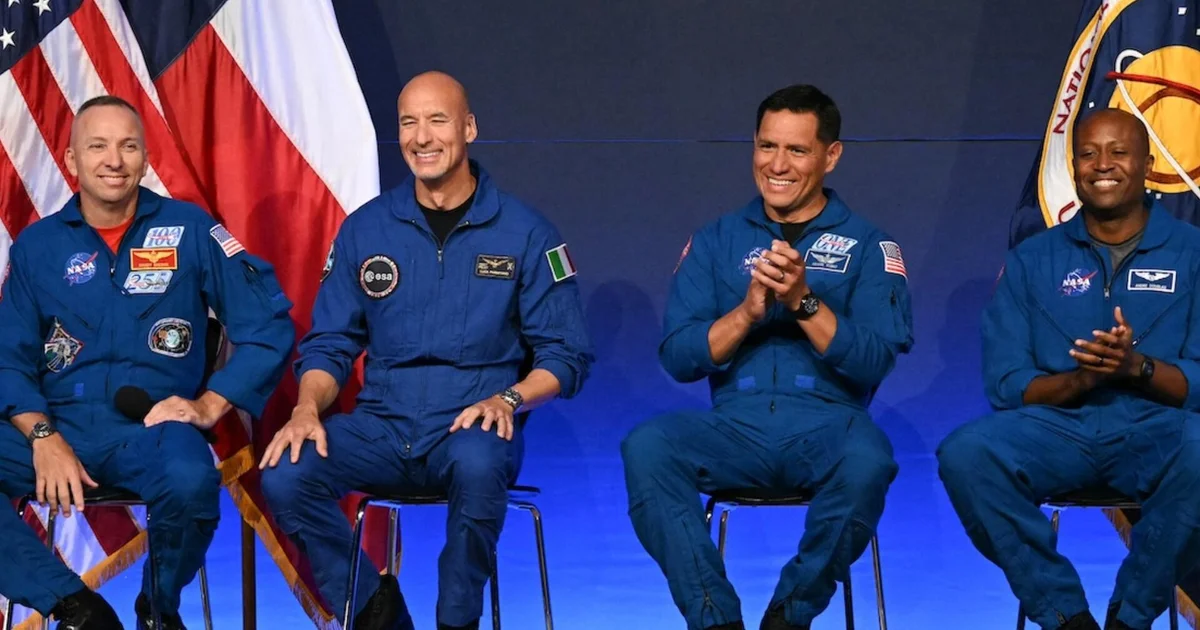
SouthernWorldwide.com – NASA has officially announced the four astronauts who will be part of the historic Artemis III mission, marking a significant step in humanity’s return to the lunar surface. The crew comprises three American astronauts and one Italian astronaut.
This mission is slated for launch next year and aims to land the first humans on the Moon since the Apollo program. The announcement was made by NASA on Tuesday, generating considerable excitement within the space exploration community.
The selected astronauts bring a wealth of experience and expertise to this groundbreaking endeavor. Their mission will focus on exploring the lunar South Pole, a region believed to hold significant scientific interest, particularly the potential presence of water ice.
The Artemis program itself is NASA’s ambitious initiative to establish a sustainable human presence on the Moon and, ultimately, to prepare for future missions to Mars. Artemis III is designed to be the first mission to land astronauts on the lunar surface as part of this long-term strategy.
The astronauts have been undergoing rigorous training to prepare for the unique challenges of the Artemis III mission. This includes simulations of lunar surface operations, spacecraft systems, and emergency procedures.
During their mission, the crew will conduct scientific experiments, collect lunar samples, and deploy instruments to study the lunar environment. Their work is expected to provide invaluable data that will shape future space exploration efforts.
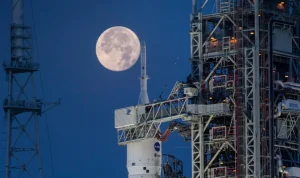
The mission will utilize the Orion spacecraft, which is designed to carry astronauts farther into space than ever before. It will also involve the use of the Human Landing System (HLS), a crucial component that will transport the astronauts from lunar orbit to the surface and back.
NASA has emphasized the importance of international collaboration in space exploration. The inclusion of an Italian astronaut in the Artemis III crew highlights the strong partnerships NASA has forged with other space agencies around the world.
The agency is confident that the Artemis III mission will not only achieve its scientific objectives but also inspire a new generation of explorers. The journey to the Moon represents a pivotal moment in human history and a testament to our drive for discovery.
The astronauts themselves have expressed their enthusiasm and readiness for the mission. They understand the historical significance of their undertaking and are eager to contribute to NASA’s Artemis goals.
Speaking with Mark Strassmann, the astronauts shared their thoughts on the mission’s objectives and the primary challenges they anticipate. Their insights offer a glimpse into the dedication and meticulous planning that underpin such complex space missions.
The Artemis III mission is a critical step in NASA’s broader plan to send humans to Mars. By learning to live and work on the Moon, NASA aims to develop the technologies and strategies necessary for eventual human expeditions to the Red Planet.
The agency continues to work closely with its international and commercial partners to ensure the success of the Artemis program. This collaborative approach is essential for advancing human space exploration and achieving ambitious goals like returning to the Moon.
The public’s interest in the Artemis III mission remains high, with many eagerly awaiting the launch. The mission promises to be a source of inspiration and a significant advancement in our understanding of space and our place within it.
Further details regarding the specific scientific payloads and operational plans for Artemis III are expected to be released as the mission approaches its launch date. The crew’s preparation is ongoing, ensuring they are fully equipped for this historic journey.
The Artemis III mission represents a new era of lunar exploration, building on the legacy of previous missions while forging a path toward future human endeavors in deep space.