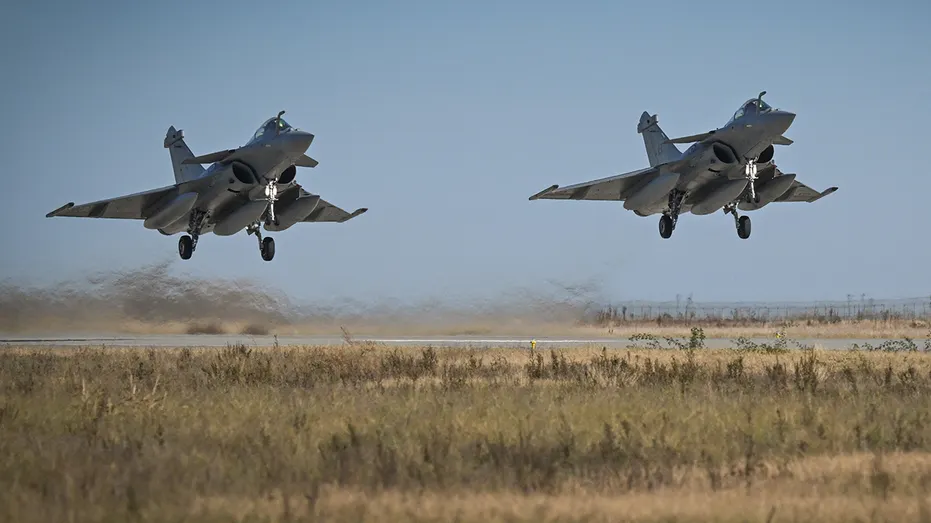
SouthernWorldwide.com – Europe’s most ambitious endeavor to develop its own sixth-generation fighter jet has faltered, casting a shadow over the continent’s aspirations for military independence at a time when NATO allies are committing to unprecedented increases in defense expenditure.
France and Germany have reportedly withdrawn from the fighter jet component of the Future Combat Air System (FCAS) project. This ambitious, approximately $116 billion initiative, launched in 2017, aimed to create a next-generation combat aircraft to replace France’s Rafale and Germany and Spain’s Eurofighter fleets by 2040.
The Élysée Palace, the office of French President Emmanuel Macron, stated that “The German authorities considered that it was not possible to put further pressure on the companies concerned.” This indicates a significant divergence in perspectives regarding the project’s feasibility.
The FCAS program was envisioned as Europe’s response to the evolving air power capabilities of the United States and China. It was designed to integrate a stealth fighter with advanced networking, artificial intelligence, and a fleet of accompanying drones.
Furthermore, European leaders viewed FCAS as a cornerstone of their strategy to achieve greater defense autonomy and cultivate a robust domestic defense industry. Its collapse now raises pertinent questions about Europe’s capacity to translate its rearmament pledges and strategic autonomy goals into tangible, complex multinational defense programs.
Sixth-generation fighters are expected to be characterized by stealth technology, artificial intelligence, sophisticated sensors, advanced networking systems, and collaborative drone operations. Military strategists consider them crucial for future air combat, particularly in potential conflicts involving major global powers.
The program’s failure represents a significant setback for Europe’s broader ambitions of defense self-sufficiency and strategic autonomy. It was intended to demonstrate Europe’s ability to develop cutting-edge military technology without relying on American defense contractors.
German Chancellor Friedrich Merz had previously voiced doubts about Germany’s need for a manned sixth-generation fighter by the aircraft’s projected service entry. He also highlighted differing requirements between Germany and France, with France envisioning a jet capable of carrying nuclear weapons and operating from aircraft carriers.
This development occurs at a critical juncture for NATO. Alliance members have committed to substantial increases in defense spending and capability enhancements in response to Russia’s ongoing conflict in Ukraine and growing concerns for long-term European security.
“It’s hardly ideal signalling either to Washington or to Moscow,” remarked Douglas Barrie, senior fellow for military aerospace at the International Institute for Strategic Studies, in comments to Reuters. This sentiment underscores the geopolitical implications of the project’s collapse.
The breakdown of the FCAS fighter jet component highlights the deep-seated disagreements between the involved governments and industrial partners. These disputes have plagued the project for months, particularly concerning design authority, technology sharing, and industrial control.
Despite this setback, Macron’s office affirmed France’s commitment to European defense cooperation. “The French authorities will continue to encourage our companies and armed forces to explore ways and means of pursuing ambitious European projects that are consistent with our national security interests,” the statement read.
The collapse of the fighter program also casts uncertainty over the future of other significant European defense initiatives. France and Germany have encountered challenges in maintaining momentum on the Main Ground Combat System (MGCS), a next-generation tank project, and several other joint defense efforts have faced delays, restructuring, or outright cancellation in recent years.
Defense analysts view the FCAS failure as a clear indication of Europe’s ongoing struggle to convert political commitments to military self-sufficiency into large-scale, effective multinational defense programs. This is occurring despite mounting pressure to reduce reliance on U.S. military capabilities.
German Defense Minister Boris Pistorius stated that Berlin is actively exploring alternative solutions following the program’s collapse. “One is ordering more F-35s as a bridge solution or for whatever reason,” Pistorius informed reporters. Other options include joining an existing international fighter program or pursuing a separate aircraft development under German leadership, potentially with Airbus and other partners.
Pistorius offered a candid assessment of the failed endeavor. “With what we know today, we would no longer launch this project in the way it was originally set up,” he admitted, describing FCAS as “an ambitious European project” that had “crashed into reality.”
He attributed the program’s demise primarily to tensions between major aerospace firms Airbus and Dassault, as well as divergent military requirements between France and Germany. These industrial and national differences proved insurmountable.
The Future Combat Air System project was initiated by Germany and France in 2017, with Spain joining in 2019. The aircraft was envisioned to operate in conjunction with drones and a highly networked “combat cloud.” However, disputes over industrial leadership, intellectual property, technology sharing, and the aircraft’s future design had been steadily undermining the program.
French President Emmanuel Macron has long been a vocal proponent of European “strategic autonomy,” advocating for reduced dependence on the United States for critical defense capabilities. FCAS was widely regarded as a crucial test of this vision.
Disagreements emerged concerning industrial leadership, intellectual property rights, technology transfer, and the future configuration of the aircraft. France aimed to protect sovereign capabilities linked to its nuclear deterrent and aircraft carrier operations, while Germany sought a more equitable industrial partnership.
The program’s failure creates significant uncertainty regarding how France, Germany, and Spain will proceed with their future air combat capabilities. It also comes as a rival sixth-generation fighter initiative, the Global Combat Air Programme (GCAP), led by the United Kingdom, Italy, and Japan, continues to progress.
The collapse of FCAS could potentially reinforce Europe’s reliance on American defense technology, a trend many European leaders have expressed a desire to curtail. Germany has already committed to acquiring U.S.-made F-35 fighter jets, and numerous NATO allies have turned to American aircraft, missile defense systems, and long-range weapons since Russia’s invasion of Ukraine.
While France is unlikely to abandon its domestic aerospace industry, analysts suggest that the demise of FCAS could make it more challenging for European governments to find alternatives to American defense technology in the coming decades.
The Pentagon has consistently welcomed increased European defense spending but has also stressed the importance of allies delivering tangible capabilities rather than making long-term promises. The U.S. is actively pursuing multiple next-generation combat aircraft programs.
Earlier in 2026, President Donald Trump announced the Air Force’s new F-47 fighter jet, while the Navy continues development of its separate F/A-XX carrier-based fighter program. These initiatives underscore the pace of American advancements in this domain.
China is also vigorously pursuing its own next-generation air combat systems. The country has conducted highly publicized test flights of advanced aircraft that defense analysts believe are connected to Beijing’s sixth-generation fighter development efforts.
The failure of FCAS leaves Europe without a clear, unified path toward a sixth-generation fighter capability. Meanwhile, both the United States and China continue to make significant strides in their respective next-generation combat aircraft programs.
France, Germany, and Spain now face the critical decision of whether to pursue individual national efforts, seek new industrial partners, or increase their reliance on existing aircraft and foreign-made systems. This comes amid mounting pressure to deliver on Europe’s rearmament ambitions and enhance its defense posture.