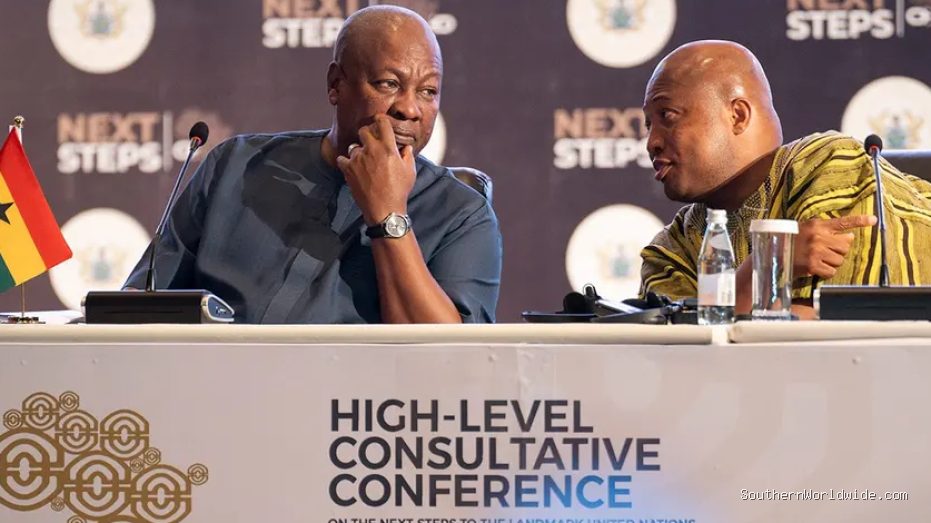
SouthernWorldwide.com – Leaders from Africa and the Caribbean are escalating their demands for financial compensation, debt cancellation, and formal apologies from nations that profited from the transatlantic slave trade. This unified stance follows the adoption of a comprehensive reparations plan during a recent conference held in Ghana.
The newly established 19-point framework meticulously outlines specific calls to action. These include financial reparations, debt relief initiatives, the establishment of a Global Reparations Fund, and the repatriation of cultural artifacts and ancestral remains that were looted. Furthermore, the plan advocates for reforms within international financial institutions, which proponents argue currently place Third World countries at a disadvantage.
This significant proposal is slated for presentation at the upcoming UN General Assembly. The move signifies a coordinated and intensified effort by African and Caribbean nations to secure reparations for the historical injustices of slavery.
The plan was formally adopted on Friday by both the African Union and the Caribbean Community (CARICOM) Commission on Reparatory Justice. This adoption marked the conclusion of a three-day conference dedicated to addressing these critical issues.
Ghanaian President John Dramani Mahama addressed the delegates, emphasizing a shared responsibility rather than personal guilt. He stated that while current generations are not personally accountable for the historical atrocities of the transatlantic slave trade, history compels them to acknowledge and address the resulting responsibilities.
The proposal, as it stands, does not pinpoint specific countries that are expected to provide compensation or issue formal apologies. The focus is on establishing a framework for these actions to be taken.
Beyond financial compensation and apologies, the plan encompasses a range of other crucial demands. These include the cancellation of existing debts, increased financing for climate justice initiatives, and the creation of expanded pathways for citizenship for Africans residing in the diaspora. It also calls for a “right of return” for descendants of enslaved Africans.
Additionally, the plan urges African nations to diligently preserve former slave forts and castles. These sites are to be maintained as important memorial locations, serving as constant reminders of the historical atrocities.
Advocates for reparations highlight the profound and lasting impact of slavery. They estimate that between the 15th and 19th centuries, approximately 12.5 million Africans were forcibly kidnapped and transported across the Atlantic. The ongoing effects of this brutal trade continue to be felt across Africa and the Caribbean for generations.
This conference in Ghana follows a significant UN vote that took place in March. During this vote, the United Nations recognized the transatlantic slave trade as “the gravest crime against humanity.”
The UN resolution garnered substantial support, with 123 member states voting in favor. However, the United States, Israel, and 52 other nations chose to vote against it or abstain from the vote, indicating differing perspectives on the matter.
According to reports from Reuters, the United States and the European Union expressed concerns regarding the UN resolution. They voiced apprehension that it could be interpreted as establishing a hierarchy among crimes against humanity, potentially implying that some atrocities are more severe than others.
The conference in Ghana was attended by several heads of state, including those from Namibia, Liberia, Senegal, Barbados, and Sao Tome and Principe. Senior officials from numerous other countries also participated in the discussions.
French President Emmanuel Macron addressed the gathering virtually from the Élysée Palace. During his address, he acknowledged the immense suffering endured by enslaved people, describing how they were “torn from their homelands, deported, dehumanised, and treated as goods.”
President Macron also offered a nuanced perspective on the concept of reparations, suggesting that they should not be viewed “as an end point, or a cheque written to bring the story to a close.” This implies a call for ongoing engagement and a broader understanding of addressing historical injustices.
The conference served as a crucial platform for consolidating the separate reparations efforts that had previously been pursued by individual African and Caribbean nations. The outcome is a single, unified document that organizers now intend to formally present to the United Nations for consideration.