SouthernWorldwide.com – A secretive federal agency’s decades-old bureaucratic bottleneck, once a symbol of government inefficiency, has finally been cleared. The Office of Personnel Management (OPM), responsible for managing federal employee retirement, has transitioned from a cumbersome paper-based system to a modern, digitized process.
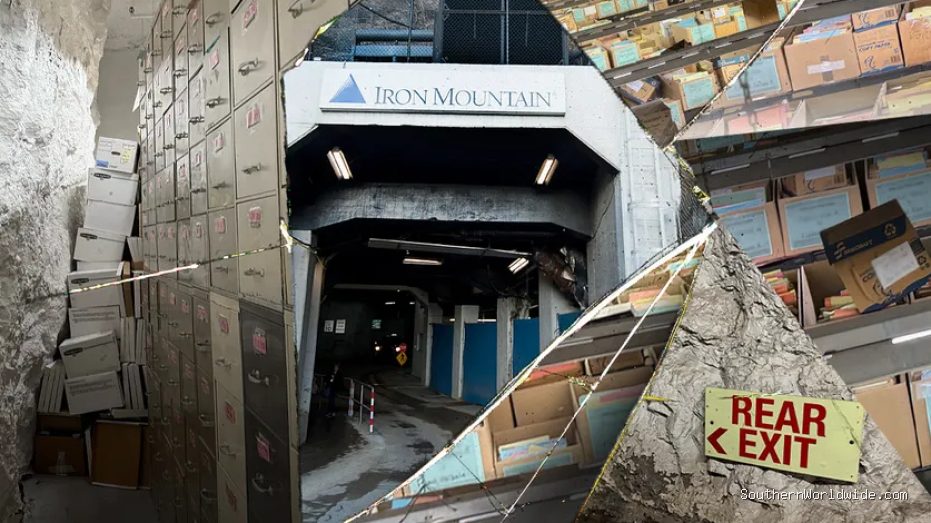
For years, retirement applications were physically mailed between federal agencies. They eventually landed at OPM’s Retirement Operations Center in Boyers, Pennsylvania. There, employees manually processed approximately 10,000 retirements each month. This operation also housed over 400 million paper records, a testament to the system’s antiquated nature.
OPM has officially celebrated the move from this paper-dependent system to digitized records. The agency confirmed that the millions of documents that had been languishing in the “mine” will now be shredded, marking a significant step towards modernization.
The OPM serves as the federal government’s human resources department. It is tasked with overseeing policies, benefits, and personnel systems that impact millions of civilian federal employees and retirees across the nation.
According to Kupor, the Biden administration and previous officials had indeed discussed modernizing the online retirement application. However, this crucial initiative never managed to gain sufficient momentum to move forward.
“The idea of the online retirement application was an idea,” Kupor stated. “I think what happened was it never got traction.” This highlights a recurring challenge in government modernization efforts.
The federal retirement system had been operating on a largely paper-based process since its inception in the 1980s. This long-standing reliance on physical documents contributed to the system’s ineffectiveness and delays.
Over the years, various modernization efforts were launched. These included pilot programs and attempts to digitize retirement applications. Despite these initiatives, the government remained heavily dependent on paper until the Trump administration. This administration accelerated the adoption of OPM’s Online Retirement Application, particularly after Elon Musk’s public criticism of the system.
The underground operation, with its vast paper archives, became a national symbol of government bureaucracy. This perception was cemented after Elon Musk brought its existence to light last year. While in the Oval Office, Musk described the system as being “like a time warp,” underscoring its outdated nature.
Kupor expressed that both Elon Musk and U.S. Chief Design Officer Joe Gebbia deserve a significant amount of credit for pushing this change forward. Their involvement was instrumental in breaking through the bureaucratic inertia.
“It’s a great example to me of the more meta level of what Elon and the DOGE team was doing,” Kupor elaborated. “Which is rethink processes from ground zero, be creative in terms of what the solutions are and recognize that, look, you have to actually make significant change if you want to ultimately drive efficiency in the government.”
Kupor also emphasized the security protocols in place. “We have a great team who does a lot of security, and obviously we’re in a building here with other very highly secure agencies. There’s a number of kind of three-letter agencies who also have records here.”
When questioned about potential security concerns associated with the physical copies, Kupor was resolute. “I think by far the benefits of obviously getting off paper going to electronic records. Way outweigh any potential risks we might have from a security perspective.”
Kupor further argued that government innovation is a critical factor in reducing costs for taxpayers. Investing in modernization is seen as a way to achieve greater efficiency and deliver better services without necessarily increasing budgets.
“I think the president has done and told us is take the skills that you have around innovation and creative thinking and apply that to modernization for the government,” Kupor stated. “And if we do that, we’ll not only improve the quality of service, but that is where we get efficiency.”
This approach, according to Kupor, allows the government to achieve more with existing resources. “That’s how we actually deliver more for the American people without constantly going to have to go back to the till and ask Congress for more money.” The successful modernization of the OPM’s retirement system serves as a prime example of this principle in action.