SouthernWorldwide.com – The 2026 FIFA World Cup has been lauded as a resounding success, both on and off the pitch. Fans visiting the United States have expressed great satisfaction with their experience, praising the nation’s welcoming hospitality. The host cities have also received widespread acclaim for their excellent facilities and vibrant atmospheres.
However, even the most successful tournaments are not immune to controversy. One of the most significant issues encountered in the early stages was the red card issued to Folarin Balogun. The decision to show Balogun a card during the US Men’s National Team’s match against Bosnia and Herzegovina was reportedly due to a misapplication of VAR rules.
Despite this, FIFA later postponed his one-game suspension, which allowed him to participate in the round of 16 match against Belgium. This decision sparked considerable outcry from European fans, commentators, and their respective soccer federations.
Yet, their reactions pale in comparison to the accusations leveled by the Egyptian team’s players and coaches following their surprising 3-2 defeat to Argentina, led by Lionel Messi, on Tuesday afternoon.
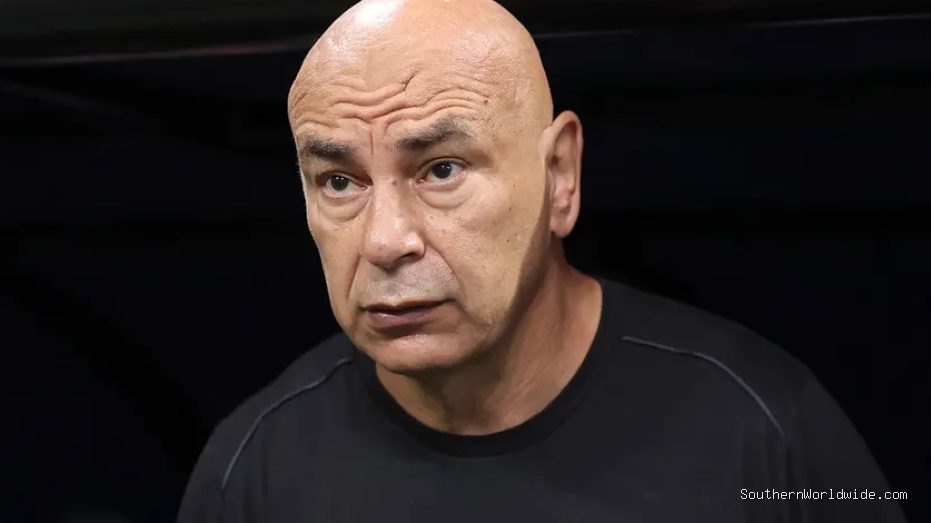
Egyptian coach Hossam Hassan addressed the media after the game, offering a strong critique of the officiating.
“We have not witnessed respect or fair play,” Hassan stated. “A penalty was overturned, and a second incident, which should have been reviewed for a penalty in our favor, was not even examined by VAR. A second goal was inexplicably disallowed.”
“I wish to express this diplomatically by saying ‘hard luck,’ but we were treated unfairly, and it was an injustice,” he continued.
Egypt had established a 1-0 lead and appeared to extend it to 2-0. However, the second goal was disallowed after a VAR review concluded that a foul had occurred approximately 20 seconds prior on the opposite side of the field.
Egypt managed to score again, but a 2-0 scoreline could have potentially been 3-0, making Argentina’s remarkable comeback even less probable.
Furthermore, there were several other questionable calls, including a potential penalty that could have been awarded after a foul on star player Mohamed Salah.
“We performed better than the reigning champions – superior in every aspect – but the outcome was influenced by internal factors on the pitch and external factors off it,” Hassan informed reporters.
“Perhaps the intention was to keep the world champions in the competition. Perhaps they wanted Messi to remain a contender.
“In football, there are sometimes external influences that extend beyond technical considerations. The world champion received support at all levels.”
“There appears to have been pressure exerted on the referee from the Argentinian side, leading to this result,” he added. “Life can be unfair. The world can be unfair. But why is there no fairness in sports? I am not convinced by this outcome or the manner in which events unfolded in this match.”
Forward Mostafa Ziko echoed similar sentiments, stating that his Egyptian team was “hard done by” the referee.
“We were wronged by the referee today, and everyone witnessed it. I will not dwell on such matters. We were leading 2-0. After the 2-0 score, everything turned against us. I don’t even understand why the second goal was disallowed; I see no justification for it.
However, we must find a solution so that a second disallowed goal does not occur. He even intended to disallow the third goal, but thank God, he was unsuccessful.”
“It was a rigged game,” Ziko asserted. “It was not our fault. That referee… it seems this match was fixed. We were winning 2-0, and he continuously penalized us. Congratulations to Argentina on another World Cup, it appears.”
It is highly probable that FIFA is pleased that Messi and Argentina have advanced to the quarterfinals. Messi remains arguably the most prominent star on the international stage, and interest and viewership will inevitably be higher as long as he and his team remain in the tournament.
However, this does not necessarily imply that the match was “rigged.” The VAR review that led to the disallowance of Egypt’s second goal did appear questionable. Nevertheless, some of the other contentious calls were borderline decisions that could have been interpreted in either direction.
The most critical factor, which none of the Egyptian players or their coach seem willing to acknowledge, is that had they wished to secure a victory, they simply could not have conceded three goals within a 25-minute span.