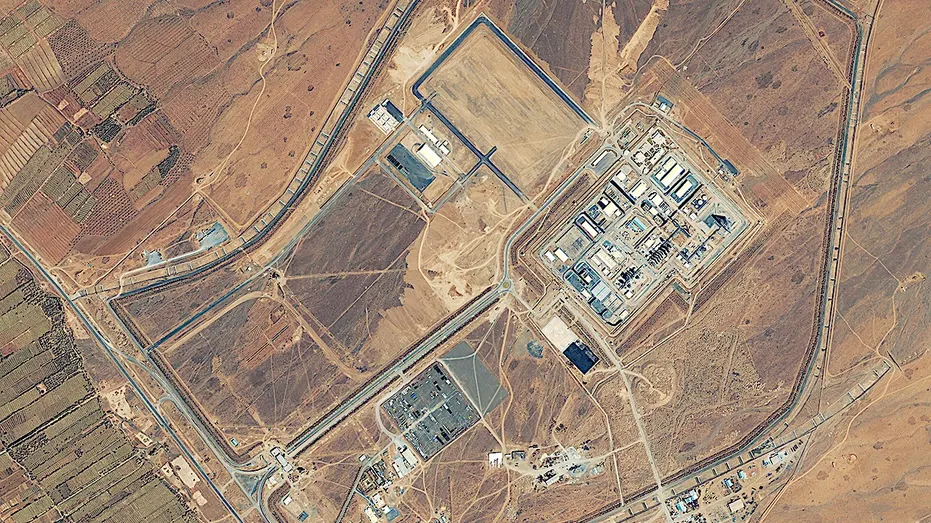
SouthernWorldwide.com – Nuclear weapons experts are urging the Trump administration to solidify a ban on Iran’s efforts to utilize plutonium from its facilities for the construction of atomic bombs in any forthcoming agreement.
While the administration and non-proliferation specialists have predominantly concentrated on Iran’s uranium-based nuclear weapons facilities, a potential loophole exists. Tehran could exploit this oversight to covertly develop a plutonium-based nuclear weapon.
Jason Brodsky, policy director at United Against Nuclear Iran (UANI), emphasized the critical need to address the plutonium pathway. He stated that any proposed deal must include provisions for this. Brodsky pointed to the strikes on the Arak heavy water reactor in June 2025 and March 2026, noting intelligence suggesting Iran’s persistent attempts to rebuild the facility. Therefore, he stressed that any agreement should encompass the plutonium pathway.
TRUMP BLOCKADE SQUEEZING IRAN SO HARD REGIME MAY BE DUMPING OIL INTO GULF, EXPERTS SAY
According to Henry Sokolski, executive director of the Nonproliferation Policy Education Center, Iran could potentially use plutonium derived from spent fuel at its Bushehr nuclear reactor to develop an atomic weapon.
Sokolski, a former deputy for nonproliferation policy in the Department of Defense, previously wrote that Washington must ensure Iran does not remove spent fuel from Bushehr and extract plutonium. He suggested this could be achieved without resorting to bombing the plant.
He further proposed that the Pentagon should monitor Iran’s activities at Bushehr to prevent the removal of spent fuel, utilizing space surveillance or drones, similar to actions taken in 2012. Sokolski also advocated for any peace deal with Tehran to include near-real-time monitoring of the Bushehr reactor and its spent fuel pond, akin to the International Atomic Energy Agency’s (IAEA) oversight of Iran’s fuel enrichment activities.
In an earlier article in the Bulletin of the Atomic Scientists, Sokolski posited that Iran possesses enough plutonium to construct over 200 nuclear bombs. He highlighted that the last IAEA inspection of Bushehr occurred on August 27, 2025, and even then, inspectors visited only every 90 days. This frequency, he argued, was more than sufficient time to divert spent fuel and potentially fashion it into nuclear weapons.
Sokolski also recalled that President Obama did not insist on such surveillance, despite the IAEA’s request for Iran’s permission, which Tehran denied.
Recent IAEA reports have not provided specific details regarding the plutonium pathway to a bomb.
TRUMP CLAIMS IRAN ‘STARVING FOR CASH,’ ‘COLLAPSING FINANCIALLY’ AFTER EXTENDING CEASEFIRE
A State Department spokesperson communicated to Fox News Digital that Iran’s nuclear program constitutes a threat to the United States and the global community.
The spokesperson added that Iran is currently in breach of its Nuclear Non-Proliferation Treaty obligations by not fully cooperating with the IAEA. The leadership of Iran, they stated, must engage in serious diplomatic negotiations with the United States to definitively resolve the nuclear issue.
David Albright, a physicist and president of the Institute for Science and International Security, expressed skepticism about Iran’s willingness to use plutonium from Bushehr’s spent fuel for nuclear weapons.
Albright, a former weapons inspector, presented three key arguments. Firstly, Iran would require a weapon design it has not yet developed, as there is no record of a plutonium-based nuclear weapon in the Nuclear Archive. Secondly, any diversion from Bushehr would be detected, likely prompting Russia to halt enriched uranium supplies, consequently shutting down a multi-billion dollar investment that provides electricity to the region. Thirdly, Albright noted that most of the plutonium in the spent fuel is reactor-grade, making it potentially unsuitable for weapons-grade material.
He elaborated that while reactor-grade plutonium can be used to create a nuclear weapon, achieving a significant explosive yield is challenging. Albright also mentioned that former National Security Adviser John Bolton has been raising this concern for decades, but it is considered a remote possibility and was previously rejected by the Bush administration.
Persistent concerns remain regarding Iran’s clandestine activities and its ultimate goal of acquiring nuclear weapons at any cost. Consequently, there are calls for a ban on Iran’s plutonium reprocessing and the implementation of stringent surveillance measures on its plutonium infrastructure in any future agreement with the U.S.
Andrea Stricker, deputy director of The Foundation for Defense of Democracies (FDD) Nonproliferation and Biodefense Program, told Fox News Digital that the United States must insist on a permanent and verifiable ban on plutonium reprocessing in Iran under any deal.
Stricker pointed out that Russia also recognized the danger. She noted that Russia insisted Iran allow inspectors back to safeguard the Bushehr reactor following the June 2025 strikes, with inspections resuming in August. Stricker added that the plutonium produced at the reactor is not of desirable quality for nuclear weapons, and Iran has not prioritized the plutonium route to nuclear weapons since the early 2000s, making it difficult for Tehran to proceed. They would also need to illicitly acquire and equip a plutonium reprocessing plant along with sophisticated equipment for handling and chemically converting the fuel, presenting significant obstacles to its use in nuclear weapons.
Read more : The AI Model Too Risky for Public Release
She suggested that the IAEA could mitigate any proliferation risks at Bushehr by increasing inspection frequency to monthly. Stricker also proposed that Russia could facilitate the removal of accumulated spent fuel from the site.