SouthernWorldwide.com – Republicans in Alabama are moving forward with new primary elections following a significant Supreme Court decision that allows the state to revisit its congressional map.
This ruling comes just three years after the same court mandated a redraw of the map to be more conscious of racial demographics. The recent Supreme Court decision, which followed a similar ruling concerning Louisiana’s map, has paved the way for Alabama lawmakers to advance a redistricting plan.
The effort to seek a fresh legal review proved successful late Monday. The Supreme Court overturned a 2023 order from the “Allen v. Milligan” case. This order had established a second congressional district with a Black population majority, which subsequently flipped to Democratic control in 2024.
The case has now been sent back to a federal court in Birmingham. In response to this development, Governor Kay Ivey announced special primary elections for several affected districts, primarily located in the central and southern parts of the state.
“As I stated at the close of our special session last week, Alabama is now in a position to act swiftly,” Ivey said in a statement. “I will continue to assert that Alabama understands our state, our people, and our districts best.”
The special primary elections are scheduled for August 11 and will impact the 1st, 2nd, 6th, and 7th congressional districts. This move by the governor aims to address the redistricting changes prompted by the Supreme Court’s decision.
The 1st district, currently represented by Republican Congressman Barry Moore, stretches along the Florida border. It encompasses the popular “Redneck Riviera” and Flora-Bama beach region, extending inland to Dothan, the hometown of Joe Scarborough in the Wiregrass region.
The 2nd district, which was created under the now-overturned Milligan ruling, runs from Mobile through Montgomery. It is currently represented by Democrat Shomari Figures. Representative Terri Sewell, the state’s other Democrat, is also affected as her district, the 7th, is centered around Birmingham.
The other Republican incumbent whose district is impacted is Congressman Gary Palmer. He represents suburban areas of Birmingham, including Hoover and Leeds, as well as regions approaching Wetumpka, which is located outside Montgomery.
Supporters of the ruling, such as Ledbetter, hailed it as a “massive victory; not just for Alabama but for conservatives around the country.” This sentiment highlights the broader implications of the Supreme Court’s decision beyond the state’s borders.
The new Supreme Court order directs the case to a federal court in Birmingham. This court now includes six judges appointed by former President Trump and one appointed by former President Obama. This composition could influence future legal interpretations of the redistricting plan.
Furthermore, the order grants the Alabama legislature considerable leeway to implement the GOP-drawn “Livingston Map” from 2023. This map was the catalyst for the initial litigation challenging the previous redistricting effort.
Ledbetter expressed his intention to see the 2023 “Livingston Map” passed into law. He believes this would provide Governor Kay Ivey with the opportunity to approve it, thereby initiating a broader constitutional test of race-based redistricting in light of the Supreme Court’s latest ruling in “Callais.”
Currently, Alabama holds a 5-2 Republican majority in its congressional delegation. Prior to the Milligan case, the state had long operated with a 6-1 map that included a district favoring minority representation, covering Birmingham and the historic Black Belt region.
Leading up to Friday’s legislative session, the proceedings reportedly devolved into chaos. This occurred after Republicans successfully approved sending the “Livingston” resolution to Governor Ivey for her consideration.
Alabama Attorney General Steve Marshall, who filed emergency requests to the Supreme Court that expedited this action, commented on Monday that his “job… is done.” He indicated that he had placed Ledbetter and Senate President Garlan Gudger in a position to potentially draw a congressional map that could result in a 7-0 Republican advantage.
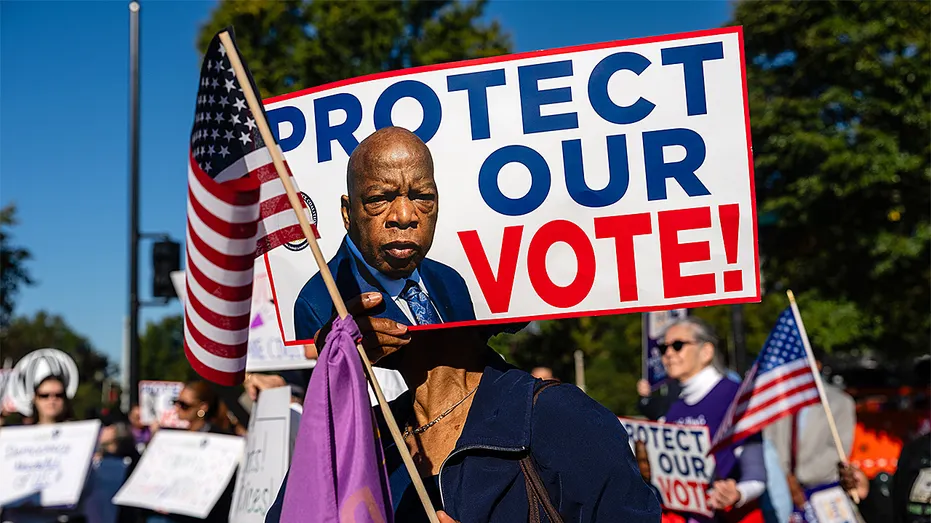
House Minority Leader Bobby Singleton, a Democrat from Greensboro, strongly criticized the legislature’s resolution. His remarks appeared to draw parallels to or invoke the violent suppression of Black demonstrators by state police in Selma, Alabama, during the Civil Rights era in 1965.
A court filing on Singleton’s behalf stated, “Less than a week ago, while tornado sirens blared and flooding forced the Alabama legislative chambers to be evacuated, an unlawful and unconstitutional bill was rammed through by White legislators.” This language underscores the deep divisions and strong opposition to the redistricting efforts.
Despite the objections, the court ultimately sided with the legislative majority in its decision. This outcome reflects the shifting legal landscape and the Supreme Court’s interpretation of voting rights and redistricting principles.
Attorney General Marshall later stated on Monday that Alabama has a long history of having to redraw its decennial congressional maps based on race. He emphasized the state’s ongoing legal battles against such mandates.
“We have fought for years against courts forcing Alabama to sort its citizens by race, and we were right to fight,” Marshall asserted. “On April 29, the United States Supreme Court issued a landmark ruling in Louisiana vs. Calais. The court confirmed what we have been arguing for years: States cannot be forced to gerrymander by race.”
He further elaborated, “Let’s be clear about what happened here. Alabama originally drew its maps around geography and communities: the Gulf Coast, the Black Belt, the Wiregrass, and a federal court punished us for it. Today the Supreme Court vindicated the state’s long-held position.”
While the Livingston map, favored by some Republicans, is projected to create a 6-1 Republican advantage, Marshall suggested that Monday’s court decision might empower lawmakers to pursue an even more favorable outcome for the party.
“My job in this office was to put the legislature in the best possible legal position to draw a congressional map that favors Republicans 7 to 0,” he stated. “My office has never taken the charge of our state motto lightly,” he added, referencing Alabama’s motto, “Audemus Jura Nostra Defendere.”
This motto, translating to “We Dare to Defend Our Rights,” could potentially serve as a rallying cry for other states. It may encourage them to re-examine and potentially eliminate racial factors from their congressional redistricting processes ahead of a contentious national primary election season.
Read more : Social Security COLA Projected Near 4% in 2027
“We dare to defend our rights,” Marshall concluded in translating the motto to English. “Stay tuned.” His closing remark suggests that further developments and legal challenges in redistricting are anticipated.