SouthernWorldwide.com – A protocol breach involving a hantavirus-infected patient at a Dutch hospital has led to 12 employees being placed in a six-week quarantine, according to hospital officials on Monday.
The incident occurred last week at Radboud University Medical Center in Nijmegen, Netherlands. This followed the admission of a patient linked to a rare and potentially fatal hantavirus outbreak that occurred on the MV Hondius luxury cruise ship.
Hospital authorities stated that the patient’s blood and urine were not handled and disposed of according to the most stringent international protocols required for this specific strain of hantavirus.
“Due to these circumstances, 12 employees will be placed in preventive quarantine for six weeks as a precautionary measure, even though the likelihood of infection is small,” the hospital announced.
The hospital explained that when the patient was admitted on May 7, their blood was processed using standard procedures. However, it should have been handled under stricter protocols due to the nature of the virus.
Staff also discovered on Saturday that the latest international regulations for disposing of a hantavirus patient’s urine had not been followed. Instead, they had adhered to what was considered the standard procedure at the time.
Dutch Health Minister Sophie Hermans addressed the situation in Parliament on Tuesday, assuring officials that the protocols followed were still considered strict, albeit not the most stringent available.
“At Radboud Hospital in Nijmegen, strict procedures were followed, but not the strictest procedures applicable in the case of this hantavirus,” she stated.
Hospital executives expressed regret over the incident in a statement released on Monday. They reaffirmed their commitment to providing care for any new hantavirus patients who may require it.
“Despite the fact that the chance of actual infection is very small, these measures have a major impact on all those involved. We regret that this happened in our [university medical center]. We will carefully investigate the course of events to learn from this so that it can be prevented in the future,” said Bertine Lahuis, chair of the hospital’s executive board.
“Of course, we will ensure that the colleagues involved receive all the support they need. We have great appreciation for their commitment, and that of their colleagues, to ensure that care for the patient runs smoothly. In the meantime, our [university medical center] stands ready to admit any new patients should this be necessary.”
This announcement represents a shift from earlier hospital statements made during the patient’s admission, which claimed that “appropriate isolation measures have been taken to prevent the spread of the virus, in accordance with internationally agreed protocols.”
As of May 13, the World Health Organization (WHO) reported 11 hantavirus cases, an increase from eight reported on May 8, and three deaths.
The agency indicated that two of the more recent cases have been confirmed and are from Spain and France. The French patient developed symptoms during repatriation, while the Spanish patient tested positive after repatriation and remains asymptomatic.
A third case yielded inconclusive results, with the patient initially testing positive and later testing negative.
In total, eight cases are confirmed, two are probable, and one is inconclusive. The three reported deaths include two confirmed cases and one probable case.
Health officials emphasize that while the virus can be fatal, it poses a low risk to the general public. Contact tracing for all individuals associated with the hantavirus-affected cruise ship is ongoing.
In the United States, the Centers for Disease Control and Prevention (CDC) announced on Wednesday that it has dispatched a team to the Canary Islands, where passengers disembarked. The team will provide on-site healthcare, including interviews with every American passenger considered at risk of potential exposure.
The CDC has stated that it will not disclose the exact number of passengers currently under observation.
The outbreak originated when a Dutch cruise ship, carrying 147 passengers and crew, departed from Argentina on April 1 for a South Atlantic voyage. It is believed that the initial infection was contracted by a passenger who may have been exposed to rodents during birdwatching activities in the region before boarding, according to the WHO.
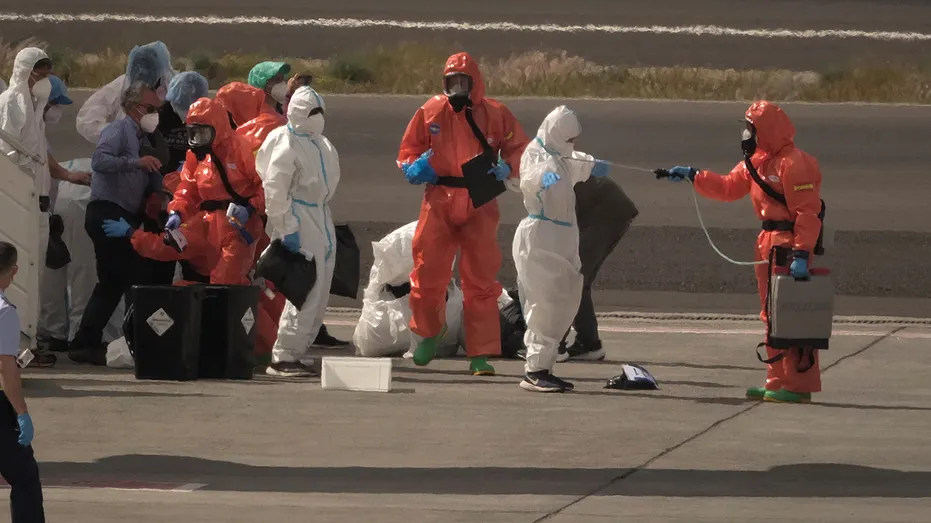
Following multiple reports of infections, the ship docked in Spain’s Canary Islands on May 10. Here, the remaining passengers and most of the crew were evacuated under quarantine protocols.
Passengers were repatriated to their home countries and advised to undergo a 42-day isolation period.
Read more : NFL's Inaugural Thanksgiving Eve Game Between Packers and Rams to Stream on Netflix
The ship, accompanied by a skeleton crew of 25 and two medical professionals, then sailed to Rotterdam, Netherlands, as reported by The Associated Press.