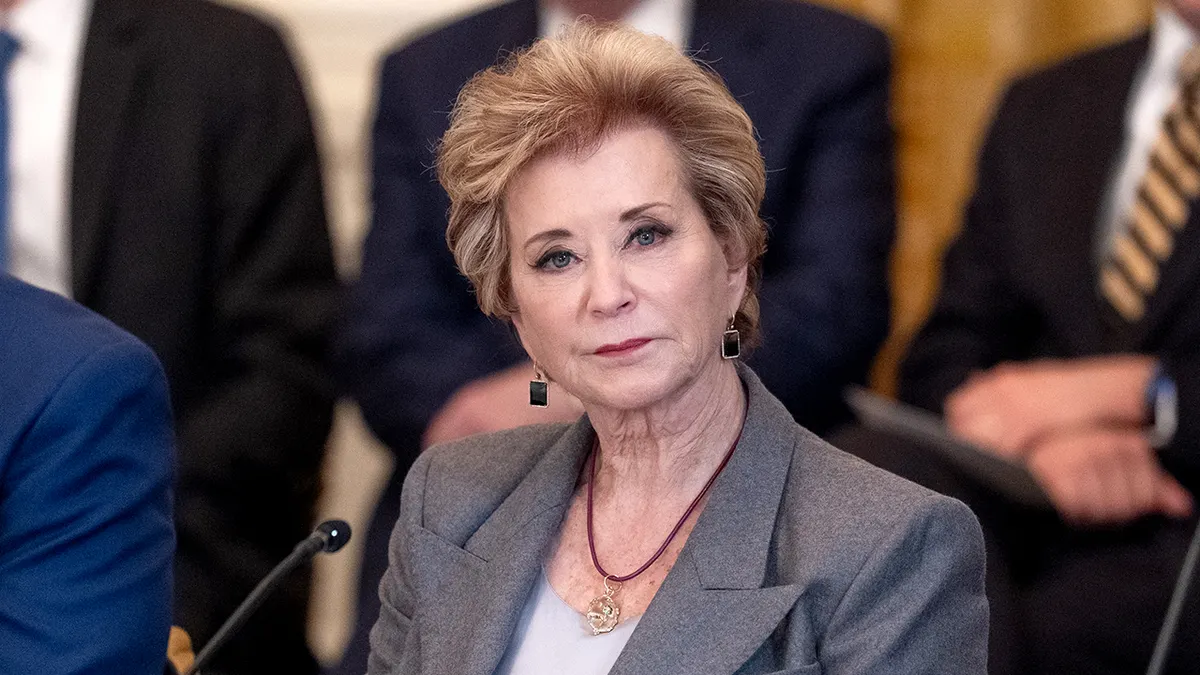
SouthernWorldwide.com – Education Secretary Linda McMahon announced on Thursday that the Trump administration is committed to dismantling what she described as a “failed” $3 trillion education bureaucracy. She stated that the administration is actively pursuing “education renewal” as mandated by President Donald Trump’s re-election.
McMahon conveyed this message during her opening statement before the House Committee on Education and Workforce. She emphasized that Americans elected President Trump with a clear directive to dismantle the 46-year-old, $3 trillion education bureaucracy located in Washington D.C.
The core of this directive, according to McMahon, is to return authority over educational matters to parents, teachers, and local leaders. This shift signifies a move away from centralized federal control towards a more localized and community-driven approach to education.
McMahon was testifying at a hearing titled “Examining the Policies and Priorities of the Department of Education.” The hearing provided a platform for her to elaborate on the administration’s vision and strategy for the future of education in the United States.
Her remarks suggest a significant philosophical departure from previous administrations, which often favored a stronger federal role in education policy and funding. The Trump administration, as articulated by McMahon, views the current federal department as an inefficient and costly entity that has outlived its usefulness.
The secretary’s statement also highlighted the substantial financial investment in the existing education bureaucracy, estimated at $3 trillion over 46 years. This figure underscores the scale of the system the administration intends to reform or replace.
Read more : US Holds the Edge as Trump, Xi Convene for Crucial Summit
The concept of “education renewal” implies a proactive effort to create a new, more effective system. This could involve various initiatives aimed at improving educational outcomes, fostering innovation, and ensuring accountability at the local level.
The focus on returning authority to parents and local leaders suggests a belief that these stakeholders are best positioned to understand and address the unique educational needs of their communities. This approach aligns with a broader conservative philosophy that often advocates for decentralization and reduced federal intervention.
The hearing before the House Committee on Education and Workforce is a critical step in this process. It allows for public scrutiny and debate on the administration’s plans, as well as an opportunity for lawmakers to ask questions and voice their concerns.
The secretary’s assertion that Americans reelected President Trump with a “clear mandate” to make these changes indicates a confidence in the public’s support for such a reform agenda. This mandate, if accurately interpreted, provides a strong political foundation for the administration’s efforts.
The term “sunset” used by McMahon suggests a planned phase-out of the existing federal education bureaucracy. This implies a gradual but deliberate process of reducing its influence and responsibilities.
The phrase “failed education bureaucracy” is a strong indictment of the current system. It suggests that the administration believes the federal department has not been effective in achieving its stated goals and may have even hindered progress in education.
The emphasis on parents, teachers, and local leaders as the rightful custodians of educational authority is a recurring theme in discussions about education reform. It reflects a desire to empower those directly involved in the day-to-day process of educating children.
The scale of the $3 trillion figure is significant, raising questions about how such resources have been utilized and what the implications of dismantling this structure would be. It also suggests that the current system is deeply entrenched and any reform efforts will face considerable challenges.
The administration’s agenda, as presented by McMahon, appears to be rooted in a desire to streamline government, reduce federal spending, and empower local communities. These are core tenets of the Trump presidency.
The timing of this announcement, during a congressional hearing, indicates the administration’s intention to make these plans a central part of its policy agenda. It also suggests a willingness to engage with lawmakers on the specifics of these reforms.
The phrase “education renewal” implies a positive and forward-looking vision, rather than simply a dismantling of the existing system. It suggests an effort to build something better in its place.
McMahon’s testimony is likely to be a focal point for discussions about the future of federal involvement in education. Her clear and direct language signals the administration’s firm commitment to its reform goals.
The hearing serves as an important forum for the public to understand the administration’s perspective and for stakeholders to voice their opinions on these significant policy shifts. The coming months will likely see further developments as the administration works to implement its vision for education.