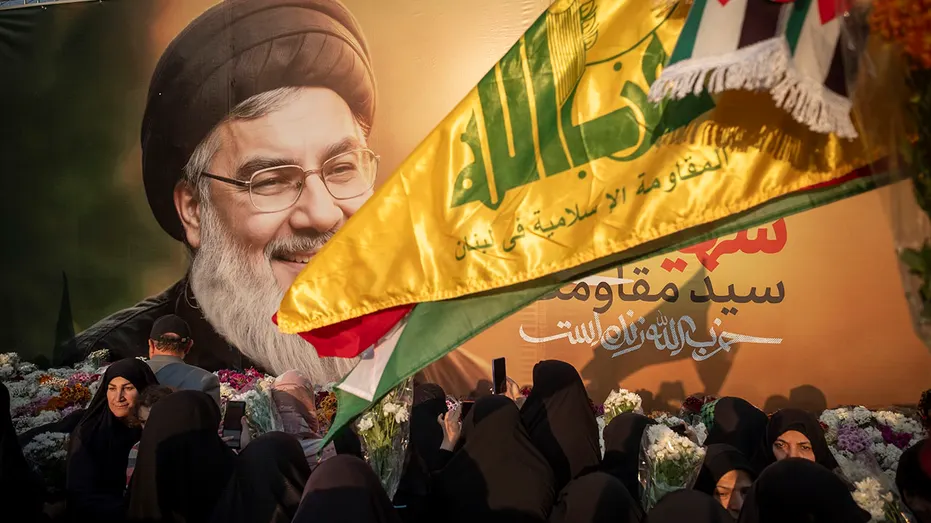
SouthernWorldwide.com – The Lebanese government has lodged a strong complaint with the United Nations, accusing Iran of exploiting diplomatic immunity. This comes after Beirut demanded the expulsion of Iran’s ambassador and an end to alleged terrorist activities within Lebanon, according to a letter that surfaced in late April.
The revelation of this letter, which is reportedly a groundbreaking move by Lebanon, occurs amidst ongoing talks in Washington between Israel and Lebanon. These discussions aim to normalize relations between the two nations, which are technically in a state of war, and to dismantle the Iranian-backed Hezbollah terrorist movement operating in Lebanon.
FAMILY OF AMERICAN HOSTAGE TORTURED IN LEBANON WINS LANDMARK CASE AGAINST IRAN
U.S. State Department spokesman Tommy Pigott shared on X on Friday that the United States hosted highly productive talks between Israel and Lebanon on May 14 and 15. He noted that the cessation of hostilities, which began on April 16, would be extended by 45 days to facilitate further progress. The State Department is scheduled to reconvene the political track of negotiations on June 2 and June 3.
Pigott further stated that a security track would be initiated at the Pentagon on May 29, involving military delegations from both countries. The U.S. expressed hope that these discussions would advance lasting peace, full recognition of each other’s sovereignty and territorial integrity, and establish genuine security along their shared border.
Read more : Dodgers Catcher Hits Himself With Bat After Strikeout
As both sides report back to their respective capitals, the potentially significant letter from Lebanon’s Ambassador to the U.N., Ahmad Arafa, has offered a glimmer of hope to critics of Iran and Hezbollah. In the letter, Arafa strongly criticized Iran for allegedly infiltrating Lebanon with terrorists from its Islamic Revolutionary Guard Corps (IRGC) under the guise of diplomatic activities.
According to the letter, Arafa asserted that Iran had engaged in “unlawful acts in blatant defiance of the decisions of the Government of Lebanon.” He further stated that this Iranian conduct constituted “direct and blatant interference in the internal affairs of Lebanon and drags the country into a war it did not choose to become involved in.”
Both the United States and the European Union have designated the IRGC as a terrorist entity.
The letter specifically addressed the Iranian Ambassador to Beirut, Mohammad Reza Sheibani, criticizing his alleged “blatant interference” in Lebanon.
Lebanon’s U.N. letter argued that Iran’s actions violate the 1961 Vienna Convention on Diplomatic Relations and interfere with Lebanon’s internal affairs.
IDF SOLDIERS ACCUSE UN PEACEKEEPERS OF ENABLING HEZBOLLAH TERRORISTS AMID INCREASING CEASE-FIRE VIOLATIONS
When approached for details regarding the letter, a spokesperson for Lebanon’s ambassador to the U.S. declined to comment. The spokesperson also refrained from commenting on the ongoing talks with Israel in Washington.
The spokesperson elaborated that the recent dispute stemmed from a legal change in status concerning the presence of Iranians on Lebanese soil. The Lebanese government had decided not to grant automatic visa waivers to Iranian government and private citizens, a move that reportedly angered Iran and Hezbollah. Furthermore, Tehran is reportedly furious that the Lebanese government has not been more cooperative in addressing the elimination of several IRGC members killed in Lebanon by Israel. Tehran allegedly blames Lebanon’s foreign ministry, particularly Foreign Minister Youssef Raggi, for a perceived “lessening of solidarity with Iran.”
According to analyst Phares, Raggi represents a Lebanese Christian bloc in parliament that is not aligned with the current Iranian regime. He suggested that the talks in D.C. were orchestrated by the Lebanese government to signal to the Trump administration that “the state wants to talk,” but not necessarily to reach an agreement that would provoke Hezbollah. Phares indicated that the leaders of the Lebanese state have not yet reached the position expected by the U.S. and Israel.
An official source stated that Iran had not informed Lebanon’s foreign ministry about the six individuals in question.