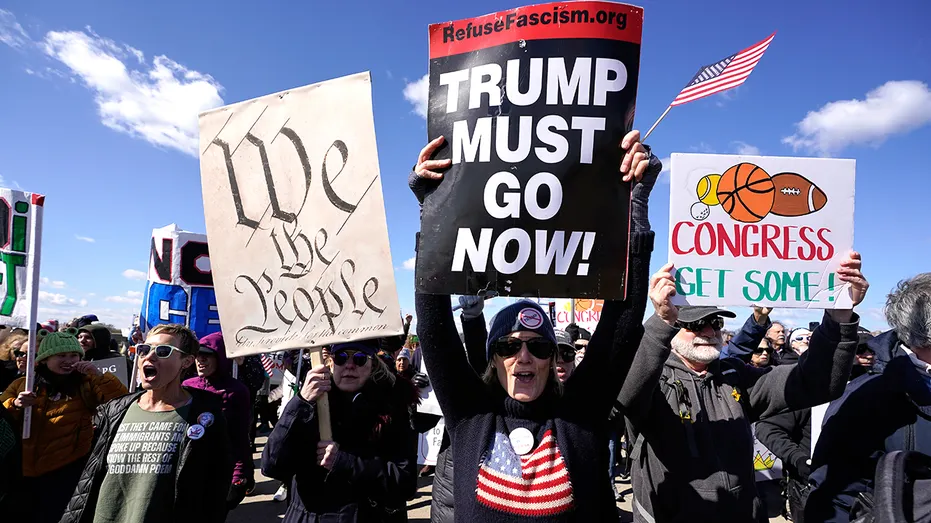
SouthernWorldwide.com – A patient once attempted to explain to me her lack of concern regarding fantasies about President Donald Trump’s demise. She wasn’t advocating violence, nor did she have a history of aggression. In most aspects of her life, she considered herself compassionate and thoughtful. However, her ease in justifying sentiments that, if directed at nearly any other public figure, would be deemed disturbing was striking.
“He’s dangerous,” she stated. “He ruins people’s lives.”
What she was truly articulating was a sense of moral license, not a political stance.
As a psychotherapist, I increasingly observe individuals interpreting political differences through a lens typically reserved for emotional threats and psychological harm. Opponents are no longer merely seen as incorrect. They are perceived as toxic, dangerous, unsafe, narcissistic, or morally irredeemable. Once this shift occurs, emotional intensity escalates rapidly. People cease to see themselves as fellow citizens with differing ideas and begin to perceive others as threats.
This is a central concern I delve into in my book, “Therapy Nation.” Over the past decade, therapeutic language has permeated beyond the therapist’s office, reshaping how Americans perceive politics, relationships, workplaces, parenting, and everyday conflicts.
Concepts such as “trauma,” “safety,” “validation,” “triggering,” and “boundaries” can be beneficial in their appropriate contexts. However, when applied too broadly, they subtly begin to transform disagreement itself into something psychologically destabilizing. This transformation carries significant consequences.
Baca juga di sini: ADUs: Building Housing in Your Backyard
Americans once viewed political disagreement as an indication that people held different perspectives on the world. Now, disagreement is often interpreted as evidence of a psychological or moral failing in the other person. Politics ceases to be about persuasion and instead becomes about emotional self-protection from perceived psychological threats.
When an individual is cast as a villain, the usual constraints on behavior start to erode. Curiosity diminishes, and fairness becomes conditional. Reactions that might otherwise seem excessive begin to feel justified, even righteous. From an internal perspective, it feels like clarity. In therapy, when someone adopts such rigid, black-and-white thinking, it typically signals a loss of psychological flexibility. Complexity collapses into emotionally satisfying certainty, at the cost of perspective.
I increasingly witness this in patients who describe severing ties with friends or family members over political issues, not due to mistreatment or abuse, but because the relationship itself has become emotionally unbearable. Upon closer examination of these conversations, the justification often rests almost entirely on what their beliefs are presumed to represent.
This mindset is no longer confined to private discussions. Licensed clinicians are now appearing on national television and social media, advising people to distance themselves from family members due to political differences. They reframe disagreement as a form of emotional harm rather than an aspect of mature adult navigation.
What is casually referred to as “Trump Derangement Syndrome” reflects a facet of this broader phenomenon. While not a formal clinical diagnosis, the underlying psychology is very real: the tendency for political disagreement to become emotionally consuming, morally absolute, and psychologically destabilizing. This dynamic is not exclusive to critics of Donald Trump. Similar patterns emerge whenever people become convinced that opposing views are not merely mistaken but illegitimate.
The more emotionally reinforcing narratives individuals consume through social media, political media, and online communities, the more psychologically compelling those narratives become. Certainty begins to supersede reflection.
This certainty feels moral rather than political. People believe they are defending something essential and righteous. From a clinical perspective, this resembles a cognitive distortion: a way of interpreting reality that simplifies complexity while narrowing judgment and reducing individuals’ capacity to tolerate ambiguity, discomfort, or opposing viewpoints without feeling psychologically threatened.
In “Therapy Nation,” I contend that therapy culture has conditioned Americans to reinterpret ordinary discomfort through the language of psychological harm. Discomfort is treated as something to be eliminated rather than something that can be worked through. Over time, this lowers people’s threshold for what feels threatening.
The repercussions extend far beyond politics. Social circles shrink, relationships fracture more easily, and exposure to disagreement decreases. Opponents are perceived as psychological threats rather than simply philosophical adversaries. A culture organized around emotional safety gradually becomes less capable of tolerating ordinary human friction.
Effective therapy encourages the opposite. It assists individuals in reality-testing distorted thinking, regulating emotions, tolerating discomfort, and maintaining connections with others despite disagreement and uncertainty. It fosters resilience rather than avoidance, and curiosity rather than certainty.
A psychologically healthy society cannot function if disagreement itself is interpreted as emotional injury. Democracies necessitate people coexisting with others they dislike, distrust, and fundamentally disagree with. Once politics becomes organized around emotional threat and moral contamination rather than persuasion and coexistence, democratic life itself becomes more challenging to sustain.
A culture that loses the ability to tolerate disagreement eventually loses the capacity for self-governance. And a political landscape organized solely around emotional safety will foster fragility, suspicion, isolation, and perpetual conflict.