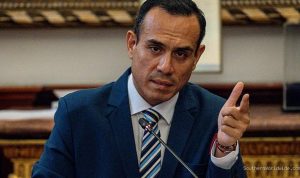
SouthernWorldwide.com – Dr. David Brett-Major, an infectious disease doctor and professor of epidemiology at the University of Nebraska Medical Center, is being hailed as a medical hero for his role in managing the return of American passengers exposed to the hantavirus.
Dr. Brett-Major is a globally recognized expert in the quarantine and isolation of individuals at high risk of exposure to dangerous pathogens, including Ebola, particularly in resource-limited environments. He has extensive experience working in sub-Saharan Africa.
Currently, he is a key member of a U.S. State Department-organized team responsible for bringing eighteen passengers back from Tenerife in the Canary Islands to Nebraska. Fifteen of these passengers are being housed at the National Quarantine and Biocontainment Unit.
One passenger, Dr. Kornfeld, is initially brought to the unit due to a weakly positive hantavirus test. The remaining two passengers are being flown to Emory University for biocontainment and quarantine there.
In an interview, Dr. Brett-Major stated that the flight bringing the American passengers back from the Canary Islands to Omaha, Nebraska, involved no “unmanaged surprises.” The passengers had been exposed to the Andes strain of the hantavirus.
The interview took place outside the National Quarantine Center, where the plane had delivered its passengers two days prior. This location is familiar to Dr. Brett-Major, as he was present in February 2020 during the initial COVID-19 outbreak.
At that time, the same team of physicians and nurses, including Dr. Brett-Major, were simultaneously caring for and studying the novel coronavirus that would go on to infect millions worldwide. The current situation involves a different virus, posing a significantly lower risk.
However, the approach remains the same: a selfless and careful effort to contain the virus, led by dedicated medical professionals, with Dr. Brett-Major at the forefront.
Baca juga di sini: Urgent US Travel Warning Issued Amidst Spreading Ebola Outbreak
HANTAVIRUS DEATHS ON CRUISE SHIP HIGHLIGHT DANGERS OF RODENT-BORNE DISEASE
Dr. Brett-Major exhibits a calm and confident demeanor, expressing no fear of contracting the virus himself. He represents a type of physician who may be becoming rare, humorously noting that if one were worried about personal risk, they wouldn’t be standing so close during the interview.
Indeed, fear can be a more pervasive threat than viruses like Andes or even COVID-19, as media-fueled imagination can often overshadow the actual personal risk involved.
He described the aircraft used for the transport as a “stripped aircraft,” a modified Boeing 747. It lacked significant insulation and was quite noisy.
While expecting basic seating like on an old C-130, he instead found groups of about 12 to 16 passenger seats, similar to a commercial airline. These seats were mounted on a metal plate that could be moved along industrial tracks within the aircraft.
The front of the plane had been completely cleared out to accommodate 23,000-pound biocontainment canisters. These canisters were fully equipped for the passenger who had tested positive and for the individual experiencing symptoms, who would be transferred to Emory.
“It is a mini-intensive care unit inside a container that comes on board the front of the aircraft like any other cargo,” Dr. Brett-Major explained. Those inside were either healthcare workers or individuals who had entered isolation.
There were four beds equipped with standard hospital monitors and carrying cases containing all the necessary supplies for nurses, medics, and physicians in critical care settings.
The support team included personnel from the Phoenix Air Group, a company known for its international ambulance and military support services. Dr. Brett-Major himself is a former prominent medical officer in the U.S. Navy.
During the flight back to the U.S. from Spain, Dr. Brett-Major and his team focused on how to best utilize the aircraft’s space to keep the returning passengers engaged with the team and minimize feelings of isolation, while ensuring everyone’s safety.
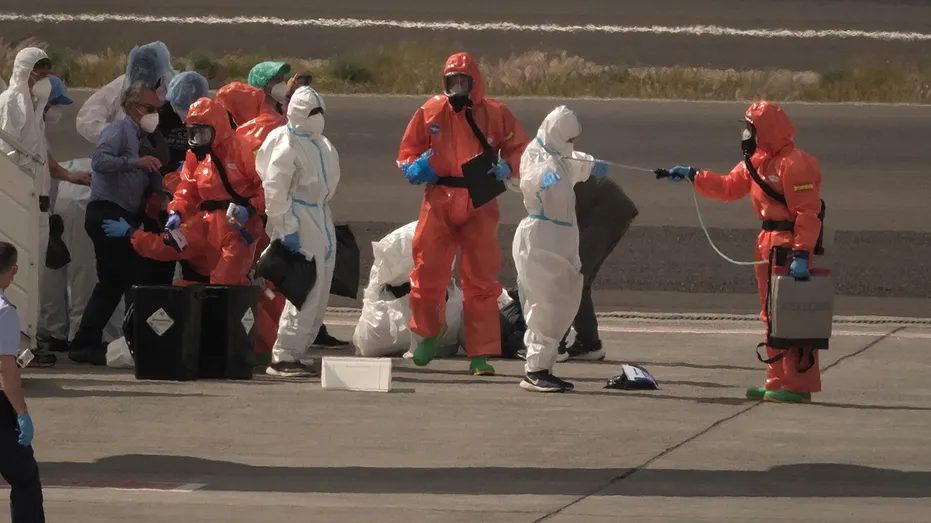
Dr. Brett-Major explained that each team member had distinct roles and wore varying levels of personal protective equipment (PPE) accordingly. While he wore a gown, double gloves, an N95 mask, and a face shield in his coaching role, the Phoenix team, who worked longer shifts, used higher-level PPE.
This included powered air-purifying respirators (CAPRs), full hoods, and coveralls. The name “Phoenix” is fitting for the life-saving function they perform, referencing the mythical bird that is reborn.
Back in Nebraska, working within the biocontainment and quarantine units, a significant aspect of Dr. Brett-Major’s role as a “healing angel” is his attention to the psychological well-being of those exposed to the hantavirus, in addition to their physical health.
He is particularly mindful of the challenges associated with a 42-day quarantine period. Dr. Craig Spencer, another public health professional who battled and survived Ebola in 2014, emphasized the difficulty of such prolonged isolation.
“Imagine trying to be locked in one spot for five weeks. It’s really, really hard,” Dr. Spencer stated in an interview. He recalled spending 19 days in isolation at Bellevue Hospital for treatment, which is less than half the duration these passengers face.
Dr. Spencer urged reflection on the profound impact of such isolation on individuals’ lives, their families, and their mental and physical health.