SouthernWorldwide.com – Kevin Warsh was officially sworn in as the new Chairman of the Federal Reserve on Friday, taking over the leadership of the central bank from Jerome Powell following a ceremony held at the White House.
The swearing-in ceremony took place in the White House East Room, where President Trump addressed an audience that included distinguished guests such as Supreme Court justices, members of Congress, Cabinet officials, and prominent business leaders. Justice Clarence Thomas administered the oath of office to Warsh, who placed his hand on a Bible held by his wife.
President Trump expressed his strong desire for Warsh to operate with complete independence. He stated, “Honestly, I really mean this, this is not said in any other way, I want Kevin to be totally independent. I want him to be independent and just do a great job. Don’t look at me, don’t look at anybody, just do your own thing and do a great job, OK?”
The President further lauded Warsh, suggesting he would be remembered as one of the most exceptional Federal Reserve chairmen in history. He highlighted Warsh’s unique abilities and his widespread respect among peers.
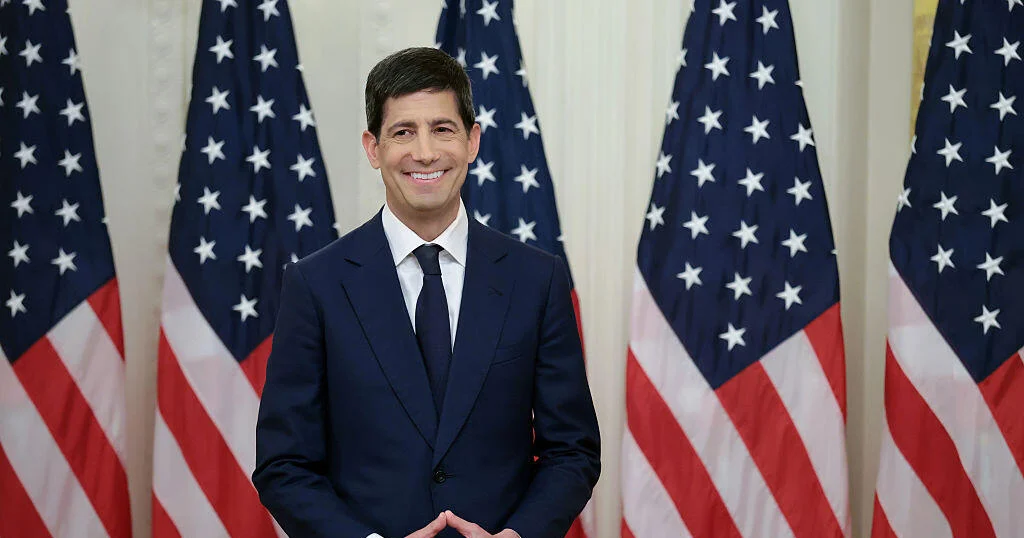
Kevin Warsh arrives for his swearing-in ceremony as Fed chair in the East Room of the White House on May 22, 2026.
Anna Moneymaker / Getty Images
President Trump had previously made his expectations for the Federal Reserve clear, advocating for rapid interest rate reductions. He had been highly critical of Powell’s approach, viewing it as too slow and cautious. While lower interest rates can stimulate economic growth and reduce borrowing costs, they also carry the risk of reigniting inflation.
Powell had faced intense public criticism from the President, who used terms such as “numbskull,” “stubborn mule,” and “moron,” and even openly considered his dismissal. Powell alleged that the Justice Department initiated a criminal investigation with the intent to intimidate him, a claim prosecutors denied, though a judge later supported Powell’s assertion. The probe was ultimately closed the previous month, with the Fed’s internal watchdog taking over the matter.
Jerome Powell had been at the helm of the Fed since 2018, guiding the institution through the unprecedented challenges of the COVID-19 pandemic and a significant surge in inflation.
Warsh has committed to upholding the Federal Reserve’s independence in its monetary policy decisions. He conveyed to lawmakers that he would never predetermine interest rates at the request of President Trump. He also indicated a willingness to collaborate with the Trump administration on other matters, suggesting last year that the Fed and the Treasury Department could establish a new framework for managing the central bank’s balance sheet.
It remains uncertain whether Warsh will fulfill the President’s desire for lower interest rates. Monetary policy is determined by a committee of 12 senior Fed officials. Although the chair typically holds significant influence, Warsh would need to gain consensus from the committee for any rate cuts to be implemented.
Read more : Giants QB Jaxson Dart Dismisses Tebow Comparisons
The current economic landscape presents a complex challenge for the Fed. Inflation remains above the Federal Reserve’s target of 2%, and it saw an increase in March, partly influenced by the conflict in Iran. While some proponents of rate cuts express concern about a potential weakening of the labor market, recent employment figures have remained robust.
The members of the Federal Open Market Committee (FOMC) are divided on the issue, with some appearing unconvinced about the necessity of easing rates. At their April meeting, the committee voted to maintain stable rates, although three members dissented from a sentence in the post-meeting statement that suggested the possibility of future rate cuts. According to meeting minutes released earlier this week, a “majority” of participants believed that a rate increase might be necessary if inflation persists above 2% annually.
Financial markets are also not anticipating an imminent interest rate cut. Investors largely expect the committee to keep rates unchanged at their upcoming June meeting. Projections from CME Group’s FedWatch tool, which monitors market sentiment, indicate a 52% probability that rates will be higher than current levels by the end of the year.
In an unusual departure from tradition, Jerome Powell will continue to be a voting member on the rate-setting committee. He intends to remain on the Fed’s Board of Governors until he is satisfied that the Justice Department probe has been fully resolved.
Warsh himself has not explicitly stated his stance on pursuing rate cuts.
During his previous tenure on the Fed board from 2006 to 2011, Warsh was known for his hawkish stance, generally favoring tighter monetary policy. However, he has since expressed support for lower rates. He has also argued that advancements in artificial intelligence could lead to reduced inflation and increased productivity, potentially creating room for the Fed to ease policy. This perspective may become a point of contention within the committee, as at least one other member believes the AI boom could actually contribute to higher inflation.
Randall Kroszner, who served alongside Warsh on the Fed board and as an economic staffer under former President George W. Bush, told CBS News last week that he does not anticipate Warsh succumbing to short-term political pressures.
“Kevin is a long-run strategic thinker,” Kroszner, now a professor at the University of Chicago, commented. “He understands that to get things done, you need to … build a consensus around things. You can’t just come in and say, ‘Off with their heads, I want to do this or I want to do that.’ That’s not going to be very effective.”