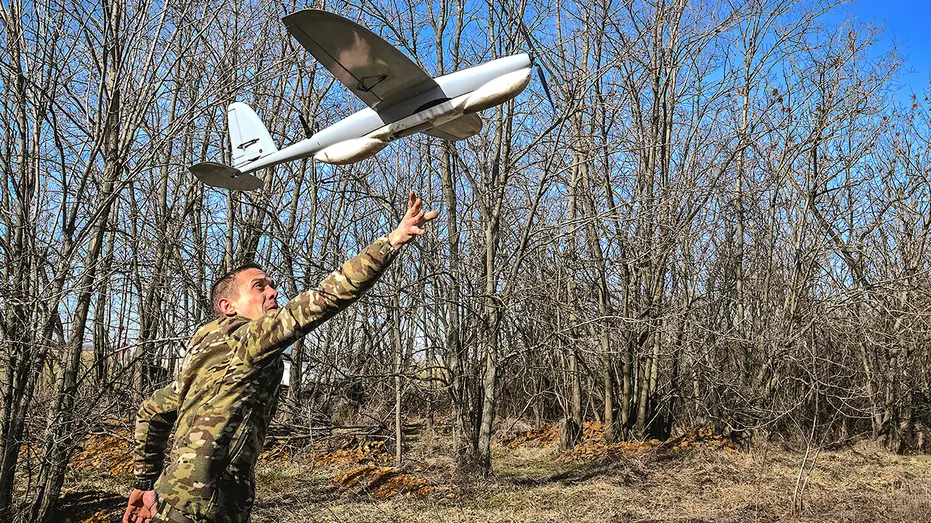
SouthernWorldwide.com – In the heart of Ukraine, a clandestine revolution is unfolding within hidden factories. Here, former students and office workers are working around the clock, transforming into skilled technicians assembling a new generation of combat drones and interceptor systems. These aren’t just any drones; they are Ukraine’s answer to the Iranian-designed Shahed drones that have become a nightly terror for cities like Lviv.
What began as an improvised response to wartime necessity has blossomed into one of the world’s most rapidly expanding military drone industries. A Ukrainian official boldly asserts that Kyiv now holds a leadership position over NATO in battlefield innovation. This hard-won expertise, gained from direct confrontation with Russian drone technology, offers invaluable lessons for nations like the United States and Israel, who face similar threats from Iranian drones in the Persian Gulf.
The proliferation of affordable drones has fundamentally altered the dynamics of the battlefield. Small military units can now effectively identify and neutralize targets like tanks and armored vehicles, and even sophisticated air defense systems, capabilities that previously demanded the deployment of expensive missiles or fighter jets. This paradigm shift is profoundly evident across western Ukraine, where defense technology hubs, secret workshops, and testing facilities are thriving amidst the constant backdrop of air raid sirens.
One individual, identified only as Vitaliy, expressed a sense of honor in contributing to his country’s peace efforts. He views his work as a direct contribution to accelerating the end of the war, driven by the motivation of achieving “peace through strength.” He emphasizes that the ultimate responsibility for this peace lies with Ukraine itself.
The expansion of Ukraine’s domestic drone production has been nothing short of staggering. According to Ukrainian Deputy Defense Minister Serhiy Boev, the nation has set an ambitious target of producing over seven million drones in 2026, a significant increase from the approximately four million planned for 2025. This rapid scaling reflects a determined effort to equip the Ukrainian military with cutting-edge aerial capabilities.
Ukraine’s wartime innovations are not limited to sheer numbers. The country is developing advanced systems, including AI-assisted battlefield platforms and drones specifically engineered to resist Russian electronic warfare. These advancements are challenging traditional Western military doctrines, exposing potential vulnerabilities in established approaches to warfare.
At another defense technology hub in Lviv, a showroom displays a testament to Ukraine’s rapidly evolving battlefield ecosystem. Rows of interceptor drones, unmanned ground vehicles, and remotely operated weapon systems are showcased, highlighting the diverse range of technologies being developed. Volodymyr Cherniuk, co-founder of Iron, a Ukrainian defense technology cluster, revealed that approximately 250 tech companies are involved in this national effort.
The drones being produced serve a multitude of purposes. Some are designed for reconnaissance, providing crucial intelligence from enemy lines. Others are dedicated to evacuation and logistics, ensuring the efficient movement of personnel and supplies. A particularly formidable heavy-lift drone, utilized for nighttime attacks, has earned the ominous nickname “Baba Yaga” from Russian troops, a term Cherniuk translates as “boogeyman.”
Read more : Nikki Bella Remembers Paige's WrestleMania Moment, Shares Injury Update
A specialized interceptor drone has been developed with a singular focus: to counter the Iranian-made Shahed drones that Russia deploys nightly against Ukrainian cities. These interceptors are designed for speed and efficiency, capable of reaching speeds of 300 kilometers per hour. Cherniuk noted that a mere 100 grams of payload is sufficient to disable a Shahed drone, underscoring the effectiveness of these new countermeasures.
The exchange of knowledge and technology is a crucial aspect of Ukraine’s defense strategy. Dmytro, another figure involved in the industry, mentioned that numerous individuals from the United States, Canada, and Europe visit Ukraine, eager to acquire data and feedback directly from the front lines. This international collaboration is vital for refining and advancing drone warfare capabilities.
Russia has significantly intensified its aerial assaults in recent weeks, launching massive drone barrages targeting cities and logistical hubs across Ukraine. These attacks, which have extended to areas near NATO territory close to the Polish border, follow the conclusion of a brief ceasefire. This escalation underscores the persistent threat posed by Russian aerial bombardment.
Simultaneously, Ukraine has demonstrated an increasing capacity to strike deep within Russian territory. Long-range drone attacks have targeted areas around Moscow and Russian energy infrastructure, signaling a shift towards offensive operations beyond its own borders.
However, the evolving drone war has increasingly transcended the immediate conflict zone, spilling into NATO territory. In recent weeks, drones associated with Ukrainian long-range strike operations have entered the airspace of Baltic alliance members, including Latvia, Lithuania, and Estonia. These incursions have led to political repercussions and renewed concerns about regional air defense capabilities.
The resignation of Latvian Defense Minister Andris Sprūds followed the crash of drones near fuel storage facilities close to the Russian border. Ukrainian and Baltic officials attribute these incidents to Russian electronic warfare and GPS spoofing, which they claim rerouted the drones off course. They argue that Moscow is increasingly employing electronic warfare not only for defensive purposes but also as a tool to sow instability and exert political pressure on NATO countries.
These incidents serve as a stark reminder of how the Iranian-designed Shahed drones, used nightly by Russia against Ukrainian cities, and similar long-range drone technologies increasingly employed by both sides, are fundamentally reshaping modern warfare. The impact of this evolving drone conflict extends far beyond the traditional battlefield, influencing geopolitical dynamics and international security.