SouthernWorldwide.com – Russia has secured a significant geopolitical and economic win with a landmark agreement to construct Kazakhstan’s first commercial nuclear power plant, a project valued at $16.5 billion.
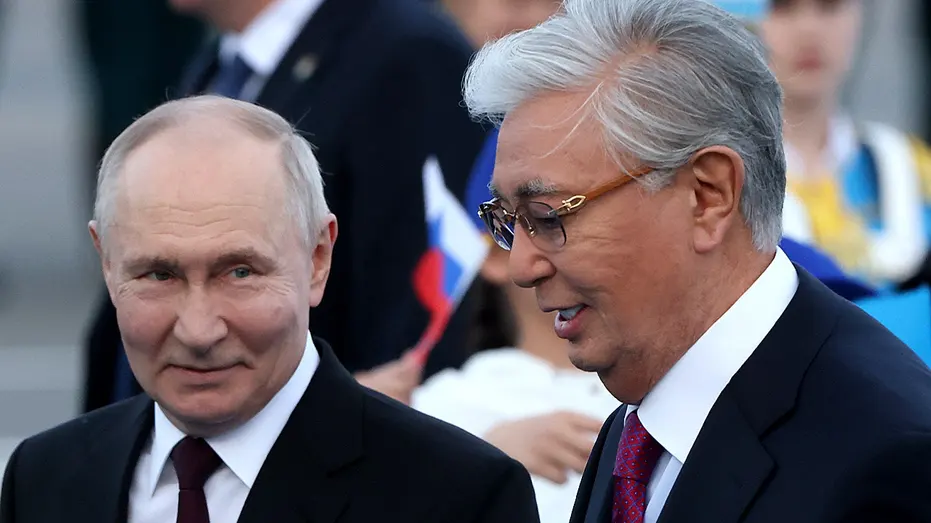
The deal, finalized during high-level talks in Astana between Russian President Vladimir Putin and Kazakh President Kassym-Jomart Tokayev, will be substantially financed by Russia. A Russian export loan is set to cover approximately 85% of the total project cost, according to reports.
The construction will be overseen by Rosatom, Russia’s state-owned nuclear corporation. The plant is planned for a site near the village of Ulken, situated in southeastern Kazakhstan along the picturesque shores of Lake Balkhash.
Rosatom emerged victorious in a competitive bidding process, outmaneuvering other major international players. These included China National Nuclear Corporation, France’s EDF, and Korea Hydro & Nuclear Power, underscoring Russia’s strong position in the global nuclear energy sector.
This agreement is seen as a crucial step in the Kremlin’s broader strategy to solidify its economic and geopolitical influence within former Soviet republics. This is particularly pertinent in the current climate of Western sanctions against Russia.
Kazakhstan holds a prominent position in the global nuclear landscape, being the world’s largest producer of uranium, according to the World Nuclear Association.
For Kazakhstan, the new nuclear facility is designed to address critical energy needs. The country has grappled with an aging, coal-dependent power infrastructure and persistent electricity deficits for over two decades.
“The agreement signed today on the construction of the Balkhash NPP has an important role,” stated President Tokayev during the signing ceremony, highlighting the project’s significance.
Read more : Papa John's Drone Delivery: No Pizza Included
President Putin described the deal as a “flagship project in the field of peaceful nuclear energy.” He further emphasized that the plant’s operation would significantly contribute to the Kazakh economy, ensuring affordable and clean energy for both businesses and households.
“I would like to point out that, as we agreed with the president of Kazakhstan, we are not simply talking about the creation of a nuclear power plant or construction; we are talking about the creation of an entire industry, including education, personnel training, and so on,” Putin added, indicating a comprehensive approach to developing the nuclear sector.
The proposed nuclear facility will be equipped with two advanced VVER-1200 Generation III+ reactors, as confirmed by Kazakhstan’s atomic energy agency.
The substantial $16.5 billion budget for the project includes an allocation of approximately $2 billion dedicated to security systems and essential foundational infrastructure.
Construction is slated to commence in 2027, with the first reactor expected to be operational by early 2034. This timeline follows a national referendum held in 2024, where Kazakh citizens formally approved the development at the Balkhash site.
However, the transition to atomic energy carries historical sensitivities for the local population. Kazakhstan was the site of numerous Soviet nuclear weapons tests at Semipalatinsk between 1949 and 1989, which resulted in severe public health crises and widespread environmental pollution.
Public distrust was further amplified by the Chernobyl disaster in Ukraine in 1986. Tens of thousands of Kazakh workers who assisted in the cleanup efforts subsequently suffered from serious health issues.
In addition to the nuclear power plant agreement, the two nations also signed a currency swap arrangement on Thursday. This accord was finalized by Bank of Russia Governor Elvira Nabiullina and National Bank of Kazakhstan Governor Timur Suleimenov, facilitating a ruble-tenge swap.