SouthernWorldwide.com – A notable development has emerged in the discourse surrounding artificial intelligence, with Pope Leo XIV issuing a significant policy statement that aligns with progressive concerns about the technology’s impact.
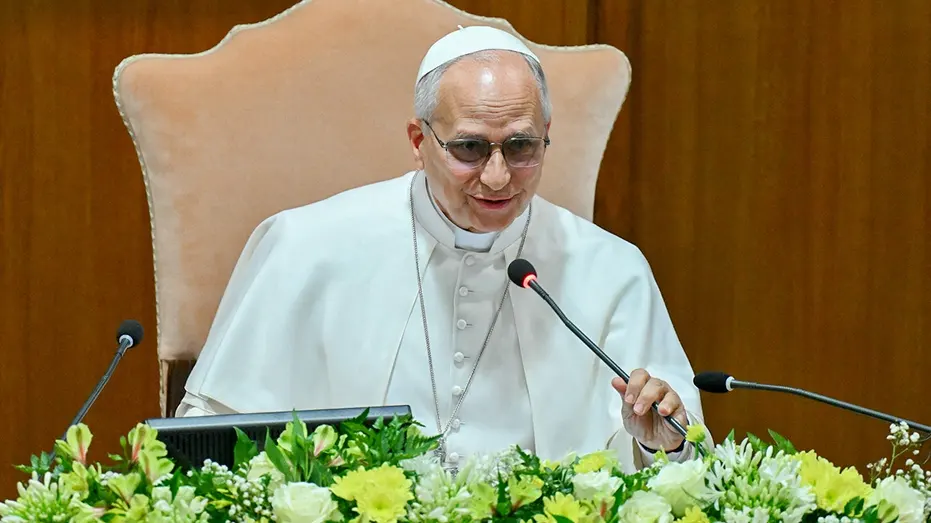
In what is being described as his most important policy statement to date, Pope Leo XIV has voiced strong warnings about AI. He stated that the technology “threatens to normalize an anti-human vision” and has called for robust regulation of the rapidly expanding AI industry.
According to Vatican News, the pontiff emphasized that technological advancements should not be concentrated in the hands of a select few. Instead, he advocated for their management in a way that prioritizes the dignity of every individual and the common good, rather than solely focusing on profit.
Echoing the sentiments of progressive figures like Senator Bernie Sanders, who has called for a moratorium on data center construction to curb AI’s rapid advancement, Pope Leo XIV argued that AI should not be permitted to displace workers simply to reduce costs and increase profits.
Similar to Senator Sanders, the Pope expressed hope for a resurgence and strengthening of labor organizations.
The Pope’s encyclical letter is being widely regarded as a defining document of his papacy, according to The Wall Street Journal. This significant document draws parallels to a pivotal 1891 encyclical titled “Rerum Novarum,” which translates to “new things” and critically examined the social issues that arose during the Industrial Revolution.
The earlier encyclical was penned by Pope Leo XIII, the historical figure who inspired the current Pope’s chosen name. Pope Leo XIV’s new encyclical, “Magnifica humanitas,” was signed on May 15, mirroring the date Pope Leo XIII signed his own impactful letter.
This choice of historical reference is particularly telling. While the Industrial Revolution undeniably brought about immense hardship for early factory laborers and urban migrants, it also ushered in an era of unprecedented improvement in living standards, health, and overall prosperity.
Baca juga di sini: Former Biden aide warns Democrats playing 'dangerous game' backing Platner amid deepening scandal
Prior to the widespread adoption of factories and machinery in production, transportation, and agriculture, a significant portion of the global population lived in extreme poverty, often on the brink of starvation.
The Industrial Revolution led to a substantial increase in the production of essential goods like clothing and furniture, consequently driving down their costs. Concurrently, real wages saw a steady rise throughout the 19th century in industrialized nations, and the poverty rate experienced a sharp decline.
The Adam Smith Institute, an organization that champions capitalism, has noted that the wealth generated by the Industrial Revolution funded significant advancements in public health and sanitation. This era not only led to the conquest of extreme poverty but also to the eradication of many preventable and curable diseases. Rather than causing widespread misery, the Industrial Revolution demonstrably improved the material conditions of the masses to a degree never before witnessed in human history.
It is this very period of historical uplift and progress that Pope Leo XIII, and now Pope Leo XIV, have critiqued. In a similar vein, Pope Leo XIV appears to be expressing reservations about the progress and wealth creation potential promised by artificial intelligence.
Much like the early industrialists who pioneered transformative technologies such as the steam engine and the spinning jenny, contemporary innovators in Silicon Valley are amassing fortunes and significant political influence through AI.
While tech leaders acknowledge that AI will automate certain jobs, they also anticipate a surge in overall productivity. This, they believe, will translate into increased leisure time, a reduction in arduous tasks, and a host of other societal benefits. Furthermore, they foresee AI driving significant breakthroughs in medical science.
Critics like Bernie Sanders and Pope Leo XIV appear to be narrowly focused on the issue of job displacement, potentially overlooking the broader advantages AI offers. They may not be fully considering the millions worldwide who suffer from debilitating diseases like Parkinson’s, which AI’s advanced analytical capabilities may soon help to cure.
There is also the case of Jorie Kraus, a young individual who battled a rare genetic disorder. She spent her first 73 days in a neonatal intensive care unit and struggled with breathing and speaking for her first two years. Her mother recounted how, thanks to an AI diagnosis, Jorie was prescribed a common muscle relaxant typically used for seizures. This intervention dramatically improved her muscle control, an outcome her mother described as a miracle, likening the change to a “light switch.”
The medical community is also experiencing a newfound ability to repurpose existing drugs with the assistance of AI. Research conducted at Harvard Medical School, for instance, utilized an AI model to identify nearly 8,000 approved drugs that could potentially be repurposed to treat 17,000 different diseases.
The beneficial applications of AI extend beyond healthcare. Large AI models can optimize complex operations such as air traffic control and TSA procedures, thereby enhancing flight safety and streamlining travel. AI can also be instrumental in identifying and eliminating fraud and waste in government spending. Mundane tasks like drafting legal documents or creating financial spreadsheets can be accomplished with remarkable speed, and weather forecasting could become significantly more accurate, aiding in disaster preparedness.
Critics of AI, including Senator Sanders and Pope Leo XIV, express alarm over the potential for AI systems to perform certain tasks faster and more cheaply than humans. This raises significant concerns about future employment prospects, particularly for younger generations who are increasingly worried about their career paths and are showing growing skepticism towards the AI industry.
AI developers have been criticized for not adequately addressing these public concerns. It is suggested that they should be actively encouraging students to learn about and master AI, demonstrating how it can enhance their skills and open up new opportunities.
The vocal criticism has indeed had an impact. A survey by Morning Consult indicated that AI ranks among the top 10 most distrusted categories for brands and industries, placed just above social media. Interestingly, Americans appear to be growing less enthusiastic about AI, even as its usage increases. It is noteworthy that skepticism towards AI is predominantly found in English-speaking developed nations, while residents of other countries tend to exhibit a more positive outlook towards AI technologies like ChatGPT and Gemini.
While AI creators may possess exceptional technical brilliance, they have not been as effective in promoting the new technology to the American public. A crucial step for them would be to better illustrate the tangible benefits of AI for individuals and to actively support regulatory frameworks, similar to those proposed by the Trump White House, that can alleviate public anxieties.
Failure to do so could lead to the very outcome critics fear: AI development being curtailed by figures like Senator Sanders and Pope Leo XIV, potentially ceding the technological frontier to countries like China, which may implement far fewer safeguards to protect humanity. Such a scenario presents a considerably more daunting prospect.