SouthernWorldwide.com – The author recounts the tragic death of her youngest daughter, Katie, who was killed when an intoxicated undocumented immigrant collided with her stationary vehicle at high speed. This devastating event prompted a deep examination of U.S. immigration policies and their unintended consequences.
Katie’s death compelled the author to look beyond superficial political rhetoric and investigate the realities of America’s immigration system, including who benefits and who bears the costs when the government fails to uphold meaningful standards.
Through her research, she observed a growing trend that seemed to be overlooked in public discourse, perhaps due to its political sensitivity.
Data from the Center for Immigration Studies indicates that recent immigrant arrivals possess lower educational qualifications compared to earlier waves of immigrants.
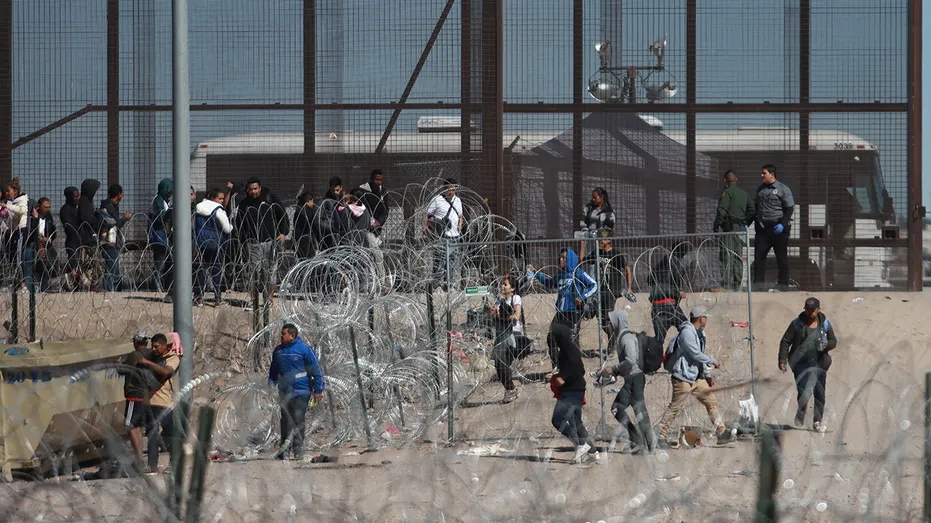
During the border surge under the Biden-Harris administration, overseen by Homeland Security Secretary Alejandro Mayorkas, the demographic makeup of migrants shifted significantly towards individuals from poorer Latin American regions. This influx included a larger number of people with limited formal education and fewer skills relevant to a modern, technology-dependent economy.
This shift is significant because advanced economies rely heavily on productivity, skills, and institutional capacity. Educational attainment is strongly linked to earning potential, poverty levels, tax contributions, and the long-term need for public assistance.
The United States of today is not the industrial nation of 1920. In the current economic climate, low-skill labor alone does not guarantee upward mobility, even for native-born Americans struggling with rising housing costs, inflation, healthcare expenses, and stagnant wages. Yet, policymakers continue to increase migration flows, asserting that there will be no significant fiscal or social repercussions.
However, consequences are present whether political leaders choose to acknowledge them or not.
Lower educational attainment is closely correlated with reduced earnings, higher poverty rates, and increased demand on public services. School districts bear the financial burden of providing language services and educational remediation, often straining already under-resourced areas. Hospitals provide emergency care that is frequently not fully reimbursed, with taxpayers ultimately shouldering much of the cost.
Cities experience mounting housing pressures, and welfare systems expand to meet growing needs.
The author’s family has experienced both sides of America’s immigration narrative. Decades ago, her parents immigrated legally to the United States, seeking opportunities rather than benefits or special privileges, which she believes increasingly incentivize lawlessness in the current immigration landscape.
This issue is deeply personal for her.
Katie’s killer, Julio Cucul-Bol, a Guatemalan national who used a Mexican alias in Illinois, admitted in state court through an interpreter that he had no formal education and could not communicate effectively in either English or Spanish.
Therefore, the author poses a question that Democrat Illinois Governor JB Pritzker and many other politicians avoid: What was the purpose of allowing Bol into the country? How did it benefit America, improve communities, or enhance the lives of American citizens?
Her daughter is deceased.
While reasonable individuals can debate immigration levels and legal entry pathways, no responsible nation can maintain public trust by weakening enforcement and denying the downstream consequences for public institutions, fiscal stability, or social cohesion.
Many countries benefit significantly from large-scale emigration. Remittances sent home by migrants working in the United States generate billions in foreign income and alleviate domestic political pressures.
Essentially, the United States increasingly subsidizes the failures of foreign governments. Instead of addressing the root causes of their citizens’ struggles, some governments can export their poverty to the United States while receiving remittance dollars in return.
This dynamic might benefit political elites on both sides of the border, but it does little to foster long-term reform, self-sufficiency, or stable institutions. In many instances, unmanaged mass migration may actually hinder the economic and civic progress that these societies most desperately need.
A truly ethical and compassionate approach should not merely encourage people to leave struggling nations indefinitely. It should promote the development of lawful, stable, and prosperous societies where citizens can build fulfilling lives in their own countries with dignity and opportunity.
The United States should serve as a model to be emulated—a nation founded on lawful conduct, strong institutions, accountability, and opportunity. It should not be a nation that increasingly allows itself to be exploited by governments unwilling to address the conditions within their own borders.
Migrants should be attracted to America because of the opportunities presented by economic freedom and social stability, not lured by self-serving politicians offering taxpayer-funded benefits while neglecting to address the repercussions of lax enforcement.
States like Illinois increasingly attempt to compensate for the departure of productive citizens not by confronting the policies that drive people away, but by trying to replace those losses through mass migration, encouraged by generous benefits and relaxed standards. Administrations like Biden-Harris amplified this approach nationwide during the border surge years.
This is not a viable long-term strategy for national prosperity or institutional stability.
Every public policy involves trade-offs, and citizens should not become collateral damage to reckless immigration policies pursued for fleeting political advantage.
A serious immigration policy would commence with candor: honesty regarding the importance of educational attainment in advanced economies; honesty about the fiscal burdens created by mass low-skill migration; honesty about the real-world consequences of weak enforcement and sanctuary policies; and honesty that America cannot indefinitely serve as the economic and social safety net for the developing world without ultimately undermining its own stability.
Baca juga di sini: Weekly Practice Boosts Cancer Survivors' Sleep and Well-being
Unfettered compassion is not governance. And no nation can perpetually absorb the unresolved economic and institutional failures of other countries while expecting its own stability, cohesion, and prosperity to endure indefinitely.