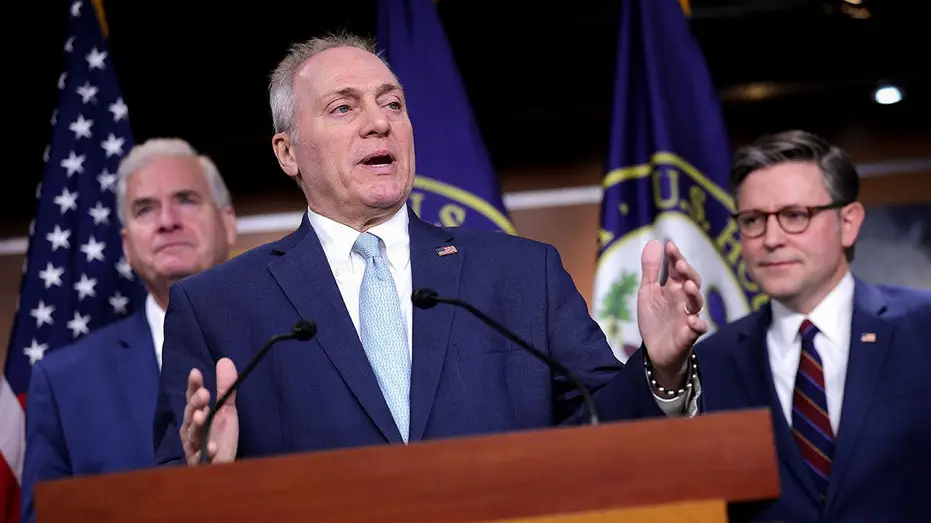
SouthernWorldwide.com – More than 70 members of the U.S. House of Representatives are formally opposing a legal challenge initiated by a Colorado county. This challenge aims to hold major oil companies financially responsible for alleged damages attributed to climate change.
A group of House Republicans, spearheaded by Majority Leader Steve Scalise of Louisiana, has petitioned the Supreme Court. They are urging the court to rule in favor of ExxonMobil and Suncor Energy in a significant climate change lawsuit. The lawmakers contend that this lawsuit represents a detrimental “war on American energy.”
The Republican lawmakers have described the lawsuit filed by Boulder County as a “dangerous overreach.” They argue that if successful, it could force major fossil fuel companies to pay billions of dollars in compensation for alleged damages. The GOP expressed concerns that a favorable ruling for the county would likely encourage numerous similar lawsuits, potentially jeopardizing the financial stability of the entire fossil fuel industry.
Attorneys from the law firm Boyden Gray have submitted an amicus brief, also known as a “friend of the court” brief, on behalf of the congressional Republicans. This brief provides additional arguments and perspectives to the court.
The Supreme Court is anticipated to hear oral arguments in the case, Suncor v. Boulder, during the fall. The central question before the court is whether federal law supersedes local jurisdictions in seeking remedies for alleged climate-related damages in state courts. A decision in this landmark case is expected in 2027.
The case reached the nation’s highest court after the Colorado Supreme Court permitted the lengthy legal battle to continue under state law. This decision was made despite long-standing questions regarding the authority of local governments to pursue damages for greenhouse gas emissions that transcend state borders and have global implications. Boulder County initially filed its lawsuit against the major oil companies in 2018, asserting that these companies knowingly contributed to global warming and misled the public about the potential harms of climate change.
The amicus brief filed by the Republicans argues that claims for such damages should fall under federal jurisdiction. They contend that allowing state courts to adjudicate global climate damages would lead to a “cacophony of competing state commands.” This, they argue, would undermine Congress’s authority and its role in formulating national energy policy.
Read more : Rosenthal: NL's All-Star Pitching Staff Could Be 'The Greatest
“The Court should reject this attempt by Respondents to establish their ‘own foreign policy’ from a Boulder courthouse,” the brief states, emphasizing the argument for federal oversight.
The signatories of the brief also issued a stark warning about the potential economic consequences of a ruling in favor of Boulder County. They believe such a decision could lead to severe financial repercussions for American energy producers.
“The sheer magnitude of the alleged damages would restructure the American energy industry if not bankrupt it altogether — and cause ripple effects worldwide, especially when multiplied by the dozens of similar cases across the country,” the brief continued, highlighting the far-reaching implications.
This legal dispute is also having an impact on Colorado’s political landscape. Republicans in the state argue that climate-related lawsuits, which are often supported by Democrats, pose a threat to jobs and contribute to rising energy costs for consumers.
Representative Gabe Evans, a freshman Republican from Colorado representing a competitive district near Boulder, characterized the lawsuit as part of a broader Democratic agenda to make energy production prohibitively expensive. His perspective reflects a key talking point for the party.
The Republican party’s focus on energy affordability comes at a time when the party is addressing voter concerns about elevated gas prices. These price increases have been partly attributed to the ongoing conflict in Iran, adding another layer of complexity to the energy debate.