SouthernWorldwide.com – Republicans are facing a critical deadline as the ongoing fallout from the conflict with Iran continues to exert pressure on domestic gas prices.
Even if the Strait of Hormuz, a crucial global oil chokepoint that has been largely inaccessible due to Iranian attacks, were to reopen immediately, it could still take several months for oil flows to normalize. This extended timeline is attributed to logistical challenges, including trapped tankers, accumulated inventories, and damaged oil infrastructure. Oil analyst Matt Smith of Kpler estimates that global energy markets will not return to normal until the fourth quarter of the year, pushing the recovery close to the November 3 midterm elections.
“It’s then going to take until the fourth quarter of the year for things to return to normal,” Smith stated.
The central question for Republicans is whether the economic repercussions of the conflict will persist longer than the conflict itself. While the White House is actively pursuing a diplomatic resolution with Iran, strategists and energy analysts suggest that disruptions to global energy markets might linger well after any agreement is reached. This could result in voters facing elevated costs for an extended period leading up to the midterms.
TRUMP CONFIRMS ‘CRAZY’ NETANYAHU CLASH AS QUESTIONS MOUNT OVER PUSH TO HOLD FIRE ON HEZBOLLAH TERRORISTS
The economic impact is already being felt across the nation.
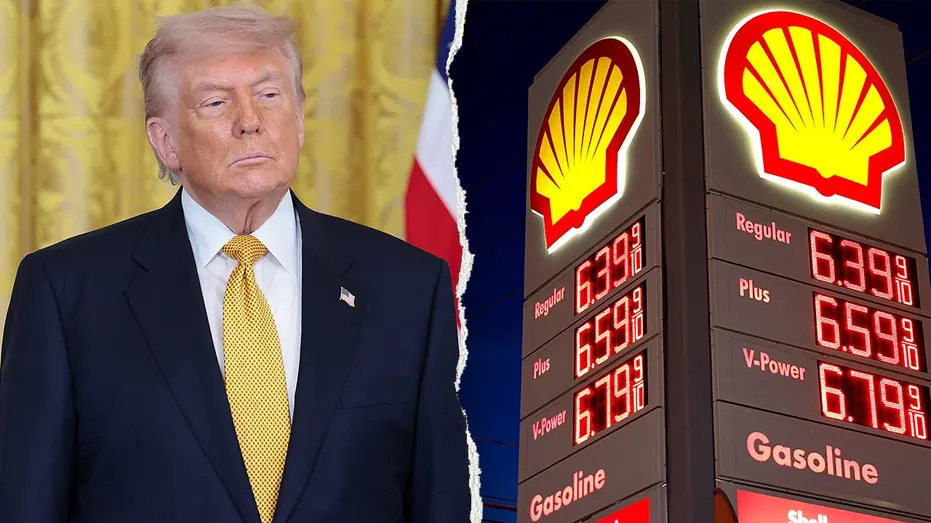
According to AAA, the national average price for regular gasoline stood at $4.241 per gallon on Thursday. This represents a significant increase from $3.144 a year prior, marking a nearly 35% jump.
Moody’s Analytics estimates that the conflict has cost American households approximately $100 billion over the past three months. This amounts to roughly $750 per household, driven by higher expenses for fuel, transportation, and related goods and services.
For some observers, the duration of the conflict has already reached a point where it could lead to lasting political consequences.
The White House has dismissed the notion that the conflict could become a long-term political liability, asserting that any economic disruption would be temporary.
Rogers expressed confidence that Trump “will never allow Iran to possess a nuclear weapon.” He further argued that “when the President forces this conflict to a successful end, gas prices will drop back to multi-year lows and global energy markets will be much more stable in the long term.”
“We were promised that this would be a short operation, and repeatedly told it would all be over in 24–48 hours,” he continued. “This is no longer a blip.”
Others believe that the window of opportunity for resolution is narrowing.
Feehery’s July 4 benchmark aligns with a period during which the White House hopes to redirect public attention towards the commencement of America’s 250th anniversary celebrations.
The administration has employed a dual approach, at times signaling that a deal is imminent while also warning that military action remains a possibility. More recently, President Trump has voiced frustration with the pace of negotiations, describing them as “very boring” and stating he “couldn’t care less” if the talks failed due to Iran’s dilatory tactics. Concurrently, he has predicted that oil prices would “be dropping like a rock” in the near future and maintained that a deal is still achievable.
However, regardless of the negotiation outcomes, strategists contend that economic relief must materialize soon if Republicans are to avoid carrying the conflict’s negative repercussions into the midterm elections.
Republicans are entering the midterms defending a slim House majority, which many analysts consider vulnerable to the traditional midterm backlash against the party of the sitting president. The Senate landscape is generally more favorable to Republicans, though several races in states like North Carolina, Maine, Ohio, and Texas are anticipated to be highly competitive.
Feehery posited that the political impact of the conflict will ultimately be less about uranium stockpiles, enrichment levels, or the specifics of any final agreement. Instead, it will hinge on whether voters perceive themselves as economically secure.
“They don’t care about that,” Feehery remarked when asked about the substance of a potential deal. “From the voters’ minds, they’re not worried about far-flung issues. They’re worried about the economy at home.”
TRUMP THREATENED TO ‘BLOW UP’ OMAN — WHY THE TINY GULF KINGDOM IS CAUGHT BETWEEN DC AND IRAN
“George H. W. Bush kicked Saddam Hussein out of Kuwait and his approval ratings were around 91%, and he lost the next election,” Feehery recalled.
Even if a diplomatic breakthrough occurs in the coming weeks, Americans may not experience immediate relief at the gas pump.
Smith noted that the U.S. has been somewhat insulated from the most severe supply disruptions due to its domestic production. However, the country is increasingly acting as an energy supplier to regions that have been cut off from Middle Eastern oil flows.
“We’re likely going to be seeing higher prices coming through in the U.S. because of that because, you know, we’re getting to a scarcity issue,” Smith explained.
As Asian countries seek to replace lost crude oil from the Middle East and Europe searches for alternative jet fuel sources, international buyers are intensifying their competition for American energy exports, he elaborated.
“Countries outside of the U.S. are bidding up U.S. prices,” Smith concluded.
For Republicans, the primary concern is that the economic fallout could persist even after the conflict itself has concluded.
“Even if this were all over tomorrow, prices won’t immediately come back to normal and if or when they do, voters don’t get a refund from the high bills they’ve already paid,” Heye stated.