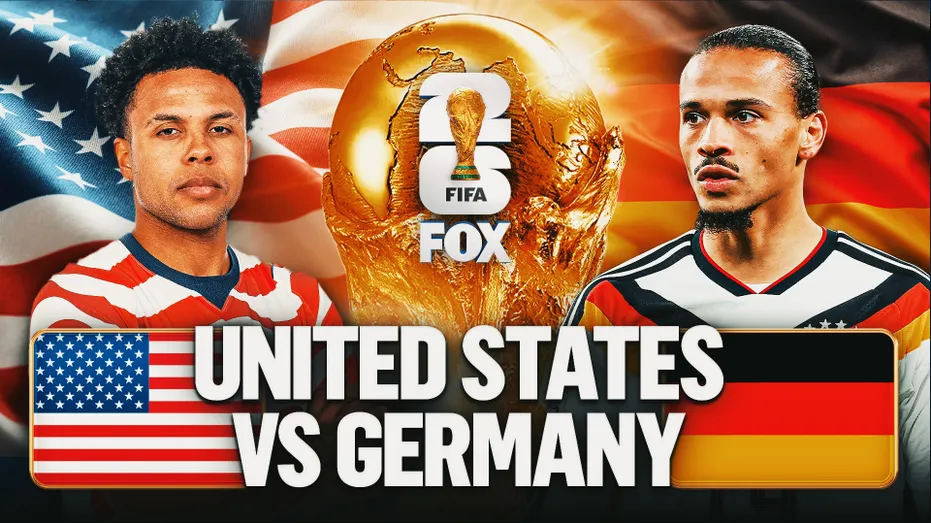
SouthernWorldwide.com – As the U.S. Men’s National Team gears up for their World Cup journey, a crucial final tune-up match against Germany presents a significant test, offering insights into their preparedness and areas of focus.
Having experienced the World Cup firsthand, I understand the meticulous preparation involved for the U.S. national team. With their tournament opener against Paraguay on June 12th looming, heading into it with confidence is paramount. This upcoming friendly against Germany serves as the final opportunity to fine-tune their strategy and build that essential momentum.
My role now shifts to dissecting the USA’s performance throughout the 2026 World Cup, beginning with this pivotal match against a formidable German side. Here, I’ll outline the key factors for this game and provide a preview of what to anticipate from both Germany and the United States.
When considering the German national team, prominent names like Jamal Musiala, Florian Wirtz, and Joshua Kimmich immediately come to mind. However, the player I’ll be closely watching in this encounter is one who possesses the capability to exploit a potential vulnerability in the U.S. defense.
Leroy Sané is the individual I’m highlighting because his strengths directly address my concerns regarding the United States. The former Manchester City star is a swift, left-footed winger who typically operates on the right flank. His dribbling prowess allows him to maneuver in either direction, either cutting inside onto his left foot or dragging the ball towards the touchline.
On the left side of the U.S. defense, Tim Ream and Antonee “Jedi” Robinson will be tasked with marking Sané. When Robinson pushes high up the field and Germany gains possession in transition, there’s a distinct possibility of Sané finding himself in open space against Ream. Based on their recent friendly against Senegal, this scenario would not be ideal for the U.S. team.
While this defensive matchup might pose less of a threat during the World Cup group stage against opponents like Paraguay, Australia, and Türkiye, it becomes a critical concern in the knockout rounds. In those later stages, the U.S. will face players with the pace and skill to exploit such spaces, potentially causing significant problems for Ream.
Ream’s role in orchestrating the U.S. team’s build-up play is vital. However, in the opening 20 minutes against Senegal last Saturday, he exhibited some uncharacteristic turnovers that resulted in dangerous scoring opportunities for the opposition.
Furthermore, there were instances where the ball traveled wide, and Ream was not positioned close enough to immediately challenge. While he correctly delayed the attack and awaited defensive support, his ability to effectively defend wingers in perilous positions will be of immense importance throughout the tournament.
Alex Freeman, looking to build upon his performance against Senegal, is likely to find himself in more one-on-one situations out wide against Germany. His ability to contain these threats will be crucial.
I am particularly keen to observe Weston McKennie’s performance and the extent to which he can influence the game’s tempo. We are well aware of his offensive capabilities, but the question remains: can he be equally effective on both sides of the ball?
McKennie played the second half against Senegal after a significant tactical shift by manager Mauricio Pochettino, who made 10 substitutions at halftime. McKennie performed admirably during his time on the field, especially defensively, displaying a grit and leadership that was evident when he wore the captain’s armband for the second half.
McKennie is expected to start in the midfield alongside Tyler Adams, whose defensive coverage is exceptional and could potentially grant McKennie greater freedom to advance forward. Nevertheless, against a team like Germany, which can quickly exploit the U.S. in transition, my former U.S. teammate must deliver a strong performance on both ends of the pitch.
I am confident in his ability, having played alongside the renowned “MMA” midfield trio of Adams, McKennie, and Yunus Musah at the 2022 World Cup. Adams anchored the center of the pitch, while McKennie and Musah covered the rest of the midfield, extending all the way to the flanks. This match against Germany will serve as an excellent test for the midfield unit as they enter the tournament.
The effectiveness of McKennie’s play and the U.S. midfield’s overall control of the game will significantly dictate what the team can achieve against Germany.
The U.S. may need to adopt a different approach against Germany compared to their opening against Senegal. In the previous match, the starting lineup played 45 minutes together before halftime substitutions. Manager Mauricio Pochettino’s preference for a high press means players often exert maximum effort, knowing they will only play for 45 minutes.
I was highly impressed by the team’s compactness against Senegal and hope to see a similar defensive structure against Germany. Offensively, the attacking group showcased numerous positive combinations and created several goal-scoring opportunities in the previous match. It will be interesting to see if they can maintain that attacking threat against Germany.
I anticipate that the starting XI will play more minutes against Germany to build the necessary match fitness for the World Cup, while also prioritizing player safety and health. My assumption is that the starting lineup will feature for at least 60 to 70 minutes in this game.
Can the U.S. exhibit the same level of aggression against Germany as they did against Senegal? It’s unlikely the Americans will enjoy as much possession as they did in their first friendly. This particular matchup might necessitate a shift to a deeper defensive block, requiring them to sit back and defend more resolutely.
If Pochettino opts for a three-center-back formation, as he did against Senegal, how will the U.S. organize their defense when dropping back? Will it morph into a 5-4-1 formation when they concede space? Will the U.S. be content to cede possession and territory? I am eager to observe the team’s tactical setup against a potential title contender.
In light of this, can the U.S. strike the right balance between attack and defense? Can the team convey a message of intent, stating, “We are not going to be purely passive; we can be aggressive in the opportune moments”? Based on the Senegal game, I expect the Americans to at least attempt to be highly aggressive in the initial 10 to 15 minutes.
Achieving this equilibrium will demand considerable maturity from both the coaching staff and the players on the field. I am hopeful that we can find the appropriate balance between pressing and sitting deep against an opponent widely considered superior.
I predict that Germany will score a goal during a transitional phase of play.
There are two primary concerns I have regarding the U.S. team’s prospects in the World Cup, and both are directly related to their defense. The first, as previously discussed, is how the team will manage defensive transitions when facing opposition counterattacks. Germany boasts players like Sané, Musiala, and Wirtz, who can inflict damage when afforded space and time on the ball.
The second concern, which may not be directly tested in this specific game, is the U.S.’s ability to cope with a traditional big-target striker. Fortunately, Germany does not possess such a player. However, the potential inclusion of defender Chris Richards, if fit, could offer a different defensive dimension for the U.S.
Against Senegal, some direct balls were played towards the U.S. defense that Mark McKenzie and Ream did not handle with optimal control. The addition of Richards should provide assistance in this area, and I am hopeful for improved control moving forward. Facing a physically imposing striker will challenge the American backline in both hold-up play and defending deep within the penalty area.