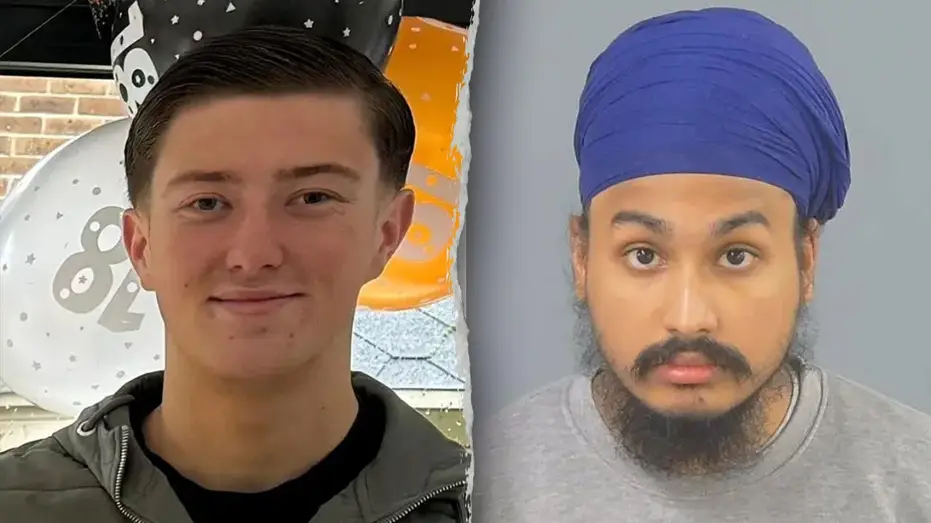
SouthernWorldwide.com – The tragic death of Henry Nowak, an 18-year-old college student, in Southampton, England, last December has brought to the forefront a disturbing narrative of a “two-tier” justice system in Britain, with many believing that “woke” police bias played a role in the young man’s demise.
This incident, largely ignored by the American press and under-reported by British media and politicians, draws a stark contrast to the national attention given to cases like Trayvon Martin in the United States. Martin, a 17-year-old, was shot and killed in 2012, a tragedy that resonated deeply, even prompting a personal statement from then-President Barack Obama.
The comparison, while acknowledging significant differences in circumstances, race, and location, highlights a perceived shift in how justice is administered. While the police handling of the Trayvon Martin case was criticized for “sloppy work,” the Henry Nowak case has ignited accusations of systemic bias within the British police force.
Britain has experienced rapid demographic changes, with a significant influx of immigrants in recent years. Data indicates a substantial decrease in the “White British” population percentage, a trend that has coincided with swift cultural transformations.
This societal shift has been accompanied by what many perceive as a crackdown on free speech. Despite its historical roots in parliamentary debate, Britain is now seen by some as one of the most restrictive Western countries regarding expression. Arrests for offensive online messages have surged, and organizations that monitor global freedoms rate the UK lower than many other Western nations.
Even public spaces like London’s Speakers’ Corner are now subject to perceived limitations, with individuals risking repercussions for expressing views deemed “transphobic” or critical of Islam. This heightened sensitivity extends to the police force.
British police have become increasingly attuned to the concerns of racial and gender minorities. The National College of Policing introduced the recording of “non-crime hate incidents” in 2005, which are based on a complainant’s perception rather than requiring concrete evidence.
Furthermore, the UK National Police Chiefs Council’s “Police Anti-Racism Commitment” explicitly advocates for “racial equity,” which it defines not as treating everyone the same, but as achieving “equality of policing outcomes for people from different ethnic groups.” This approach acknowledges that individuals and communities have unique needs and experiences that are “racialised.”
Critics argue that this emphasis on “equity” over equality has led to a situation where police at the scene of Nowak’s murder were allegedly more concerned with potential accusations of racism from the convicted stabber, Vickrum Digwa, than with attending to the dying victim. Reports suggest that Digwa’s claims were taken seriously, while Nowak’s pleas of being stabbed were dismissed.
This alleged bias is further illustrated by another case involving Valdo Calocane, a man with a history of violence and diagnosed with paranoid schizophrenia. Calocane was not involuntarily committed to a mental institution, as health professionals reportedly feared an “overrepresentation of young black males in mental health detention.” He subsequently went on to fatally stab three people in Nottingham.
In contemporary Britain, large-scale demonstrations supporting causes like Gaza or LGB+ rights are often tolerated, while displaying the English flag can be viewed with suspicion. Even seemingly innocuous actions, such as standing too close to an abortion provider with eyes closed, can lead to arrest under public order legislation.
Conversely, expressing dissent against mass migration from the “global South” is often labelled “far-right,” with individuals facing consequences like being banned from the country. This creates an environment where certain viewpoints are seemingly privileged over others.
The sentiment of a “two-tier” policing system is prevalent on social media, with allegations that indigenous British citizens and conservatives face harsher treatment under criminal law compared to illegal immigrants and left-leaning individuals. This perceived “woke” official bias has been cited in several prominent criminal cases.
The political landscape also reflects these concerns. Prime Minister Keir Starmer, previously the leader of the Labour Party, famously knelt in support of the Black Lives Matter movement. However, he has remained notably silent on the Nowak case. This stands in contrast to his championship of the release of a foreigner whose speech would typically be considered criminal under English law.
Meanwhile, an English young mother was recently jailed for over a year for a single offensive tweet that she quickly removed, highlighting a perceived disparity in how offenses are treated based on political or social alignment.
Nigel Farage, leader of the Reform party, has openly accused Starmer of employing a double standard, where those with right-wing views receive severe punishments for their speech, while the far-left faces less stringent consequences.
Starmer has been dubbed “Two-Tier Keir” by his critics. The current Labour government, facing challenges in public approval, is reportedly reluctant to alienate the immigrant vote, upon which it relies. However, its attempts to appease the concerns of the native-born majority are seen as unconvincing.
Without a concerted effort to dismantle “equity” initiatives and re-establish a principle of equal treatment under the law, critics warn that the current political leadership is presiding over a situation that is steadily escalating towards greater social unrest.