SouthernWorldwide.com – As the United States approaches its 250th anniversary, it’s easy to overlook the precarious moments that shaped its history. In August 1776, the American Revolution teetered on the brink of collapse.
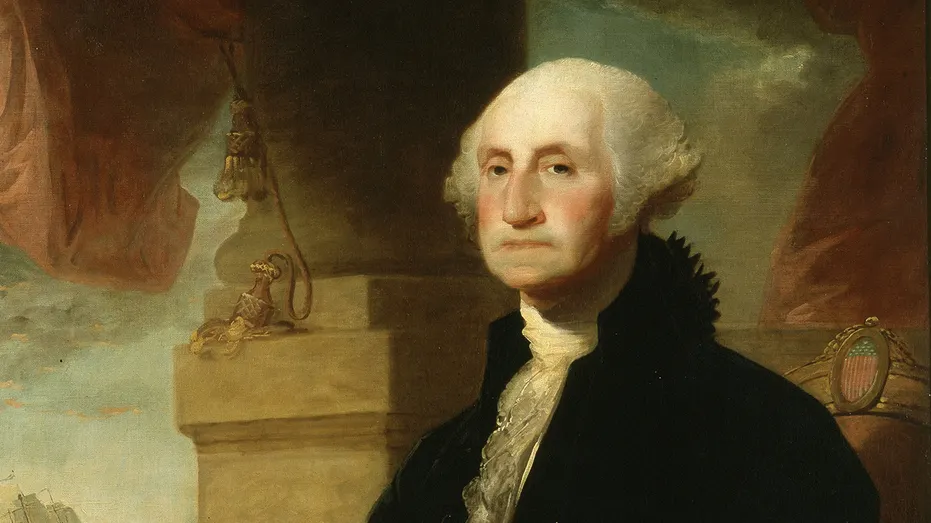
Earlier that year, George Washington, then 44, had led 19,000 soldiers to Manhattan, forcing a British withdrawal from Boston. However, in July, the formidable British military launched a full-scale assault on the colonies. British General William Howe arrived at Staten Island with a massive fleet of 400 ships and 32,000 well-trained troops.
Washington’s forces were outmaneuvered, outgunned, and outnumbered. On the eve of the Battle of Brooklyn, Washington delivered a stirring address to his troops, emphasizing the profound stakes of their struggle.
He declared, “The fate of unborn millions will now depend, under God, on the courage and conduct of this army. Our cruel and unrelenting enemy leaves us only the choice of brave resistance, or the most abject submission. We have, therefore, to resolve to conquer or die.”
Tragically, many did die. Following a fierce attack by Howe’s forces, Washington’s soldiers were compelled to retreat in disarray into Brooklyn Heights. With their backs to the East River, their escape was only made possible by a providential dense fog, which allowed Washington to ferry 9,000 troops across the river to Manhattan.
Despite this narrow escape, the subsequent months saw the Continental Army suffer defeats in White Plains and Manhattan. This forced a retreat into New Jersey, leading to a prolonged British occupation of New York City for the remainder of the war. Morale plummeted, enlistments expired, and soldiers began to desert, painting a grim picture for the nation’s future.
As we commemorate 250 years of American identity, it is crucial to remember the arduous journey. The Revolutionary War spanned six years of active combat, with the British often on the verge of victory. Even after the war’s conclusion, the young nation struggled. The initial attempt at governance under the Articles of Confederation proved disastrous, necessitating the Constitutional Convention of 1787.
Despite the unanimous election of Washington as president, the nascent republic was threatened by deep political divisions among its founders. These factions nearly tore the new nation apart.
Further challenges arose. The British waged war again in 1812, even occupying Washington, D.C., and burning the White House in 1814. The deep-seated issue of slavery persisted for nearly a century, ultimately culminating in a devastating Civil War that claimed an estimated 600,000 to 800,000 American lives.
Women were denied the right to vote until 1920, a stark contrast to the ideals of liberty proclaimed by Jefferson nearly 150 years prior. The late 19th and early 20th centuries were also marked by ethnic tensions, anarchist movements, assassinations, and the rise of communism, all of which imperiled the fragile republic.
Yet, this nation, under God, endured. George Washington led the new republic with integrity as its first president and then voluntarily relinquished power, setting a precedent for peaceful transitions. In the War of 1812, patriots fought the British to a stalemate, allowing the nation to move forward.
The Founders and their successors engaged in vigorous political debates but managed to find common ground, demonstrating the viability of a democratic system. President Abraham Lincoln reunified the nation, and his successors extended clemency to the defeated, fostering reconciliation.
Opposing ethnic groups assimilated, embodying the spirit of e pluribus unum. Anarchist and communist ideologies receded. When the world faced peril, millions of brave Americans were dispatched to combat the evils of fascism abroad.
The United States resisted colonialism and provided aid for the rebuilding of both former enemies and allies. The nation fostered the greatest entrepreneurial economy in history and made strides toward equal rights and opportunities for all its citizens.
Despite its imperfections, on the eve of its 250th anniversary, America remains a powerful beacon of freedom globally, home to some of the most prosperous, diverse, and innovative people in history.
Looking ahead, it is easy to succumb to pessimism. The nation faces significant challenges: political and cultural divisions, a substantial national debt, and ideological adversaries abroad who disregard human freedom. Many citizens seem to have forgotten the foundational principles of the republic and the sacrifices required to sustain them.
Technological advancements, while promising, also carry the potential for unprecedented disruption. In such times, it is understandable to feel like those soldiers trapped by the East River in Brooklyn, struggling to envision a future for the American experiment amidst the fog of current challenges.
However, those early patriots persevered, and so must we. The world depends on it. The United States represents history’s most ambitious and enduring experiment in self-governance and liberty. Rather than allowing its founding dreams to fade, previous generations pursued them with courage and at great cost, striving to bring them closer to realization.
The first 250 years of the nation’s history demonstrate not a decline, but the continuous progress of human liberty. It has been an imperfect nation, comprised of imperfect people, who nevertheless consistently found new ways to grow and aspire to its hallowed founding ideals.
This endeavor will necessitate a commitment to battling, much like the early patriots fought to advance this great country and its ideals. Many of these battles will be internal, requiring us to resist the urge to divide rather than unite, to confront new dangers with courage rather than retreat in fear, and to steadfastly uphold and advance our ideals rather than shrink from them.
These struggles will also manifest in our states, cities, and communities, where we face the daily challenge of remembering our national identity and looking forward to pioneering new expressions of “one nation, under God, indivisible,” even as the complexities of the coming centuries attempt to fracture us.
As we celebrate America’s 250th anniversary, we must believe that we are not witnessing the twilight of the revolution, but its nascent stages. In late August 1776, those beleaguered soldiers in Brooklyn likely feared the encroaching fog. Yet, that perceived peril became their pathway to hope. They defied the darkness and fought through.
The world is currently shrouded in fog. However, this has never deterred us before. New horizons await our next 250 years, provided we possess the courage and confidence to move forward, united and unafraid.