SouthernWorldwide.com – As America approaches its 250th anniversary next month, the nation finds itself at a pivotal moment of profound civic uncertainty. Many Americans sense that a fundamental element is being lost – a shared understanding of their collective identity and core values.
Universities are now engaged in debates questioning whether equality is a universal truth or merely a construct of its historical context. Public institutions appear hesitant to champion the natural-rights philosophy that originally underpinned the American Revolution. Even the notion of a unified national creed feels increasingly fragile.
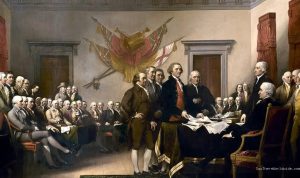
However, amidst this widespread cultural confusion, one Supreme Court justice has dedicated over three decades to advocating that the Declaration of Independence should be interpreted literally and that the nation’s survival hinges on its moral framework.
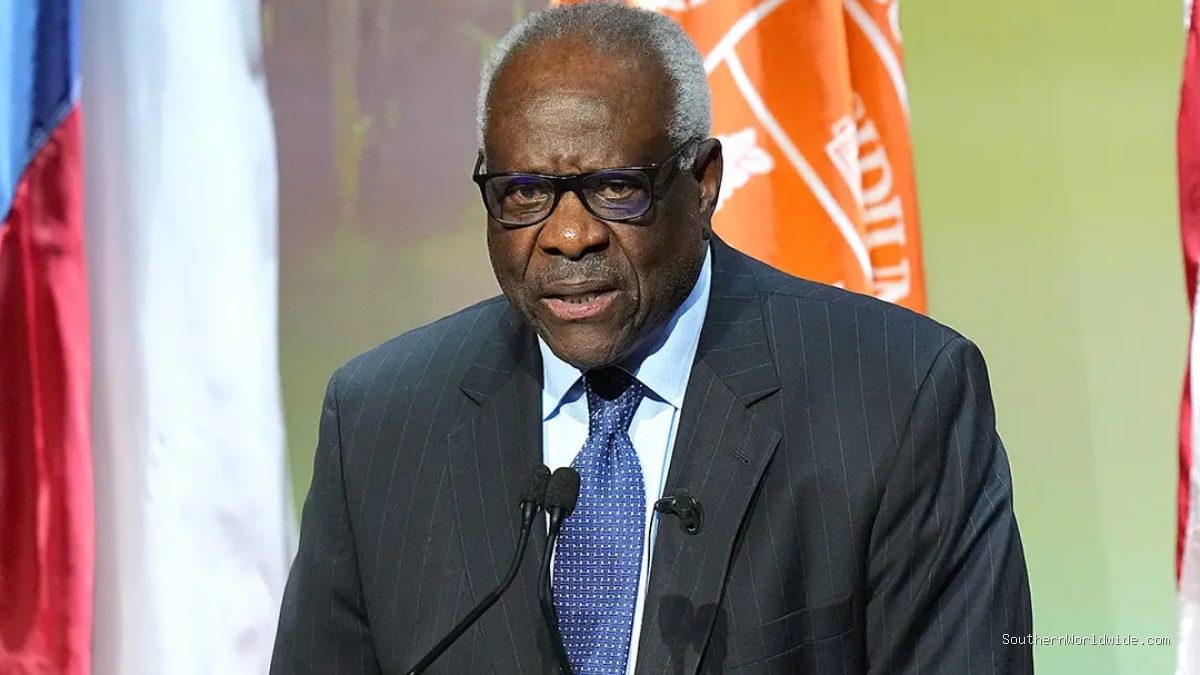
Justice Clarence Thomas, currently the second-longest-serving member of the Court, has consistently argued that the Declaration is far more than ceremonial rhetoric. He asserts it is the republic’s fundamental statement of political principle. While this perspective may be unpopular in certain elite circles, it accurately reflects how the Founding Fathers themselves understood the document.
Thomas Jefferson himself referred to the Declaration as “an expression of the American mind.” Abraham Lincoln famously likened it to the “apple of gold,” with the Constitution serving as the “frame of silver” designed to protect it. Figures like Frederick Douglass and Martin Luther King Jr. also treated its pronouncements as morally binding.
The Founders did not establish a pure democracy. They harbored concerns about what Elbridge Gerry termed “the excess of democracy” and deliberately constructed a constitutional republic to safeguard natural rights. The Constitution was conceived to protect these rights more effectively than the preceding Articles of Confederation. It functions as a means, not the ultimate end. The true objectives – the political philosophy that imbues the Constitution with its significance – are clearly articulated within the Declaration.
Equality and natural rights represent the foundational moral premises upon which the American experiment was built. The Constitution’s existence is predicated on securing these principles.
Justice Thomas has been the Court’s most steadfast adherent to this originalist methodology, particularly in cases concerning civil rights and equality. He interprets constitutional guarantees, such as equal protection and due process, through the lens of the Declaration’s moral commitments rather than being swayed by fluctuating political sentiments.
In a significant 1995 case involving government contracting, Thomas cautioned that racial paternalism “is at war with the principle of inherent equality that underlies and infuses our Constitution,” citing the Declaration’s equality clause as the governing principle. For more than thirty years, he has maintained that the Constitution cannot coexist with policies that discriminate against citizens based on race. His influential concurrence in the 2023 Harvard and UNC admissions cases powerfully reaffirmed this stance and significantly altered the contemporary legal discourse.
This is not about clinging to the past; it is about upholding constitutional integrity.
The Founders held the conviction that natural rights predate government, that equality is an intrinsic aspect of human nature, and that the government’s primary purpose is to secure these rights. Justice Thomas has dedicated over three decades to reminding the nation of these crucial foundational tenets.
His detractors often accuse him of adhering to an outdated vision of America. In reality, the opposite is true. His judicial philosophy is forward-looking precisely because it is grounded in the very principles that have historically enabled the United States to rectify its course.
At a time when discussions surrounding race, identity, and equality dominate national politics, Thomas’s clear articulation of the Declaration’s meaning is more relevant than ever.
The forthcoming anniversary presents a unique opportunity to reclaim that understanding. A nation that genuinely believes all individuals are created equal can be held accountable when it fails to live up to that ideal. Conversely, a nation that abandons this fundamental belief loses its standard for self-judgment.
The Declaration of Independence is not merely the nation’s birth certificate. It is the declaration of national purpose that has guided every significant movement for reform in American history. As the United States reflects on 250 years of independence, it is noteworthy that one justice has consistently remained focused on the principles that made the country’s existence possible.
If America seeks to rediscover its sense of purpose as it turns 250, it should begin by embracing the position that Clarence Thomas has consistently advocated: the timeless truths enshrined in the Declaration of Independence.