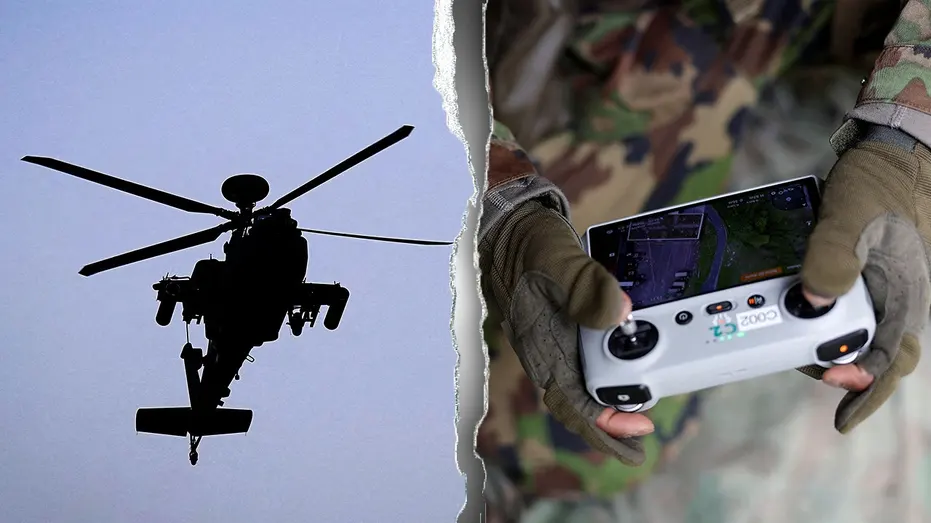
SouthernWorldwide.com – The U.S. Army is undergoing a significant strategic shift in its aviation and missile defense, driven by the evolving nature of warfare observed in recent conflicts. This transformation is leading to a re-evaluation of helicopter programs and the costly Patriot interceptor systems.
This strategic pivot is evident in the Army’s fiscal year 2027 budget request, which proposes substantial cuts to helicopter procurement. Funding for Apache helicopters is set to drastically decrease from approximately $361.7 million to about $1.5 million. Similarly, Black Hawk procurement funding will be reduced from around $913 million to roughly $39.3 million, and Chinook procurement will see a drop from approximately $629 million to about $210 million.
Concurrently, the Army is significantly increasing its investment in drones, autonomous systems, and affordable battlefield technologies. This move reflects a broader trend towards leveraging unmanned systems and artificial intelligence on the modern battlefield.
The transformation extends beyond just procurement. The Army has already announced plans to reduce its active-duty aviation personnel by approximately 6,500 positions over fiscal years 2026 and 2027. This reduction will impact pilots, flight crews, and maintenance personnel, as resources are redirected towards unmanned systems and drone warfare initiatives.
It remains to be seen whether these procurement reductions will lead to a smaller overall aviation fleet, an extension of the service life for existing aircraft, or delays in the planned replacement schedules for current platforms.
Army leaders have indicated that lessons learned from recent battlefields are directly influencing budgetary decisions. Funds are being reallocated from traditional aviation programs to prioritize drones, autonomous capabilities, and mass-produced, low-cost systems.
“Absolutely, as we look across the aviation portfolio… we’re re-looking that,” stated Assistant Army Secretary Brent Ingraham during a Pentagon media roundtable. This indicates a comprehensive review of all aviation assets and their future roles.
Ingraham further explained that the Army is reassessing the integration of traditional manned aircraft with increasingly capable unmanned systems. These unmanned platforms are now able to perform missions that were once exclusively the domain of helicopters.
The proposed cuts to aviation programs have already raised concerns on Capitol Hill. During a Senate Armed Services Committee hearing on May 12, Senator Mark Kelly expressed apprehension, noting the budget request included “zero H-64 Apaches, zero Chinook Block IIs, and one UH-60 Black Hawk.” He argued that the service was divesting critical capabilities without a clear validation of their replacements.
Representative Rosa DeLauro, the top Democrat on the House Appropriations Committee, questioned War Secretary Pete Hegseth about the impact of these cuts. “Your department’s budget request cuts over $5 billion from the industrial base in the aviation sector alone, effectively shutting down all current Army aviation platforms,” she pressed during a May 12 hearing. She sought to understand how reducing procurement for these platforms strengthens, rather than weakens, the aviation industrial base.
Hegseth acknowledged that the Pentagon was indeed reconsidering certain aspects of the plan. He admitted that while some elements of the Army Transformation Initiative are beneficial, others require further review.
Hegseth assured lawmakers that Pentagon leaders are focused on preventing the creation of “aviation capability gaps” during the transition to more unmanned systems and next-generation technologies.
‘EYES IN THE SKY’: ARMY DRONE EXPERT EXPLAINS US STRATEGY ON INNOVATION AS GLOBAL CONFLICT LOOMS
Army leaders emphasized that the rapid proliferation of affordable drones is compelling the service to rethink its procurement and deployment strategies for aircraft, missile defenses, and battlefield technologies.
“We know we don’t want to continue to use a Patriot missile to shoot down a cheap drone,” Ingraham remarked. “You’ve got to get on the right side of the cost curve.” This statement highlights the economic imperative driving the strategic shift.
The urgency of this concern has been amplified by the extensive use of expensive missile defense interceptors by the U.S. and its allies during recent conflicts in the Middle East. This has led to concerns about dwindling stockpiles and the long-term sustainability of relying on multi-million-dollar defensive systems against low-cost drones and missiles.
Officials also revealed the development of a new allied drone and counter-drone procurement marketplace. This initiative aims to expedite foreign military sales and standardize interoperable systems among partner nations. The effort has been likened to “an Amazon for war” by a senior official.
This marketplace is expected to be accessible to approximately 25 U.S. allies and partners globally. Initially, it will focus on drone and counter-drone systems, with the potential to expand to other capabilities and countries in the future.
For the time being, the platform will exclusively allow allies to purchase U.S.-made capabilities.
US DRAINS CRITICAL MISSILE STOCKPILES IN IRAN WAR AS YEARSLONG REBUILD LOOMS
Read more : Three Sisters Discovered Deceased in Ocean at Popular Tourist Beach Amidst Police Investigation
In parallel, the Army is initiating a rapid competition to develop low-cost interceptors specifically designed to counter drones and cruise missiles. The goal is to achieve this without depleting the stocks of expensive Patriot missile systems.
Ingraham indicated that companies will have approximately 120 days from an upcoming industry event to demonstrate their technologies. This includes components like rocket motors and seekers, as well as fully integrated interceptor concepts.
“Even if you don’t have it all on the ground… bring it,” he urged potential participants, emphasizing a willingness to consider nascent technologies.
This comprehensive transformation effort stems from a growing concern within the Pentagon that cheap drones, autonomous systems, and mass-produced weaponry are fundamentally altering the economics and survivability assumptions of modern warfare. The conflicts in Ukraine and the Middle East have particularly exposed vulnerabilities in traditional armored and aviation-centric battlefield concepts.
Army leaders increasingly suggest that future conflicts will depend less on a limited number of high-cost, manned platforms. Instead, the emphasis will be on fielding large quantities of more affordable, networked, and rapidly replaceable systems capable of operating effectively on drone-saturated battlefields.
Army Secretary Daniel Driscoll highlighted during the roundtable that the service is working to overhaul what is perceived as decades of flawed acquisition practices. These practices have historically made the Army slow to adapt to rapidly evolving battlefield conditions.
“How do we dig down deep into the system to change the broken processes that have led to so many bad outcomes over the last 30 years?” Driscoll questioned, signaling a deep-seated desire for reform.
Driscoll further stated that the Army had, in some respects, lost Congress’s trust due to persistent acquisition failures and budget overruns over the past three decades.
“The United States Army had in some ways lost Congress’s trust over the last 30 years that we could do big new projects, keep them on time, keep them on budget,” he admitted.
He cited the Army’s now-canceled M10 Booker armored vehicle program as an example of the type of procurement failure that current leadership is determined to avoid repeating.
“When we go to Congress and say, ‘Hey, trust us to develop a new platform. This one will not turn out like the Booker tank,’” Driscoll explained, underscoring the need for a proven track record of successful acquisition.
Driscoll argued that the Army is already actively working to field new capabilities on significantly accelerated timelines. These timelines are more akin to the wartime adaptation cycles observed in Ukraine rather than traditional Pentagon acquisition schedules.
“When Operation Epic Fury kicked off, we were able to on day five go start the process to purchase 13,000 Merops counter-drone interceptors,” Driscoll recounted, illustrating the speed of recent procurement efforts.
“By day 10, we had contracted for something we had never purchased before,” he added. “They were starting to flow into theater in the thousands by day 20.” This rapid deployment showcases a newfound agility.
Army officials also indicated that the service is prioritizing improvements in how weapon systems, sensors, and battlefield networks communicate with each other. This focus is informed by Ukraine’s demonstrated ability to quickly integrate both commercial and military technologies during the ongoing conflict.
“The Ukrainians were highlighting to us how their open architecture system allowed information to pass between nearly all of their sensors and radars,” Driscoll explained. “That empowered so many things that they could do that we just can’t do yet.” This points to a critical need for enhanced interoperability.
“At this exact moment at Fort Carson, there are 450 developers and programmers jailbreaking all of our equipment,” he revealed. This effort aims to unlock new functionalities and improve integration across existing systems.
“I’m cautiously optimistic within a month from now we will have jailbroken literally hundreds of pieces of equipment,” Driscoll concluded, expressing confidence in the rapid progress being made.