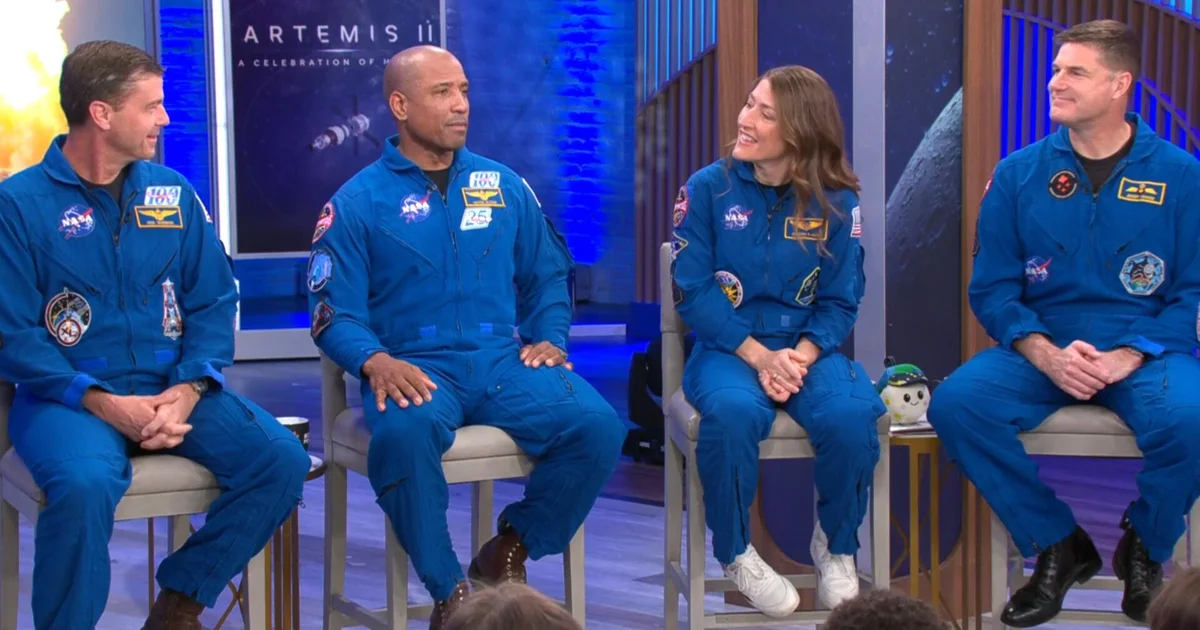
SouthernWorldwide.com – The Artemis II mission, a significant step in NASA’s journey back to the Moon, encountered a minor hiccup during its historic flight: a toilet malfunction. The crew, however, has humorously addressed this issue, shedding light on the realities of space travel.
Astronaut Victor Glover, a key member of the Artemis II crew, clarified the situation during an appearance on “CBS Mornings.” He explained that the toilet itself did not fail, but rather the system responsible for venting the waste tank experienced an issue.
This detail is crucial, as it highlights the complex engineering involved in maintaining a habitable environment in space. Even seemingly simple functions like waste management require sophisticated systems that can operate flawlessly under extreme conditions.
Glover’s explanation aimed to demystify the incident, emphasizing the resilience and problem-solving capabilities of the crew and the spacecraft’s design. Space missions are inherently challenging, and encountering and resolving such issues is part of the process.
The Artemis II mission is a crewed flight that will travel around the Moon and return to Earth. It serves as a critical test for the Orion spacecraft and the Space Launch System rocket, paving the way for future lunar missions, including landings.
The crew consists of four astronauts: Reid Wiseman, Victor Glover, Christina Koch, and Canadian Space Agency astronaut Jeremy Hansen. Their journey marks the first time humans have traveled to the vicinity of the Moon since the Apollo program ended in 1972.
While the toilet issue was resolved, it serves as a reminder of the unique challenges astronauts face. Life in space requires constant adaptation and innovation, from managing waste to ensuring the psychological well-being of the crew.
The Artemis program aims to establish a sustainable human presence on the Moon and use it as a stepping stone for future missions to Mars. The success of Artemis II is vital for validating the technologies and procedures necessary for these ambitious goals.
Glover’s candid explanation on “CBS Mornings” also offered a glimpse into the human side of space exploration. Astronauts, despite their rigorous training and extraordinary achievements, are still people who deal with everyday challenges, albeit in a much more extraordinary setting.
Read more : Cruise Ship Hantavirus Outbreak Timeline
The crew’s ability to discuss such incidents with a degree of levity underscores their professionalism and the supportive environment fostered within NASA. It also helps to educate the public about the realities of spaceflight, moving beyond the purely heroic narrative.
The Artemis II mission is not just about technological advancement; it’s also about pushing the boundaries of human endurance and ingenuity. The crew’s experiences, including the minor toilet issue, contribute valuable data and insights for future endeavors.
As NASA continues its work on the Artemis program, lessons learned from missions like Artemis II will be invaluable. These lessons encompass everything from the performance of complex systems to the everyday needs of astronauts in a zero-gravity environment.
The successful completion of the Artemis II mission will be a testament to the dedication and expertise of countless individuals at NASA and its international partners. It represents a significant leap forward in humanity’s quest to explore the cosmos.
The crew’s ability to communicate openly about their experiences, including the toilet malfunction, helps to build trust and understanding with the public. It humanizes the mission and makes space exploration more relatable.
Ultimately, the Artemis II mission, despite its small plumbing problem, is a monumental achievement. It signifies a new era of space exploration, bringing humanity closer to the Moon and, eventually, to Mars.
The insights gained from the Artemis II crew’s journey, including their encounters with the intricacies of space sanitation, will undoubtedly inform the design and operation of future spacecraft and long-duration missions.
The public’s fascination with space travel often centers on the grand scale of exploration, but it’s these relatable, everyday challenges that truly highlight the human element and the remarkable adaptability of those who venture beyond Earth.
The Artemis II crew’s mission continues to be a source of inspiration, demonstrating that even with minor setbacks, the pursuit of scientific discovery and human advancement in space remains a powerful driving force.