SouthernWorldwide.com – The creation of a $1.7 billion compensation fund, intended to reimburse individuals allegedly victimized by government overreach, has ignited significant controversy and skepticism within Congress, making its approval a far more arduous task than initially anticipated.
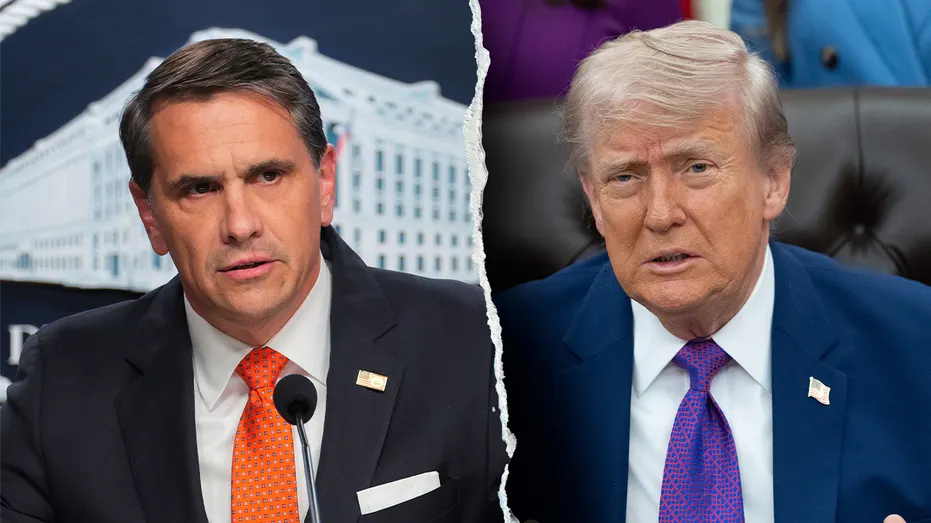
Acting Attorney General Todd Blanche found himself in an unprecedented situation, appearing before a congressional panel to request funds for his department. This was a departure from the norm, as cabinet secretaries routinely present their budget requests to lawmakers.
However, in a peculiar turn of events, it appears Blanche did not even need to formally ask for the most contentious federal funds in years. The compensation fund had seemingly already been approved, a development that has left many in Congress bewildered.
The Justice Department, under Blanche’s leadership, announced the establishment of this multi-billion dollar fund. The stated purpose is to compensate those whom Republicans identify as victims of government weaponization. The criteria for who will receive these funds remain unclear, and the origin of this substantial sum is even murkier.
APOLOGIES AND CASH HEADED TO ALLEGED ‘WEAPONIZATION’ VICTIMS IN BILLION-DOLLAR TRUMP SETTLEMENT
The genesis of this fund is tied to a lawsuit initiated by President Donald Trump against his own IRS, following the leak of his tax returns and those of hundreds of other Americans. Subsequently, the Department of Justice announced what is effectively a settlement with itself.
“Per the settlement, plaintiffs will receive a formal apology but no monetary payment or damages of any kind. They have agreed, in exchange for the creation of this fund, to drop their pending lawsuit with prejudice, and also withdraw two administrative claims, including for damages resulting from the unlawful raid of Mar-a-Lago and the Russia-collusion hoax,” read the Department of Justice statement.
The fund is valued at $1.776 billion, a figure that conspicuously echoes the year 1776, a nod to American independence.
REPUBLICANS RECOIL AS TRUMP’S BILLION-DOLLAR DOJ ‘SLUSH FUND’ FOR ALLIES THREATENS ICE, BORDER PATROL PLAN
While the former president himself is reportedly ineligible to receive funds from this compensation pool, the mechanism could potentially benefit his political allies and donors.
The establishment of this fund has occurred without any prior consultation or input from Congress, a fact that has deeply troubled many lawmakers.
“I realize it’s a lot of money,” stated Senator John Kennedy, R-La. “I want to understand where the money comes from. Do we find it in the budget? Do we have to borrow it? There’s just a lot of unanswered questions.”
DAVID MARCUS: HE BARELY SURVIVED BIDEN LAWFARE, AND NOW HE DESERVES TO GET PAID
“What I want to know is how the fund is created and what its purpose is,” added Senator Jerry Moran, R-Kan.
“And (I want to know) the legality of creating a fund that Congress hasn’t had anything to say about.”
During Operation Arctic Frost, the government collected phone information from several Republican lawmakers in the aftermath of the January 6th riot. This included records belonging to Senator Bill Hagerty, R-Tenn., who, however, defended the creation of the fund.
‘COMPLETE FAILURE’: GOVERNMENT SHUTDOWN CRISIS THREATENS CAPITOL HILL AS TRUMP PLANS POLICY OVERHAUL
“What we ought to be talking about is the reasons for the compensation. Weaponization of government that took place under former President Joe Biden was an absolute disgrace,” Senator Hagerty asserted.
Blanche’s prior role as President Trump’s personal legal counsel has led lawmakers to argue that he has reverted to that capacity by unilaterally creating the compensation fund.
“Mr. Attorney General, you are acting today like the president’s personal attorney. And that’s the whole problem,” declared Senator Chris Van Hollen, D-Md.
CONGRESSIONAL REPUBLICANS FACE BRUISING BATTLE TO AVOID GOVERNMENT SHUTDOWN
“You’re a very gifted lawyer. But from my perspective, you have very little faith to the Constitution and the people of America. And you’re the president’s consigliere,” Senator Jack Reed, D-R.I., further commented.
The eligibility criteria for compensation have become a focal point of questioning among lawmakers.
“Will individuals who assaulted Capitol Hill police officers be eligible for this fund?” inquired Van Hollen.
DEMS DEMAND TRUMP RESUME CASH FLOW AS THEY FINALLY GET LEVERAGE IN RACE TO PREVENT SHUTDOWN
“Anybody in this country is eligible to apply if they believe they are a victim of weaponization,” Blanche responded.
This broad eligibility has raised concerns across the political spectrum. The compensation fund controversy quickly became entangled with a major bill on the Senate floor.
Congressional Republicans were attempting to pass legislation to address funding for Immigration and Customs Enforcement (ICE) and Border Patrol. Their strategy involved utilizing a special legislative process known as budget reconciliation to circumvent a potential Democratic filibuster.
SENATE GOP LAUNCHES ALL-NIGHT VOTE-A-RAMA TO FUND ICE, BORDER PATROL THROUGH END OF TRUMP’S TERM
The advantage of reconciliation is that it allows for a bill to pass with a simple majority (51 votes), bypassing the need for 60 votes to overcome a filibuster. However, the drawback is that it triggers a “vote-a-rama,” an extended process where senators can propose numerous amendments on a wide range of topics, potentially lasting an entire day.
Read more : Rashford Addresses Man United 'Snub' Amidst England Call-Up
Republicans expressed alarm that Democrats might force them to vote on contentious amendments related to the compensation fund. Many Republicans also intended to introduce their own amendments to limit the fund, thereby insulating themselves from potential political fallout.
This complex political landscape proved to be too much for Senate Republicans.
DEMOCRATS’ LAST-MINUTE MOVE TO BLOCK GOP FUNDING PLAN SENDS LAWMAKERS HOME EARLY
They summoned Blanche to Capitol Hill for an explanation of the fund, but the meeting reportedly did not go well. Sources indicate that Senators Chuck Grassley, R-Iowa, and Tom Cotton, R-Ark., were direct in their criticisms of Blanche. Senator Thom Tillis, R-N.C., was overheard stating, “And I’m not voting for it!” as he passed by the meeting location.
By early afternoon, Republican leadership had decided to shelve the bill to fund ICE and Customs and Border Protection (CBP) and sent lawmakers home for the Memorial Day recess. This decision marked a significant legislative setback for President Trump’s second term.
“I just don’t know how this puppy dog will work,” remarked Kennedy. “I think there were six or seven people who are going to vote no.”
SENATE REPUBLICANS RACE TO FUND ICE, CBP WITHOUT DEMOCRATS AS SHUTDOWN DRAGS
Despite this setback, Republicans had been close to resolving the impasse on funding for ICE and Border Patrol.
“The sole reason we are here today is because Democrats refused to fund law enforcement at the Department of Homeland Security,” stated Senate Majority Leader John Thune, R-S.D.
The debate over funding for the president’s initiatives had already been challenging for Senate Republicans. However, the compensation fund transformed the reconciliation process into a far more complicated and contentious affair.
CONGRESS MELTS DOWN: MEMBERS UNLEASH PERSONAL ATTACKS AFTER WEEKS OF SHUTDOWN DRAMA
In essence, Republicans inadvertently undermined their own legislative efforts.
“There are a lot of questions about it. I have Republican colleagues who have concerns about who can receive funding from that fund,” said Senator Jim Banks, R-Ind.
Banks did note, however, that “every single Republican who was on the ballot like I was in the ‘24 cycle talked about stopping the weaponization of government.”
HOUSE GOP TENSIONS ERUPT AS REPUBLICANS TURN ON EACH OTHER HEADING INTO YEAR’S END
Democrats observed as Republicans reacted with apprehension to Blanche’s statements.
“I think my Republican colleagues have reached their limit,” commented Senator Peter Welch, D-Vt.
Thune described the compensation fund as making “everything way harder than it should be” and emphasized that the White House should have “consulted” with Congressional Republicans prior to its establishment. This deadlock led Thune and House Speaker Mike Johnson, R-La., to adjourn Congress until early June.
OUT OF POWER: DEMOCRATS DISORIENTED IN FIGHT AGAINST TRUMP AGENDA
“Republicans are so divided, so dysfunctional, so disorganized, that they are fleeing Washington. Their majority can’t melt down fast enough,” declared Senate Minority Leader Chuck Schumer, D-N.Y.
Nevertheless, some allies of the former president defended the compensation fund.
“I feel comfortable that those who have been wronged by their government should have some sort of redress,” stated Senator Eric Schmidt, R-Mo.
Despite the former president’s recent political successes against some Republican opponents, he faced legislative opposition from Republicans on this matter.
“We should have full review of what we’re funding,” asserted Representative Ryan Zinke, R-Mont. “Congress has our obligation.”
While President Trump may see his preferred personnel in Congress next year, with Senators Bill Cassidy, R-La., and Representative Thomas Massie, R-Ky., potentially on the way out, securing policy victories may be delayed until 2027 when his favored candidates are in place.
This situation has led some lawmakers to question the feasibility of passing significant legislation for the remainder of the year. The path forward for legislative action is now perceived as “way harder than it should be.”