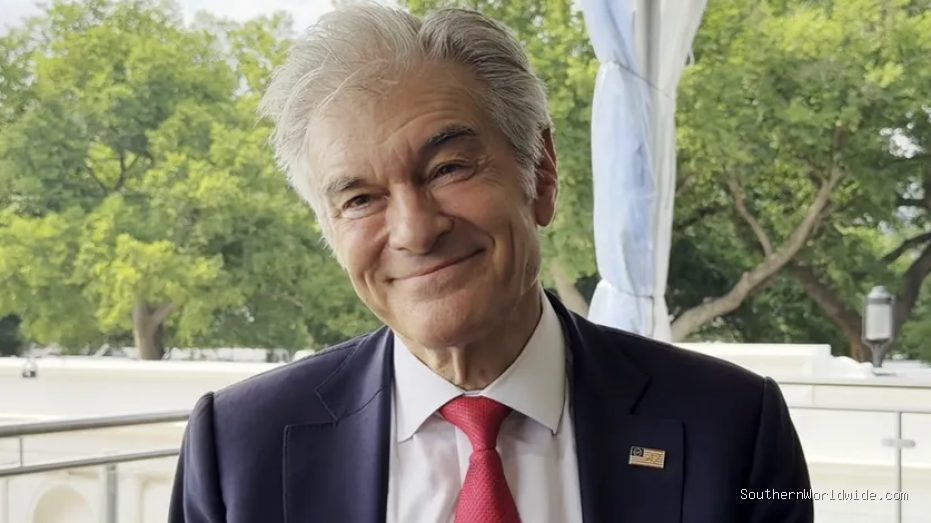
SouthernWorldwide.com – Medicare fraud is a significant issue, costing billions annually and posing a threat to personal information, according to Dr. Oz, who serves as the administrator for the Centers for Medicare & Medicaid Services (CMS). He emphasized that combating this fraud could drastically extend the viability of Medicare’s trust fund.
Dr. Oz stated that if he had to prioritize one area to make healthcare more affordable in America, it would be to address health fraud and the associated waste and abuse.
He estimated the annual cost of Medicare fraud to be approximately $100 billion. This vast sum represents a considerable drain on taxpayer money.
The U.S. Government Accountability Office defines Medicare fraud in several ways. This includes billing for services that were never rendered to patients.
It also encompasses overcharging for necessary medical equipment. Furthermore, fraud can involve the misuse of stolen patient or doctor information.
Performing unnecessary medical procedures on beneficiaries also falls under the umbrella of Medicare fraud. These fraudulent activities have serious consequences for both the system and individuals.
During the Trump administration, efforts to combat fraud were intensified. The CMS reported significant program integrity savings as a result of these efforts.
In 2025, the CMS reported $41.9 billion in Medicare program integrity savings. This marked a substantial increase from the $26.3 billion saved in 2024.
This increase of 59% highlights the growing success in recovering funds lost to fraudulent activities.
Dr. Oz warned that Medicare fraud not only impacts the federal budget but also has direct negative consequences for seniors.
These consequences include exposing seniors to identity theft. It can also lead to them receiving unnecessary medical care, which they do not need.
Fraudulent activities can also result in higher Medicare premiums for beneficiaries. Additionally, it can reduce their access to legitimate healthcare services.
The administrator stressed that removing corruption from the healthcare system would have the most significant positive impact on seniors.
This is because a large portion of healthcare fraud is specifically perpetrated against this demographic.
Dr. Oz illustrated the severity of the issue by comparing a Medicare beneficiary number to a credit card.
He explained that scammers trick seniors into divulging their Medicare beneficiary numbers. Once obtained, these numbers can be exploited for various illegitimate purposes.
Scammers might pretend to send drugs that the senior has not requested or does not need.
They could also bill for services like wheelchairs that the beneficiary never required.
Fraudulent billing might also occur for services the senior never asked for or from which they derive no benefit.
To protect themselves, Dr. Oz offered crucial advice for seniors. The foremost rule is to never share their Medicare beneficiary number with anyone.
He also advised seniors not to answer phone calls from unknown individuals. It is equally important not to provide personal information over the phone.
Dr. Oz reiterated that these scammers are actively contacting seniors and employing deceptive tactics.
Once they acquire essential personal information, they can use it for theft without the victim’s immediate knowledge.
The goal, he emphasized, is to safeguard those who rely most heavily on these programs.
This protection is achieved by preventing unscrupulous individuals from corrupting the systems designed to help vulnerable individuals.
He believes that eliminating fraud could effectively double the lifespan of Medicare’s trust fund.
This extension would ensure the program’s availability for future generations, including the beneficiaries’ children and grandchildren.
Dr. Oz acknowledged that concerns about Medicare’s solvency due to fraud are valid for those nearing retirement.
However, he projected that removing fraudulent activities could significantly bolster the program’s financial stability.
This would allow current and future beneficiaries to continue benefiting from this vital safety net program.