SouthernWorldwide.com – Hamas announced on Monday that it would dissolve the emergency committee that oversees Gaza’s civilian government. This move could potentially pave the way for a new U.S.-backed administration to assume control of civilian affairs.
The proposed body, known as the National Committee for the Administration of Gaza (NCAG), is an initiative backed by the United States. Its purpose is to manage civilian matters in Gaza following the ongoing conflict.
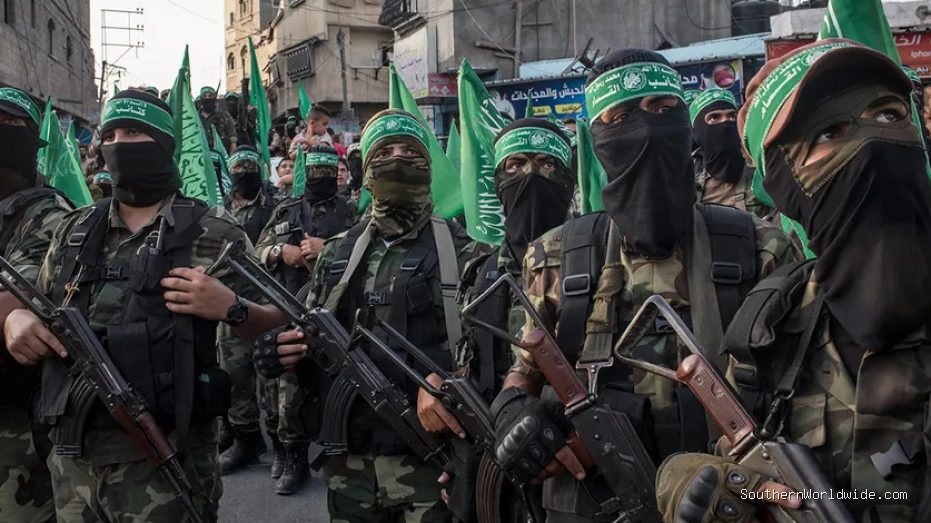
Hamas, designated as a foreign terrorist organization by the U.S., has been governing Gaza since it seized control in 2007. The group was responsible for the October 7, 2023, attack on Israel, which initiated the current war. Israel has made it clear that Hamas will not be allowed to hold any governing or military position in Gaza after the conflict.
This announcement could therefore serve as a crucial test for President Donald Trump’s proposed framework for Gaza and his broader diplomatic efforts in the region. A genuine transfer of power might help facilitate the establishment of a post-war administration. However, critics in Israel and elsewhere suggest that Hamas is offering to relinquish the responsibilities of civilian governance while maintaining its weaponry, security forces, and actual influence on the ground.
The Trump-led Board of Peace responded with caution, stating that its evaluation would be “guided by actions, not promises.” The technocratic committee, which is currently operating from outside Gaza, has indicated its readiness to begin operations once conditions permit.
However, the announcement did not include a commitment from Hamas to disarm. This is a primary demand from Israel and a central component of Trump’s post-war plan.
Alaa Abo Naddi, a teacher and political activist from Gaza, commented that the committee Hamas is dissolving was never the true source of its authority.
“I believe this is simply an attempt by Hamas to buy time,” Abo Naddi stated. “The real question has always been whether Hamas is willing to give up its weapons and dismantle the armed groups and militias under its control.”
He further explained that Gaza’s civilian officials have historically operated without independent authority and remained subservient to Hamas’s security apparatus.
“In reality, even a low-ranking Hamas security officer can overrule them or have them arrested,” he said. “As long as Hamas retains its arms, this looks like an attempt to preserve its control and gain more time.”
Hadeel Oueis, the editor-in-chief of the pan-Arab media outlet Jusoor News, also described the announcement as a “performative step.” She suggested it was likely influenced by one of Hamas’s regional allies.
Oueis believes the move was intended to signal to Trump that Hamas had met its obligations, and that Israel was now obstructing the next phase of his plan.
She pointed out that technical staff are expected to remain in their positions during the transition. This, she argued, means Hamas would continue to be the de facto authority unless its security and military structures were dismantled.
Michael Milshtein, who heads the Palestinian Studies Forum at Tel Aviv University’s Moshe Dayan Center, also characterized the dissolution as largely symbolic. However, he noted that its timing might indicate a broader diplomatic initiative.
Milshtein indicated that Egypt, Qatar, and Turkey have been engaged in discussions with Hamas to forge a compromise that could advance the stalled post-war arrangements. This is particularly relevant to the issue of disarmament.
Instead of demanding the immediate and complete surrender of Hamas’s weapons, he suggested that mediators might be advocating for a gradual and partial process that Hamas would be willing to accept.
He posited that Hamas has effectively shifted the responsibility to Israel and can now claim to have agreed to relinquish formal governmental control.
Israeli Foreign Minister Gideon Sa’ar rejected this distinction on Tuesday. He accused Hamas of attempting to replicate the model employed by Hezbollah in Lebanon, where an armed organization maintains military supremacy while civilian institutions manage governmental services.
“They don’t care if others collect the garbage, provide municipal services and administer civilian affairs, if Hamas will remain the dominant military force,” Sa’ar stated during a meeting with German Foreign Minister Johann Wadephul.
Sa’ar reiterated Israel’s insistence on the “disarmament of Hamas and all other terrorist organizations in the Gaza Strip, and its full demilitarization.”
Wadephul supported this stance, asserting that Hamas must relinquish both its weapons and its de facto control over Gaza.
The United Nations also offered a cautiously optimistic response.
U.N. spokesperson Stéphane Dujarric confirmed that the organization had taken note of Hamas’s announcement regarding the dissolution of the Government Emergency Committee and the proposed transfer of administrative responsibilities to the National Committee for the Administration of Gaza.
“We welcome any step that contributes to the implementation of the ceasefire agreement and advances the objectives reflected in relevant Security Council resolutions, including the full implementation of the ceasefire, the protection of civilians, and the unhindered provision of humanitarian aid,” Dujarric said.
He added that the U.N. continues to support “efforts toward unified Palestinian governance under the Palestinian Authority.”
Milshtein concluded that the true test will be whether the National Committee for the Administration of Gaza is permitted to operate within Gaza, function independently, and exercise genuine authority. This must be coupled with Hamas relinquishing not only its civilian role but also its security and military control.