SouthernWorldwide.com – A suspected hantavirus outbreak on a cruise ship in the Atlantic Ocean has sparked concerns about how the rare and often fatal illness could have spread among passengers and crew.
The situation has raised questions about whether the virus could continue to infect the approximately 150 people currently stranded on board, following three confirmed deaths.
While hantavirus is typically transmitted to humans through contact with contaminated rodent waste, health officials acknowledge the possibility of human-to-human transmission, albeit on a very limited scale.
This limited human-to-human spread may offer a partial explanation for the events on the ship, according to Maria Van Kerkhove, the World Health Organization’s director of epidemic and pandemic preparedness and prevention.
“We do believe that there may be some human-to-human transmission that’s happening among the really close contacts, the husband and wife, people who’ve shared cabins,” Van Kerkhove stated at a press conference.
She was referring to a couple who died from suspected hantavirus after spending time on the MV Hondius, a Dutch vessel that became the epicenter of the apparent outbreak during a weekslong polar expedition.
An investigation, quarantine protocols, and contact tracing efforts are underway to identify the origins of the suspected outbreak and prevent further spread. However, the exact emergence of the virus remains unclear, according to the WHO.
Van Kerkhove suggested that the couple might have contracted the virus while exploring wildlife in Argentina before boarding the cruise. The UN health agency generally assumes the virus originated from outside the ship.
“The cruise did stop at many different islands up the coast of Africa, and, again, seeing a lot of different wildlife on those islands. There are birds. Some islands have a lot of rodents. Others don’t,” Van Kerkhove explained.
“So, there could be some source of infection on the islands as well for some of the other suspected cases.”
One known hantavirus strain spreads between people
Hantaviruses are a group of diseases that can cause severe respiratory symptoms and even death in people globally, as per the U.S. Centers for Disease Control and Prevention.
Humans typically contract the virus by inhaling airborne particles from rodent droppings, urine, or saliva. However, the WHO noted in a statement about the current outbreak that there have been documented instances of human-to-human transmission of the Andes virus, a specific hantavirus strain responsible for most cases in South America.
“This cruise ship took off from Argentina, which is why we’re wondering, is it the usual kind [of hantavirus], or is it a kind that can be transmitted person-to-person?” questioned CBS News medical correspondent Dr. Céline Gounder.
The largest outbreak of the Andes strain occurred in Argentina in 2018, resulting in 34 cases and 11 deaths, Gounder added. She clarified that human-to-human transmission requires “prolonged close contact” and is “not a pandemic kind of virus.”
Gounder also emphasized that hantavirus remains rare, with fewer than 900 cases reported in the U.S. over a 30-year period.
Read more: Michigan Teacher Steps In During Talent Show Hiccup
Oceanwide Expeditions, the cruise operator, reported that a 70-year-old Dutch man died on board on April 11. His 69-year-old wife passed away approximately two weeks later in South Africa after disembarking. South Africa’s Health Ministry confirmed her blood tested positive for hantavirus.
A British passenger, evacuated from the Hondius to South Africa on April 27, also tested positive and is in critical condition, according to authorities.
There are at least four more suspected cases, including a fatal infection in a German passenger whose body remained on the ship, Van Kerkhove stated. At least three other individuals were ill, according to Oceanwide Expeditions and Ann Lindstrand, a WHO representative for Cape Verde.
On Monday, Cape Verde dispatched medical teams to assist the Hondius crew but prevented the ship from docking due to health concerns.
Lindstrand informed CBS News that officials strongly believe the three sick individuals contracted hantavirus and that all would be evacuated by helicopter on Tuesday.
She concurred that the virus was likely acquired off the ship and confirmed that no rodents were found aboard the Hondius, noting that traps would have indicated their presence.
Lindstrand aimed to alleviate fears regarding cruise ships, which are rarely associated with hantavirus, unlike other outbreaks such as norovirus.
When asked about the pandemic threat level of hantavirus, she stated, “It’s not.”
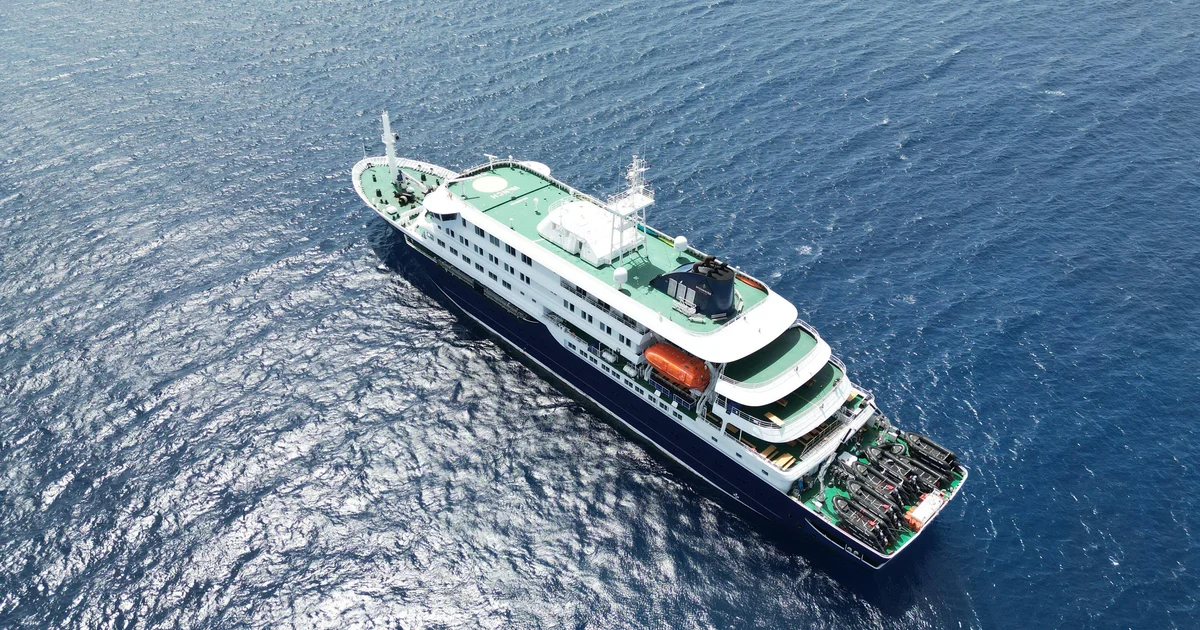
Aerial photo of the cruise ship MV Hondius off the port of Praia, the capital of Cape Verde, on May 4, 2026.
AFP via Getty Images
“We hear you”
The ship was scheduled to proceed towards Spain’s Canary Islands following the evacuation of sick passengers. The Spanish Ministry of Health informed CBS News that its epidemiologists would conduct a review of the ship to assess the condition of those on board, identify symptomatic individuals, and determine high-risk and low-risk contacts.
This assessment would inform decisions regarding repatriation processes and the ship’s route.
Passengers and crew could potentially remain on board for up to eight weeks, given the virus’s incubation period. However, Lindstrand acknowledged the significant psychological impact of such distressing circumstances.
One passenger, travel blogger Jake Rosmarin, shared his experience in an emotional social media video on Monday, stating, “There’s a lot of uncertainty, and that’s the hardest part. All we want right now is to feel safe, to have clarity and to get home.”
Officials recognized the fear experienced by those on the ship.
“We have heard from quite a few people on the boat,” Van Kerkhove stated. “We just want you to know we are working with the ship’s operators. We are working with the countries where you are from. We hear you. We know that you are scared.”