SouthernWorldwide.com – Mihrigul Tursun initially speaks with striking composure.
Seated in Washington, dressed in a neatly pressed blue suit, the 35-year-old Uyghur mother answers questions softly, almost hesitantly. However, once the memories surface, they rush in with vivid and painful detail, as if the years separating her from China’s detention system have vanished.
Her story unfolds relentlessly, one memory triggering another: the underground cells, the interrogations, the sounds of women screaming at night, the stench of overcrowded prison rooms, and the sight of her infant son’s lifeless body in her arms as she desperately tried to revive him.
For Tursun, the horror is not merely a recollection; it is an ongoing reality she claims to live with daily.
And always, there is fear.
Not fear for herself, precisely. That, she implies, ceased to matter long ago.
The fear is for her family members who she believes remain vulnerable within China because she has chosen to speak publicly about her experiences, solely due to her faith.
Her testimony emerges as President Donald Trump visits China this week for discussions with Chinese leader Xi Jinping, with trade, security, and regional tensions dominating the news cycle. However, for Tursun, China is not an abstract geopolitical adversary. It is the nation she asserts destroyed her family, ruined her health, and inflicted psychological wounds that she still struggles to overcome each day.
She states she speaks publicly because too few survivors of China’s detention system are able, or willing, to share their accounts with the world.
“People believe this only happened in history,” she said. “But it is still happening.”
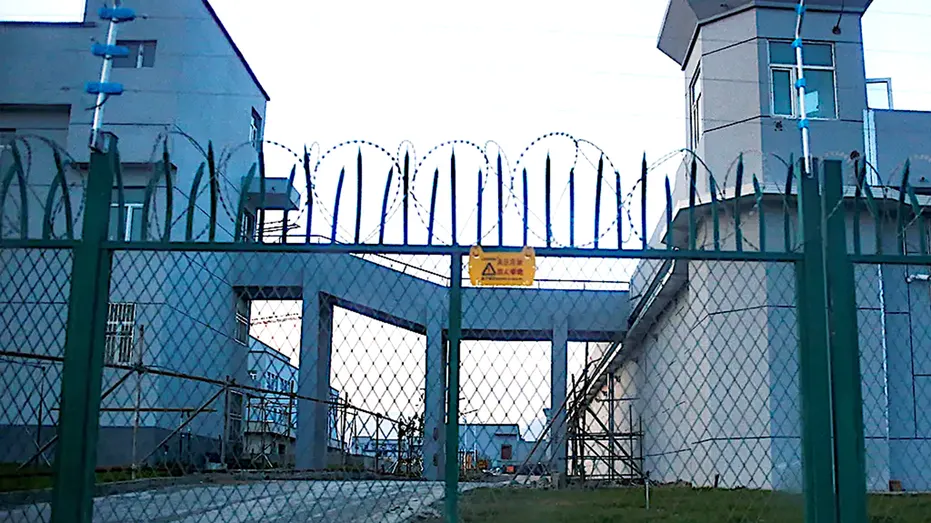
Tursun was born in Xinjiang, the westernmost region of China officially designated as the Xinjiang Uyghur Autonomous Region. This area is home to millions of Uyghurs, an ethnic minority predominantly Muslim with their own language and distinct culture. For years, human rights organizations, researchers, and former detainees have accused Beijing of orchestrating mass detentions, forced labor, political indoctrination, and severe religious repression against Uyghurs and other Muslim minorities.
China refutes these accusations, characterizing the facilities as vocational training centers designed to combat extremism and terrorism.
Tursun states her personal connection with the Chinese state predates her experiences in the camps.
At the age of 10, she recounted, she was sent by the government to study in Mandarin-language schools within China, established to assimilate Uyghur children into the mainstream Chinese society.
“They educate us as Chinese minds,” she said.
Years later, she relocated to Egypt to pursue a degree in business administration. There, she married an Egyptian man and gave birth to triplets in 2015: two sons and a daughter.
The children were merely two months old when her parents urged her to return to China so they could meet their grandchildren and offer assistance with their care.
Tursun was initially reluctant. The babies were too young to travel, she explained. But her mother insisted it was a matter of urgency.
On May 12, 2015, she boarded a flight to China with her newborn triplets.
She states the nightmare began almost immediately after her arrival in Beijing.
At the airport, two individuals approached her, offering assistance with carrying the babies through border control. Moments later, she said, they identified themselves as police officers.
“They said, ‘Keep silent. Follow us,’” she recalled.
Read more : China Trip: A Glimpse of America's Surveillance State Fears
Tursun recounted that officers separated her from her children and interrogated her for hours about her time in Egypt, inquiring whether she had participated in any political activities or anti-Chinese demonstrations. She repeatedly requested to see her babies, explaining their need for breastfeeding.
Instead, she claims officers placed a black hood over her head, handcuffed her, and transferred her to detention in Xinjiang.
There, she states, the interrogations and torture commenced.
Weeks later, authorities granted her temporary release after informing her that one of her children was ill. Escorted by police to a hospital in Urumqi, she discovered her surviving son and daughter separated on different floors, connected to oxygen tubes.
The following day, doctors presented her with documents to sign.
At the top, she stated, were the words: “Death certification.”
The document bore the name of her infant son. “They said, ‘This is your son,’” she recalled softly.
Doctors refused to elaborate on what had transpired, she said. Due to her classification as a political suspect, she stated that no one would provide answers to her questions.
For three days, she kept her son’s body with her at her parents’ residence under constant police observation.
As Muslims, the family wished to take the child to a mosque and bury him according to religious customs, she said, but authorities prohibited anyone from viewing the body.
“The body stayed with me for three days,” she said. “I tried to give him warmth. I tried to make him wake up.”
He never reopened his eyes, she stated, as tears welled up.
Following her son’s burial, she said authorities evicted her family from their home and detained her once more. Between 2015 and 2018, she was moved between multiple prisons and detention facilities, enduring psychological abuse, interrogations, and torture.
One memory continues to haunt her above all others.
During an interrogation, she recounted how officers mocked her faith after she told them that God would punish them for their actions.
“The Chinese Communist Party is God,” she recalled them saying. “Xi Jinping is God.”
Then, she stated, officers shaved her head and administered electric shocks to her until she lost consciousness.
Tursun also described what she claims were systematic medical examinations conducted on detainees, including blood tests and organ screenings. Similar accusations from former detainees have fueled long-standing claims by activists and researchers that Chinese authorities harvested organs from prisoners of conscience, assertions Beijing has consistently denied.
Inside one detention facility, she said more than 60 women were confined in a small cell under continuous surveillance. Some had not seen sunlight for over a year, she claimed.
Many of the women were educated professionals: teachers, doctors, neighbors she recognized from outside prison.
Others were barely more than children.
She recalled a 17-year-old Uyghur girl from a remote village who had never traveled beyond her hometown and asked elementary questions about the outside world, such as how people fit inside airplanes.
Weeks later, Tursun said, guards took the teenager away. When she returned, she appeared bloody and severely traumatized. She had been sexually assaulted.
Two months later, the girl died. Tursun broke into tears. “No one cared about that.”
She said guards dragged the girl’s body away “like trash.”
Eventually, her husband managed to locate her and the children, and after intervention from Egyptian authorities, she was permitted to leave China — after both of them signed agreements to never discuss their experiences.
Today, Tursun resides in the United States with her surviving children, having eventually received asylum following congressional testimony in 2018 about her experiences in China.
In many respects, she is among the fortunate few.
Her children are alive. They are safe. They are growing up in America rather than under constant state surveillance in Xinjiang.
However, survival, she states, is not synonymous with healing.
Her physical health remains delicate. So does her mental well-being. She says trauma constantly follows her, impacting her sleep, her memory, and even her everyday routines.
“There is not one hour that I forget,” she said.
Sometimes, she admitted quietly, she no longer wishes to continue living.
It is her children, she says, who give her strength. And the sense of duty she feels towards the women she left behind.
The women whose faces she still remembers. The women she watched deteriorate within the camps. The women she says died there. That obligation, she states, is more potent than fear.
Former Ambassador-at-Large for International Religious Freedom Sam Brownback, who interviewed Tursun for his recent book on religious persecution in China, believes stories like hers expose what he describes as the Chinese Communist Party’s deepest insecurity.
“This is the issue they fear the most: religious freedom,” Brownback said during an interview in Washington as Trump arrived in Beijing.
“President Trump, you are the president who has done more for religious freedom than any modern president… You need to take this message to President Xi Jinping and his suppression of religion in China.”
“Our fight is not with the Chinese people,” he added. “It is with the party.”
Liu stated that Beijing regulates religious affairs involving “national interests and the public interest” while opposing what it describes as illegal or criminal activities conducted under the guise of religion. He also accused foreign countries and media outlets of interfering in China’s internal affairs under the pretext of religious freedom and urged journalists to “respect the facts” and cease what he described as “attacking and smearing” China’s religious policies and its record on religious freedom.
As the interview concluded, Tursun slowly composed herself before stepping back out onto the streets of Washington.
To the strangers passing by, she appeared like any other young mother navigating the city.
Only she carries memories that most people cannot fathom.