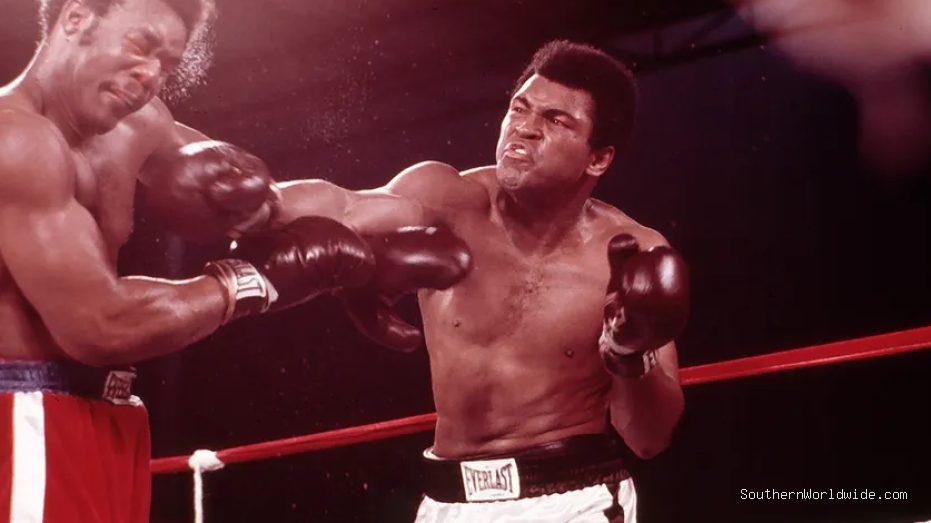
SouthernWorldwide.com – Nico Ali Walsh, the grandson of legendary boxer Muhammad Ali, has publicly addressed UFC President Dana White regarding a proposed bill that bears his grandfather’s name.
The bill, known as the Muhammad Ali American Boxing Revival Act of 2026, is a revised version of a law originally passed in 2000. It has garnered significant attention as White and TKO Group expand their involvement in boxing through Zuffa Boxing.
This new legislation aims to establish “Unified Boxing Organizations” (UBOs). These UBOs would be empowered to sign fighters, promote boxing matches, create official rankings, and award championship titles, all under a single, unified system. The Congressional Budget Office has confirmed that the bill would grant UBOs the authority to enter into contracts with boxers, orchestrate fights, and manage rankings and titles.
Walsh, carrying the esteemed Ali boxing legacy as the grandson of the iconic figure, has expressed a strong desire to engage in a dialogue with White about the bill’s implications.
“My direct and respectful message to Dana White: We understand the profound significance of my grandfather’s legacy in this sport. We also recognize that, in its current form, this bill should not carry his name. I hold great respect for all that you have accomplished with the UFC,” Walsh stated.
“We both reside in Las Vegas, and I am extending an invitation for us to meet. Whether public or private, the choice is yours. Let’s discuss the Ali Act, the protections afforded to fighters, and what truly serves the best interests of us fighters. Let’s undertake this endeavor for the sport that we both cherish.”
Rasheda Ali’s son and Muhammad Ali’s grandson, Nico Ali Walsh, has stepped into the boxing arena, aiming to continue his family’s celebrated boxing tradition. He is also the nephew of the undefeated former boxing champion, Laila Ali.
The original Muhammad Ali Boxing Reform Act was enacted into law in 2000, with Senator John McCain serving as a co-sponsor. Its primary objective was to combat unfair and anti-competitive practices within the boxing industry. A crucial element of this act was the establishment of a clear separation between promoters and managers.
Under the existing law, a promoter is prohibited from having any direct or indirect financial stake in a boxer’s management. Similarly, a manager is forbidden from holding any financial interest in a boxer’s promotion. This separation was designed to prevent conflicts of interest.
Walsh contends that the proposed new bill significantly weakens this critical firewall. He argues that it could potentially allow a single organization to simultaneously function as a promoter, a matchmaker, a ranking body, and a title-awarding system.
“This is precisely what the current Muhammad Ali Act is designed to prevent from occurring in boxing,” Walsh emphasized.
The new bill has garnered bipartisan support, with Representatives Brian Jack (R-GA) and Sharice Davids (D-KS) serving as co-sponsors. It overwhelmingly passed the House of Representatives with backing from both Republican and Democratic members. The bill was subsequently referred to the Senate Commerce Committee on March 25.
Prominent promoter Oscar De La Hoya has also voiced his opposition to the bill. He argues that this new legislative framework undermines the fundamental principles of the original 2000 Ali Act and could lead to the establishment of near-monopolies within the sport.
Despite his concerns, Walsh acknowledges that certain aspects of the original law might benefit from updates, given the passage of 26 years.
“There are certainly many elements that could be updated. The original Ali Act was conceived in the early 2000s. Naturally, with over 20 years having passed, things can be refreshed and revamped. One of the most significant areas for potential improvement lies in health benefits. The Revival Act does propose some health benefits, which is commendable for us fighters. However, these upfront health benefits do not compensate for the potential erosion of fighters’ rights on the backend.”
Conversely, proponents of the Revival Act assert that the bill is intended to modernize the sport of boxing. The legislation incorporates new safety and business regulations for UBOs, with its explicitly stated aim being to “further enhance the well-being of professional boxers.”
As the bill navigates further debate within sports and political spheres in the coming months, Walsh also intends to rally other fighters to raise awareness about this issue and to encourage them to voice their opinions.
His overarching concern stems from the observation that many fighters and fans remain unaware of the specific provisions and implications of the Ali Act. He noted that individuals often hear differing viewpoints on the debate but fail to grasp the true stakes involved.
“It is imperative that you understand your rights as a fighter,” Walsh urged.