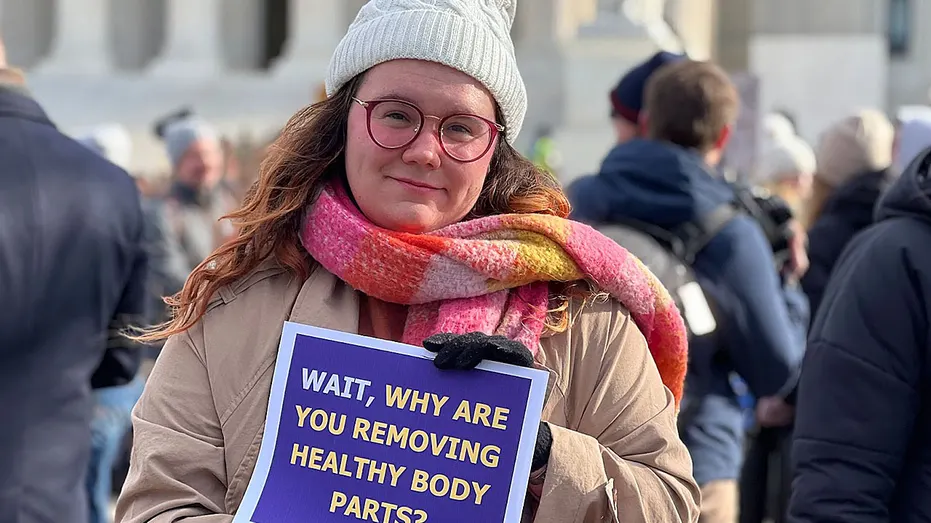
SouthernWorldwide.com – Prisha Mosley, a detransitioner and mother, shares her personal journey and the profound impact of her experiences with gender ideology, particularly as it relates to her role as a parent.
Mosley recounts her teenage years, during which she believed she was a boy trapped in a girl’s body. This belief was influenced by online platforms like Tumblr, which she notes have been replaced by TikTok, Instagram, and others that utilize algorithms to expose vulnerable children to inappropriate content.
She describes how these platforms, driven by social contagion, provided a sense of validation for her struggles with mental health and self-esteem. Activists and online communities convinced her that her identity was the source of her distress and that medical transition was the solution.
The trans community initially offered Mosley a sense of belonging and understanding. She trusted activists who attributed her suffering to her supposed innate transgender identity, and importantly, she trusted medical professionals who presented transition as the only viable path forward.
This trust, however, came at a significant cost. Mosley underwent years of high-dose testosterone and a double mastectomy. These medical interventions, presented as necessary, caused permanent damage before she fully understood the implications of such permanence.
Becoming a mother has profoundly altered Mosley’s perspective on the weight of her past decisions. Motherhood, she explains, changes one’s priorities, sharpens the understanding of what truly matters, and necessitates a focus beyond oneself, considering what one can offer to others.
Holding her child often brings a heightened awareness of the losses she has endured physically. These losses impact her future health and her capacity to fully embody the mother she aspires to be.
Mosley highlights the physical consequences, such as the numbness in her chest where her breasts once were. The inability to feel her baby’s head on her chest, a direct result of the mastectomy, is a constant reminder of what was taken from her.
The complications that arose after childbirth were even more harrowing. Pieces of breast tissue left behind by the surgeon caused milk to come in, but due to the surgical procedures and nipple grafting, the milk became trapped. This prevented her from breastfeeding her newborn, an experience that brought both emotional and physical agony, reshaping her understanding of pain and grief.
She expresses deep regret for not being protected from these interventions. Mosley wishes there had been a more cautious approach from healthcare professionals and adults who might have questioned the appropriateness of such irreversible steps, especially since her parents were also misled.
Her regret extends to the professionals she trusted, who, instead of addressing her confusion and trauma, chose to affirm them as part of a transgender identity. This, she feels, prevented genuine healing and understanding.
Above all, Mosley laments that thousands of other children are currently being told that their trauma and discomfort can be resolved by altering their bodies, and that doctors and therapists are pressuring them to do so.
She identifies with those children, recognizing the pattern of seeking outlets for distress, finding solace and acceptance in online communities, and eventually being directed towards clinics and doctors’ offices. While these encounters may offer a temporary sense of relief, for many, like herself, the feelings fade.
Speaking out about her experiences led to ostracization from the trans community, the very group that once offered her unconditional support. She faced harassment, threats, and doxxing for sharing her truth, a stark contrast to the community’s purported values of love and acceptance.
Mosley notes the paradox of a community that claims to embrace love and acceptance yet struggles to extend it to those who have had negative or manipulative experiences during their transition. She has found support elsewhere since realizing the detrimental effects of her “trans identity.”
This Mother’s Day, Mosley expresses gratitude for her children and the perspective motherhood has provided. However, this gratitude is tempered by the reality of her experiences. She believes no mother should face the realization that her health outcomes during pregnancy and postpartum were the result of misled decisions.
Baca juga di sini: Moms at the CIA Deserve Thanks This Mother's Day
She emphasizes that no mother should have to experience the physical detachment of holding her child on a numb chest. Most critically, no mother should have to witness her children embarking on a similar path, recognizing that they are being exploited.