SouthernWorldwide.com – For a segment of older Americans, the concept of retirement is evolving, often meaning a return to the workforce, or “unretiring.” This trend is driven by a combination of financial necessity and the desire for continued engagement.
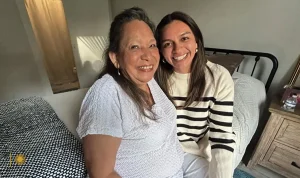
Myndie Friedman, a woman approaching 70, exemplifies this shift. She begins her weekdays with an early morning commute, involving a bus, a train, and a subway ride, totaling two hours each way to reach her administrative job in a Manhattan medical office.
Friedman, a widow, relies on her Social Security benefits, but they only cover about one-third of her living expenses. The remaining two-thirds are essential for maintaining her current lifestyle.
“I need another two-thirds to live the way I’m living,” she stated.
Friedman is part of a growing demographic of older Americans who find traditional retirement financially unfeasible or who must re-enter the workforce to cover their costs. Federal labor data and Pew Research indicate that nearly one in five adults aged 65 and older are currently employed or actively seeking work, a figure not seen in decades.
These workers, spanning various industries, locations, and educational backgrounds, often view their employment not as a choice but as a financial imperative.
The average Social Security benefit in 2026 is approximately $2,071 per month. However, the typical single adult’s baseline monthly expenses are around $4,641, according to SoFi Bank, and this figure does not include costs for utilities, home maintenance, or gifts.
This financial disparity creates a significant gap for many older Americans, compelling them to return to work at an age when they anticipated leisure. Friedman expressed her concerns about the escalating cost of living.
Read more: Astronaut Artemis Discusses Mission Food and Restrictions
“Rising costs are on my mind, and they’re just going to go higher,” Friedman commented. “You have to eat. You have to have health care. But when you retire, you don’t only want ‘have-tos.’ I’d like to enjoy my life.”
A 2024 AARP survey revealed that 20% of Americans aged 50 and above have no retirement savings, and 70% are concerned about inflation outpacing their income.
This situation is the culmination of decades of financial trends. In 1985, the labor force participation rate for Americans 65 and older was at a low of just under 11%. However, over the past two decades, the employment rate for this age group has surged by 117%, according to the Centers for Disease Control and Prevention.
The Bureau of Labor Statistics projects that the 75-and-older workforce will experience the most significant growth, estimated at 97% between 2020 and 2030. The CDC attributes this demographic shift in the workforce primarily to the country’s aging population. Americans are living longer, but many find their savings insufficient to cover the rising costs of an extended lifespan.
The simple reality is that a retirement fund designed for 15 years may fall short when retirement extends to 25 or 30 years. A report from the National Institute on Retirement Security indicates that the average American worker has less than $1,000 saved for retirement. This statistic includes individuals with employer-sponsored plans and the approximately 56 million workers who lack such benefits.
For those with retirement savings, the median balance is $40,000, the report added.
Not all older workers view their continued employment as a burden. Helen Cuocci, in her 70s, works at a CVS in Connecticut, stocking shelves and assisting customers. She has been with CVS for 18 years, a role she took on after a 40-year career as an administrative assistant.
Cuocci maintains a positive outlook on working past the traditional retirement age. “I never thought I would get a retail job,” she shared. “I always thought I’d be sitting at a little desk with my cup of coffee and just on my computer. But this is really nice. You’re more active, and you see more people.”
For Cuocci, the financial aspect is significant, but not the sole motivator. Her husband requires costly medication, and her full-time position at CVS provides the couple with health benefits that help manage his prescription expenses.
“We own a home, we have two cars and we like to travel,” she said. “Without working at CVS, I couldn’t do all these things.”
Many seniors, like Cuocci, find themselves transitioning to different types of work during their retirement years. Alan Bergman, a 71-year-old from Somers, New York, spent most of his career managing a commercial printing business. He retired in 2018 after selling his company.
However, Bergman felt a lack of fulfillment and was concerned about his savings’ longevity. This led him to establish a business as a personal historian, working from his home office to interview older adults and privately publish their life stories.
“I never expected it, but this chapter is the most fulfilling one yet,” Bergman expressed.
Geoffrey Sanzenbacher, an economics professor at Boston College and researcher at the Center for Retirement Research, categorizes Bergman among the growing number of “un-retired” Americans. He notes that older workers are more likely to rejoin the labor force during periods of economic strength.
“Workers ‘tend to un-retire when it’s easiest to do so’,” Sanzenbacher explained, while also acknowledging the competitive landscape for older job seekers against younger candidates.
For seniors needing to work to afford necessities, this often means taking on roles in industries different from their prior careers. These positions can sometimes be physically demanding, such as those in retail, requiring prolonged standing and customer interaction.
Catherine Fisher, a career expert at LinkedIn, emphasizes that the skills possessed by older workers are frequently undervalued. “The older generation has so much experience that they can bring to the table,” she stated. “Communication, adaptability, leadership — those are skills that you acquire over time.”