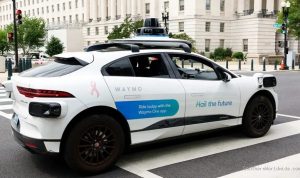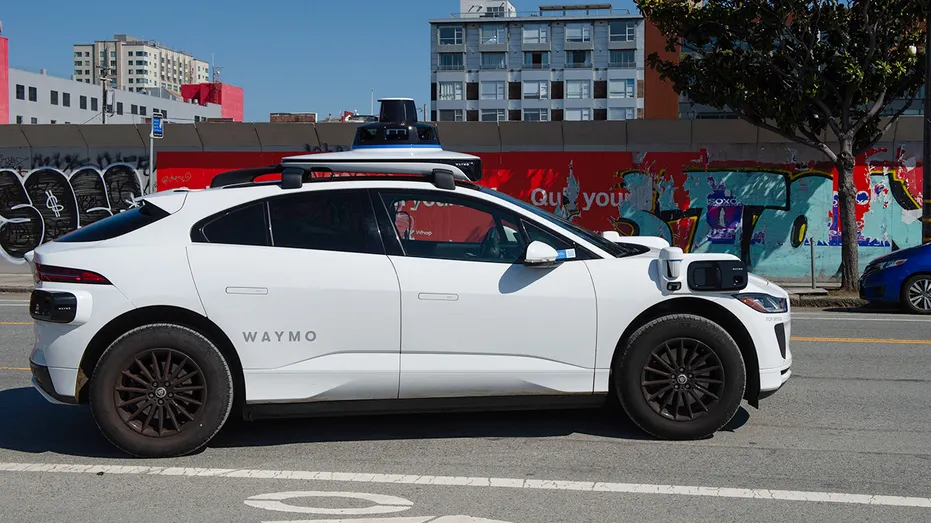
SouthernWorldwide.com – Taking a driverless robotaxi to the airport can still feel a bit unsettling for many. Passengers board the vehicle, perhaps finding themselves intently watching the steering wheel move on its own, hoping with every turn that the journey unfolds as smoothly as the company promises. However, for one passenger in California, the ride concluded with a very real travel ordeal.
Di Jin reportedly took his inaugural Waymo ride from Sunnyvale, California, to San José Mineta International Airport for a business trip.
The ride itself appeared to go without a hitch. It was upon reaching the airport and attempting to retrieve his suitcase from the trunk that matters took an unexpected turn.
Jin informed reporters that after exiting the Waymo at the airport, he tried to open the trunk. He stated that he pressed the trunk release button, but nothing happened. Subsequently, he recounted, the driverless car began to pull away with his suitcase still inside. This left him stranded at the airport without his bag, his change of clothes, or his essential work notes.
For anyone who travels for work, this is the kind of moment that can make your stomach sink. You are watching your ride disappear, but there is no driver to flag down. There is no person at the wheel to hear your calls. All that remains is the app, the support line, and a vehicle that might already be en route to another destination.
Jin mentioned that he contacted Waymo customer service immediately. According to reports of the incident, he was informed that the vehicle was already heading to a depot and could not be rerouted. Later, Waymo reportedly sent him an email stating that his luggage had been securely stored at a Waymo depot.
This addressed one aspect of the problem: the suitcase was located. However, the process of getting it back became another source of frustration. Waymo initially offered to ship the luggage to him but declined to cover the shipping or courier fees. The company also reportedly offered him two complimentary rides so he could travel to and from the depot himself.
Jin expressed his dissatisfaction. He argued that the situation was not his fault. Waymo eventually agreed to cover the shipping expenses, and Jin accepted this resolution.
Waymo did not provide a comment on the specific incident when contacted by CyberGuy. However, Waymo’s own help pages detail the intended functionality of the trunk. The company states that passengers can open the trunk by pressing the release button located above the license plate or by selecting “Open trunk” within the app. Waymo also indicates that at the passenger’s destination, the trunk is designed to open automatically as the passenger exits the vehicle. Waymo further notes that the trunk might not open if a passenger exits before the vehicle has officially pulled over and concluded the trip.
Read more : Passengers from Hantavirus Ship May Leave Nebraska Under Conditions
Waymo’s lost and found page also states that its support team endeavors to reunite passengers with items left in a vehicle. Although the company advises that it cannot guarantee that items will be found, delivered promptly, or returned undamaged. Waymo also clarifies that it is not liable for items left behind after a trip has ended and does not offer reimbursement for the value of lost items.
This policy is precisely why this story has garnered attention. Jin’s predicament was not merely about forgetting a bag. His assertion is that he attempted to retrieve it and was unable to open the trunk before the vehicle departed.
Airport journeys already come with a considerable amount of stress. You are constantly monitoring the clock. You are contemplating security lines, boarding times, and whether you remembered to pack your charger. Now, consider adding a driverless car that leaves with your suitcase. The technology may be advanced, but the problem is remarkably mundane. A passenger required access to their bag, the trunk did not function as anticipated, and customer support became the sole recourse.
With a human driver, one might knock on the trunk, wave, or request them to wait. With a robotaxi, the entire experience relies on software, sensors, app controls, and remote assistance. Most passengers may never encounter an issue. Nevertheless, when something does go wrong at an airport, a minor technical glitch can escalate into a significant travel disruption.
Waymo has been expanding its airport services, and San José Mineta International Airport became a crucial component of this initiative in November 2025, when SJC announced it was the first commercial, international airport in California to offer fully autonomous ride-hailing services to travelers.
Waymo has also characterized airport service as a significant milestone for its ride-hailing business. Waymo’s website lists several current and upcoming service areas, including the San Francisco Bay Area, Los Angeles, Phoenix, San Antonio, Austin, and other cities.
This underscores the critical importance of customer support, not its reduction. If driverless rides are to become a commonplace aspect of airport travel, passengers need to be assured of what happens when a journey does not proceed as planned.
If you opt for a Waymo or any robotaxi for an airport ride, treat the trip as incomplete until every bag is securely in your possession. Do not assume the trunk will open automatically. Keep the app open as you approach your destination. Activate the trunk release button before you fully disembark from the car. If the trunk fails to open, contact support without delay and remain in proximity to the vehicle if it is safe to do so.
Furthermore, carefully consider the contents of your trunk. Keep your wallet, passport, medication, laptop, keys, and work documents with you inside the cabin. A suitcase can be replaced. However, your identification, prescriptions, or work files can present far more significant complications. This is not to suggest that you should avoid using Waymo. We are not advocating for that. It simply means you should fully understand the limitations of a driverless system before utilizing one for a time-sensitive journey.
If you are utilizing a driverless ride for an airport trip, adopting a few simple habits can help prevent a suitcase issue from escalating into a travel catastrophe.
Place your identification, wallet, medication, laptop, and chargers in a small bag that remains with you at all times. Avoid putting any critical items in the trunk.
Upon arrival at your destination, use the app or the trunk release button before closing the door and stepping away. Ensure that your suitcase is retrieved before proceeding further.
Do not lock your phone or put it away as you approach the terminal. You may require the app to open the trunk or to contact customer support.
If you have placed a bag in the trunk, take a quick photograph before the ride commences. This can be beneficial if you need to describe the contents of the vehicle.
If your belongings remain inside the car, contact support immediately. Waymo states that its support team can assist with lost items, although it does not guarantee prompt delivery or reimbursement.
Driverless taxis are increasingly becoming an integrated part of daily travel. For many passengers, they offer convenience, a quiet experience, and a surprisingly normal mode of transport after a short adjustment period. However, airport rides present a different scenario. People are often rushed. A suitcase can contain your work laptop, essential medication, clothing, and items you will need immediately upon arrival. A minor delay can result in a missed flight, a lost business meeting, or the necessity of an expensive last-minute replacement run. This is what makes this particular incident noteworthy. While Waymo’s vehicles may drive themselves, the company must still effectively address complex human-related issues with promptness. When a trunk fails to open, passengers require more than just a policy statement. They need swift assistance, clear explanations, and a resolution that does not place the blame on them for a system malfunction. The future success of robotaxis will depend not only on their ability to drive safely but also on their capacity to respond effectively when unforeseen problems arise.
Would you entrust your suitcase to a driverless taxi on your way to the airport, or would you prefer to keep all your bags with you inside the vehicle until you reach the curb? Please share your thoughts by writing to us at CyberGuy.com.