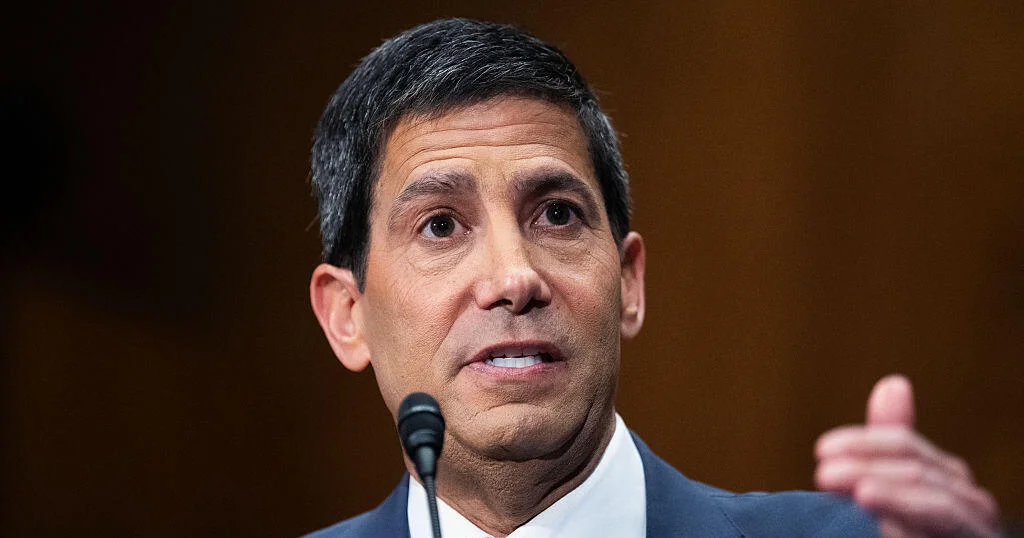
SouthernWorldwide.com – The U.S. Senate has confirmed Kevin Warsh as a governor on the Federal Reserve’s Board of Governors. This confirmation is a significant step in President Trump’s efforts to appoint Warsh as the head of the central bank.
The confirmation came after months of speculation and uncertainty, partly due to a criminal probe involving the outgoing Fed chair, Jerome Powell. The Senate voted 51-45 to approve Warsh for a 14-year term, making him one of the seven governors on the Fed’s board.
A further vote is scheduled later this week for Warsh’s appointment as the chair of the Board of Governors. This position would see him replace Jerome Powell, whose term as chair concludes this Friday.
Warsh is filling the seat previously held by Stephen Miran, an advisor to President Trump. Miran was confirmed to the Fed in September of the previous year, filling a vacancy left by an early resignation. Miran’s term technically ended in January, but he was permitted to remain on the board until his successor was confirmed.
Miran previously led the White House’s Council of Economic Advisers. In a notable move, he took a leave of absence to serve on the Fed for a few months.
Kevin Warsh’s term as a Fed governor is set to extend until the year 2040. He is an alumnus of Stanford University and Harvard Law School.
This marks a return to the Fed for Warsh, who previously served as a governor for five years, concluding in 2011. His earlier tenure included the period of the global financial crisis.
Since departing the Fed, Warsh has been a fellow at the Hoover Institution. He has also served as an advisor to billionaire investor Stanley Druckenmiller. Warsh’s personal wealth is reported to exceed $100 million.
He is married to Jane Lauder, who is the granddaughter of the late Estée Lauder, the renowned cosmetics magnate.
Warsh has been a vocal critic of the Federal Reserve’s policies and operations. He has questioned various aspects of the Fed’s work, including the size of its balance sheet and its approach to bank regulation.
He has also scrutinized the Fed’s use of data and its methods of communicating with the public. In recent times, Warsh has indicated an openness to lowering interest rates.
This stance is somewhat different from his earlier period as a Fed governor, where he was generally considered more hawkish. At that time, he was more focused on the risks of inflation and cautious about overly loose monetary policies.
President Trump has openly expressed his desire for the Fed to lower interest rates. He has publicly criticized Jerome Powell, calling him a “moron” and a “stubborn mule” for not agreeing to aggressive rate cuts.
The Federal Reserve faces complex decisions regarding interest rates. Lowering rates can stimulate economic growth but carries the risk of increasing inflation.
Since joining the Fed board last fall, Stephen Miran has dissented from every decision made by the Federal Open Market Committee (FOMC), the Fed’s interest rate-setting body.
In the three meetings held by the FOMC so far this year, the committee maintained stable interest rates. Miran, however, advocated for rate cuts on each occasion.
During the final three meetings of the previous year, when the FOMC did implement rate reductions, Miran argued that these cuts should have been more substantial.
During his confirmation hearings, Warsh pledged to uphold the Fed’s independence in setting interest rates. He stated that President Trump had never asked him to predetermine or decide on any interest rate decisions, and that he would never comply with such a request.
“I will be an independent actor if confirmed as chair of the Federal Reserve,” Warsh declared last month.
Warsh’s confirmation process encountered a significant hurdle earlier this year. This occurred after Jerome Powell disclosed that the Fed had received subpoenas as part of a criminal probe.
The probe related to Powell’s testimony to the Senate concerning a multi-billion dollar renovation of the central bank’s headquarters. Powell asserted that the investigation was an attempt to intimidate him, a claim prosecutors have denied.
A judge eventually quashed the subpoenas. The judge found that the subpoenas were issued with the intent to “harass” Powell into either lowering rates or resigning.
This investigation caused concern among some Senate Republicans. Senator Thom Tillis of North Carolina, for instance, had stated he would not vote to advance any Fed nominees out of the Senate Banking Committee until the investigation concluded.
Senator Tillis eventually lifted his hold on nominees after the U.S. Attorney for the District of Columbia, Jeanine Pirro, announced last month that her office would be closing its probe.
Pirro stated that the Fed’s Inspector General would investigate the matter. She also indicated that she would “not hesitate to restart a criminal investigation should the facts warrant doing so.”
As a member of the seven-person Fed board, Warsh will serve alongside two governors nominated during President Trump’s first term. He will also be on the board with three nominees appointed by President Biden.
President Trump’s attempts to remove one of the Biden appointees have so far been unsuccessful in the courts.
Jerome Powell, for the time being, will remain on the board as a regular member. He has stated his intention to stay until he is confident that the investigation is “well and truly over.”
This makes Powell the first outgoing Fed chair in over 75 years to continue serving on the board after his chairmanship has ended.
Read more : Florida Judge Allows Prosecutors Access to Tiger Woods' Prescription Drug Records Post-DUI Arrest
Powell has not specified the exact duration of his continued service on the board. His current term is scheduled to end in January 2028. He has committed to maintaining a “low profile” during this period.