SouthernWorldwide.com – Senate Republicans are evaluating their relationship with the House GOP as they prepare for another significant test of their unity across both legislative chambers.
The past few months of Republican control over Congress have been marked by dysfunction, miscommunication, and wasted time, particularly during the longest government shutdown on record.
Republicans in the Senate are not pointing fingers at specific individuals in the House, but they universally agree that a change is necessary as they move forward to secure funding for immigration operations in the coming years.
TRUMP SAYS HE ‘CAN’T STAND’ SOME REPUBLICANS FOR REFUSING ONE KEY MOVE FOR HIS AGENDA
The Republican strategy involves funding Immigration and Customs Enforcement (ICE) and Border Patrol for the next three and a half years through budget reconciliation. This process demands near-perfect unanimity in both the House and Senate, as it excludes Democrats.
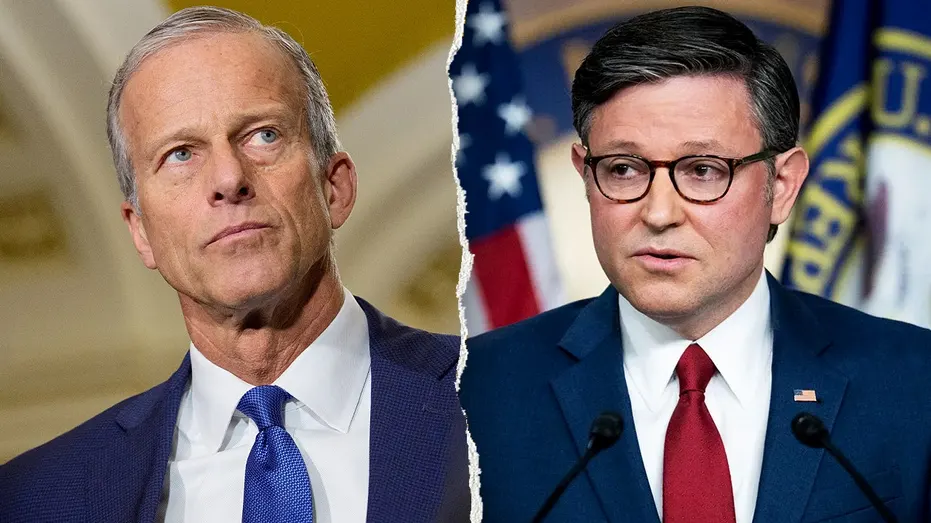
However, divisions between the chambers became evident during the Department of Homeland Security (DHS) shutdown. House Republicans, under the leadership of Speaker Mike Johnson, R-La., refused to consider the Senate’s compromise plan to reopen the agency.
This decision extended the shutdown for nearly a month and necessitated the turn to reconciliation. It also fueled frustration between the Senate and House, at a time when leadership and President Donald Trump are advocating for unity.
JOHNSON SCRAMBLES AS TRUMP, SENATE REPUBLICANS PRESSURE HOUSE TO FUND DHS
Both Speaker Johnson and Senate Majority Leader John Thune, R-S.D., are working with slim majorities, with Johnson’s being particularly narrow. This reality is not lost on Senate Republicans, especially concerning legislation that lacks Democratic support, which is currently preventing internal dissent within the Senate.
Read more : Steve Hilton's California Upset Potential
Some Republicans suggest that the issue is more about a communication breakdown between the chambers rather than outright dysfunction within the House.
“I think we have to take a little bit of ownership ourselves here in the Senate, and that’s certainly not [just] the leadership, but all of us,” stated Senator Moreno. “Because when we’re working on bills, we should have total, complete synchronicity with the House.”
‘SHIRTS AND SKINS’: HOW ONE REPUBLICAN BRIDGED THE GAP TO PASS TRUMP’S ‘BIG, BEAUTIFUL BILL’
For instance, House Republicans claimed they were blindsided by the Senate’s deal to reopen most of the DHS earlier this year, which excluded funding for ICE and Border Patrol.
Since Republicans took control of both chambers last year, the communication aspect of legislative efforts was largely managed by DHS Secretary Markwayne Mullin, a former GOP senator who acted as an informal liaison between the chambers for significant legislative initiatives.
When asked if a “Mullin 2.0” was needed, Senator Lankford indicated that the primary lines of communication rested with Senators Thune and Johnson.
Senator Thune has refrained from publicly criticizing Speaker Johnson or House Republicans, noting that the inherent nature of how both chambers operate would inevitably lead to challenges.
“We obviously have a 60-vote threshold,” Thune commented. “We need Democrats. You know, he doesn’t need Democrats, but he needs every Republican, and that’s a real challenge on a good day. And, you know, sometimes there aren’t a lot of good days around here.”
Conversely, Senate Majority Whip John Barrasso, R-Wyo., argued that despite the existing issues, had Democrats been in control of the chambers, Americans would have faced the largest tax hike in decades if Republicans had not presented a united front to pass President Trump’s signature legislation.