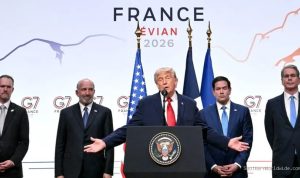
SouthernWorldwide.com – President Donald Trump’s preliminary agreement with Iran is circulating in the media, but it has yet to reach lawmakers on Capitol Hill.
Those who have reviewed the reports are divided on the memorandum of understanding (MOU) that the administration plans to finalize with a ceremonial signing on Friday.
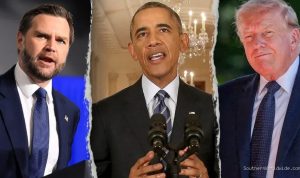
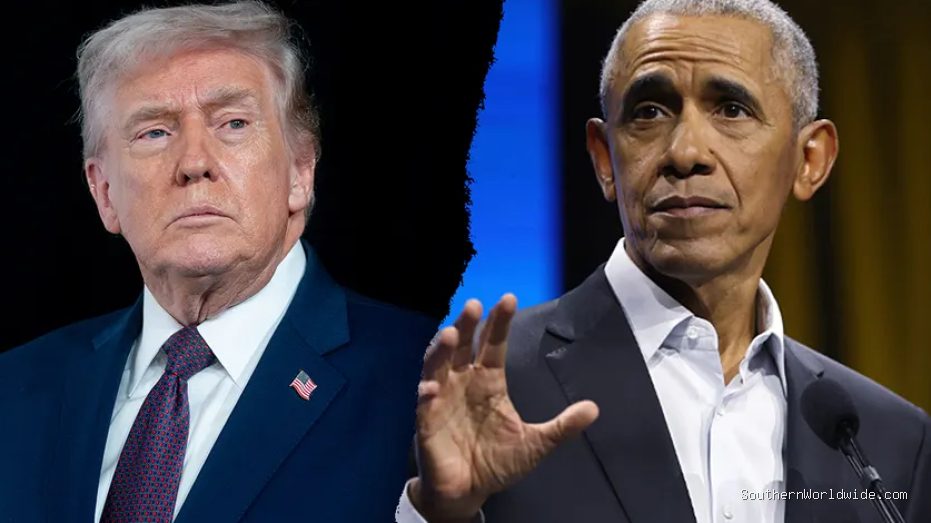
Some observers believe it represents a less favorable outcome compared to former President Barack Obama’s Joint Comprehensive Plan of Action (JCPOA), often referred to as the Iran nuclear deal, which Trump withdrew from during his presidency.
TRUMP ADMINISTRATION UNVEILS SWEEPING TERMS OF PROPOSED IRAN AGREEMENT
“Based on everything I’ve seen and what’s being reported by Bloomberg and in the official read-out, we are giving up significantly more in exchange for much less than what was achieved under the JCPOA,” stated Senator Tim Kaine of Virginia.
“While I cannot definitively confirm this until I have seen the memorandum myself, all current reporting suggests that we are conceding more for a lesser return than in the previous arrangement under Donald Trump,” he added.
The divergence of opinions on the MOU does not strictly follow party lines.
TRUMP’S IRAN DEAL SPARKS GOP DEMANDS FOR VOTE AS CONGRESS REMAINS IN THE DARK
“This is something Ronald Reagan would not approve of,” Senator Bill Cassidy of Louisiana remarked on X. “Iran’s pursuit of nuclear capabilities has not been halted, and they have learned that threatening the Strait of Hormuz is effective and will undoubtedly be used as leverage in the future. Furthermore, Iran will now be able to construct new infrastructure under this agreement.”
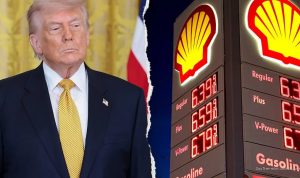
Administration officials briefed reporters on Wednesday, outlining plans for immediate waivers on Iranian oil exports, a framework for at least $300 billion in reconstruction and economic development, and a 60-day negotiation period aimed at reaching a final agreement on Iran’s nuclear program.
However, the agreement, in its current form, does not directly address the core issue that initially led to the conflict: Iran’s nuclear program.
REPUBLICANS BAT DOWN BID TO HANDCUFF TRUMP’S WAR POWERS AS PEACE DEAL NEARS
Instead, it obligates both parties to negotiate the future of Iran’s enriched uranium stockpile and its enrichment activities as part of a comprehensive final agreement.
Senator Kaine, who championed the Iran Nuclear Agreement Review Act (INARA) during the Obama administration, which mandates congressional review of any nuclear agreement with Iran, indicated that based on his current understanding, the memorandum “likely touches upon the nuclear program sufficiently to require submission to Congress.”
Senator Lindsey Graham of South Carolina, who had previously expressed reservations about the developing deal earlier in the week, now appears to be supportive. Responding to Senator Cassidy’s assessment of the MOU, Graham commented, “I respect Bill’s opinion, but I don’t believe he fully grasps the situation here.”
“I view the MOU not as a finalized deal, but as a framework for achieving one,” Graham explained. “There are aspects of it that I disagree with. My perspective is that if a diplomatic solution to Iran’s nuclear ambitions can be found, it should be pursued. The MOU lays the groundwork for this.”
When questioned about his stance on lifting sanctions on Iranian oil exports, Graham stated he was amenable to the idea in the short term, including the resulting financial inflow, “Because if the deal falters, all of that will cease.”
“My primary concern is not missing an opportunity to find a diplomatic resolution,” he emphasized. “Because if we fail to do so, the alternative is war.”