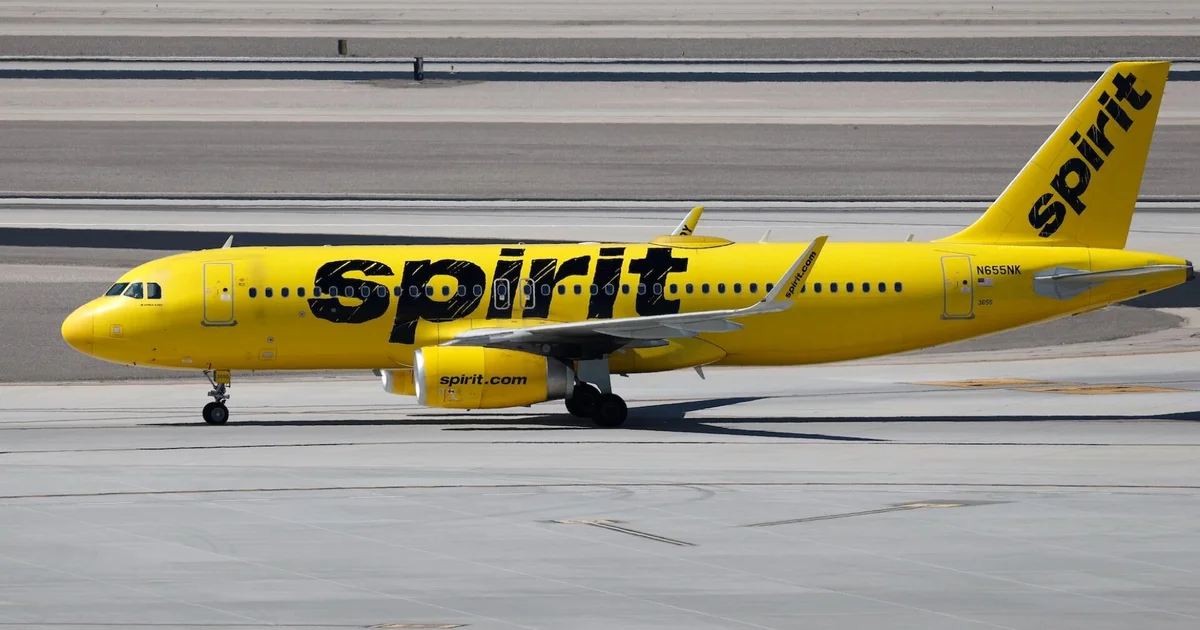
SouthernWorldwide.com – Spirit Airlines, a prominent budget carrier, has ceased all operations as of Saturday, marking a significant shift in the low-cost airline industry.
The airline had been grappling with a multitude of challenges, including soaring fuel costs and substantial debt accumulated over time. These financial pressures ultimately proved insurmountable for the company.
A crucial factor contributing to Spirit Airlines’ downfall was the unraveling of a proposed government bailout plan. This plan was intended to provide a lifeline to the struggling carrier.
However, the bailout failed to materialize, leaving a trail of uncertainty for various stakeholders. Thousands of passengers found their travel plans disrupted.
Spirit Airlines employees were also left in limbo, facing job losses and an unclear future. Investors who had placed their confidence in the airline’s success were also impacted by the shutdown.
The situation was highlighted by reports from Newark’s Liberty International Airport, a key hub for the airline. Ali Bauman provided on-the-ground coverage of the impact on passengers and operations.
The cessation of Spirit Airlines’ operations signifies a notable event in the aviation sector. It underscores the volatile nature of the airline industry, particularly for budget carriers that operate on thin margins.
Factors such as fuel prices, economic conditions, and regulatory environments can significantly influence the viability of airlines. Spirit Airlines’ story serves as a case study in these dynamics.
The airline’s business model, focused on offering low fares by unbundling services, had been popular with many travelers.
However, this model also meant that the airline was particularly vulnerable to external shocks that increased operating costs.
The failure of the government bailout plan was a critical turning point.
Such plans are often a last resort for companies facing severe financial distress.
The lack of a successful bailout indicated the depth of Spirit Airlines’ financial problems.
Passengers who had booked flights with Spirit Airlines were faced with the immediate challenge of finding alternative arrangements.
This often involved purchasing new tickets, potentially at higher prices, from other carriers.
The situation created significant inconvenience and added expense for many travelers.
The impact on employees was also substantial, with many facing unemployment.
Airline industry jobs are often specialized, and finding comparable employment may be difficult for former Spirit Airlines staff.
Investors in Spirit Airlines also faced losses as the company’s stock value likely plummeted following the operational shutdown announcement.
The long-term implications for the budget airline market are yet to be fully understood.
The absence of Spirit Airlines could potentially lead to increased demand for other low-cost carriers.
This might, in turn, influence pricing strategies and service offerings across the sector.
Airlines that can effectively manage costs and adapt to changing market conditions are likely to be better positioned for success.
The story of Spirit Airlines’ shutdown is a stark reminder of the competitive and challenging landscape of the aviation industry.
It highlights the importance of robust financial management and strategic planning in navigating economic uncertainties.
The ripple effects of this closure will be felt by passengers, employees, and the broader travel ecosystem.
The future of air travel continues to evolve, with companies needing to remain agile and resilient to thrive.
Spirit Airlines’ journey, from its inception as a budget-friendly option to its eventual cessation of operations, encapsulates the risks and rewards inherent in the airline business.
Read more : Experimental ALS treatments offer new hope
The focus now shifts to how the industry adapts to this change and how the affected parties manage the aftermath of the shutdown.