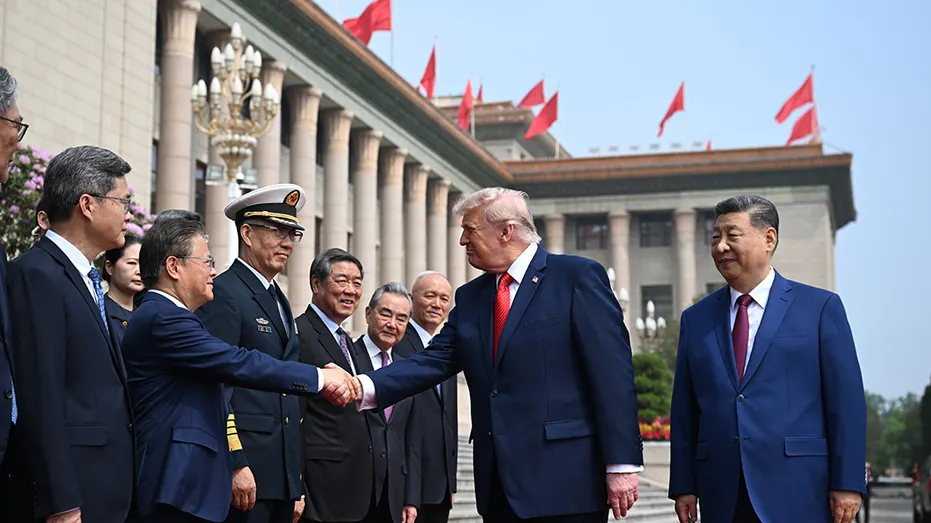
SouthernWorldwide.com – During a recent visit by President Donald Trump to China, an alleged “intense standoff” occurred between U.S. Secret Service agents and Chinese security officials at the Temple of Heaven in Beijing.
The incident reportedly began when Chinese security personnel prevented an armed U.S. Secret Service agent from entering an event with their weapon. This action led to a significant delay in entry to the venue, lasting over thirty minutes, due to what were described as heated discussions.
A correspondent from The Telegraph, present at the event, shared on social media platform X that they had witnessed “several intense confrontations” since arriving in China for the President’s visit.
President Trump and Chinese President Xi Jinping met on Thursday in Beijing as part of a two-day state visit. The White House indicated that the discussions between the leaders covered topics such as Iran, energy security, fentanyl control, and market access.
This was not the first instance of friction between the Secret Service and Chinese security during President Trump’s trips to the country. A similar situation unfolded during his 2017 visit to China.
In 2017, a commotion arose concerning the “nuclear football,” a specially designed briefcase containing the tools necessary for the U.S. President to authorize a nuclear strike. Reports from that time indicated that Chinese security officials attempted to block the entry of the U.S. military aide carrying the briefcase into the Great Hall.
The then-White House Chief of Staff, John Kelly, was reportedly notified of the situation and rushed to the scene to escort the aide. According to reports, when Kelly stated, “We’re moving in,” a Chinese security official allegedly grabbed him.
In response, a U.S. Secret Service agent reportedly intervened by grabbing the Chinese security official and, according to initial reports, tackling him to the ground. However, the U.S. Secret Service later issued a statement on X denying the reports of any “tackling” by their agents.
The agency clarified on X, “FACT CHECK: Reports about Secret Service agents tackling a host nation official during the President’s trip to China in Nov 2017 are false.”
Beyond this specific confrontation, reporters covering President Trump’s visit also documented difficulties in navigating and following the President during various meetings and events.
The Telegraph correspondent also noted on X that on several occasions, Chinese officials attempted to prevent U.S. reporters and staff from leaving their designated positions to join the presidential motorcade.
Read more : Xi Warns Trump of "Clashes" and "Conflicts" Amidst Summit Appearances
These incidents highlight the complex security and diplomatic challenges that can arise during high-level international visits, particularly when protocols and jurisdictions intersect between different national security teams.
The presence of armed agents and the sensitive nature of presidential security equipment like the nuclear football often necessitate meticulous coordination and understanding between host and visiting security details.
Past events, such as the alleged smuggling episode involving the Secret Service during a previous Trump trip, have also led to calls for internal review and adjustments to protocols, as noted by former agents.
The warnings from former Secret Service officials about low-tech threats, especially in light of incidents like the Mar-a-Lago breach, underscore the continuous need for vigilance and adaptation in security measures.
The interactions at the Temple of Heaven, while resolved without further escalation, serve as a reminder of the delicate balance required to ensure the safety and operational integrity of a presidential visit amidst differing national security practices.
The role of the Secret Service is to protect the President, and this protection extends to ensuring their movements and the security of sensitive assets are not compromised, regardless of location.
Similarly, host nations have their own security protocols and responsibilities to manage events within their borders and ensure the safety of all participants, including foreign dignitaries and their entourages.
The reported standoff underscores the potential for misunderstandings or disagreements when these distinct security frameworks come into contact, especially during high-stakes diplomatic engagements.
The media’s role in documenting these events provides crucial insights into the operational realities of presidential diplomacy and the security measures that underpin them.
Navigating these situations effectively requires clear communication, mutual respect for established protocols, and a shared commitment to the success and security of the diplomatic mission.