SouthernWorldwide.com – As the United States approaches the 2026 midterm elections, the Republican party has a potent argument to leverage, one rooted in the economic contributions and concerns of America’s small businesses.
The White House itself has recognized the significance of this demographic, recently launching National Small Business Week to highlight their vital role in the nation’s economy and job creation.
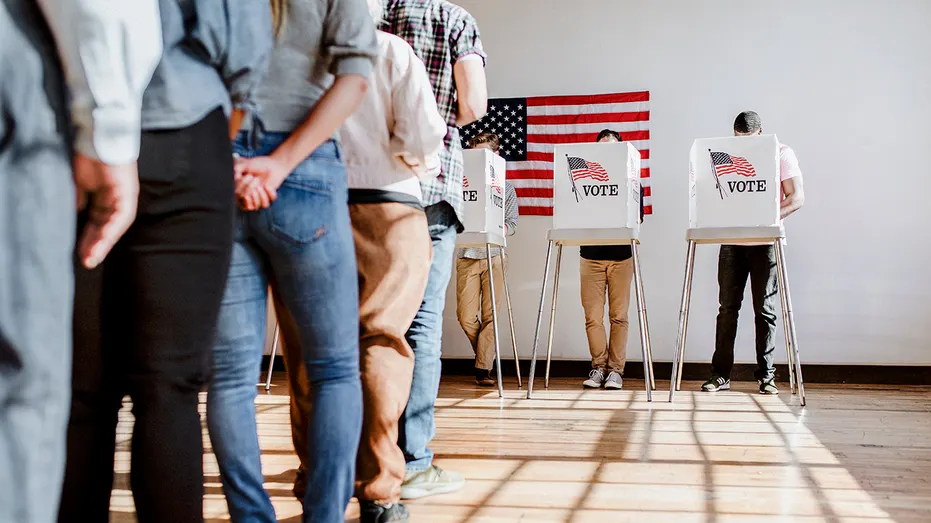
However, the sentiment among small business owners could very well be a deciding factor in who emerges victorious in the upcoming elections this November.
With over 36.8 million small businesses in the U.S., defined as companies with 500 employees or fewer, this sector represents a substantial portion of the American economic landscape.
TRUMP SHOULD MEET WITH MAIN STREET BUSINESSMEN. THEY DESERVE IT
The importance of these businesses to the U.S. economy is underscored by several key statistics.
Yet, the realities of operating a small business are often fraught with challenges.
GOP TAX LEADERS: US SMALL BUSINESSES COULD PAY MORE TAX THAN SMALL BUSINESSES DO IN CHINA IF TRUMP CUTS EXPIRE
According to the Tax Foundation, federal, state, and local taxes can consume between 20% and 30% of the earned income for small business owners.
Furthermore, a significant portion, 25%, dedicates over $10,000 annually to tax and regulatory compliance. On average, small business owners spend an estimated 200 to 300 hours per year on these compliance tasks, equivalent to approximately 32 full business days.
Conversely, small businesses were significant beneficiaries of the Trump administration’s “Big Beautiful Bill.” These advantages, however, are at risk if the Democratic party chooses to revoke them. For instance, the bill stimulated investment by increasing the Section 179 expensing cap to $2.5 million and reinstating 100% bonus depreciation for equipment. It also made permanent the 20% Qualified Business Income (QBI) deduction, thereby preventing tax increases for pass-through entities. Any repeal of these reforms by Democrats, as part of their “tax the rich” agenda, could have devastating consequences for the profitability of small businesses.
Baca juga di sini: Magic Johnson Faces Criticism for LA Mayoral Endorsement
CNN POLLING EXPERT MARVELS AT COLLAPSE OF DEMOCRATIC ADVANTAGE WITH MIDDLE CLASS IN TRUMP ERA
It appears to be a natural constituency for the GOP. A recent Stanford study revealed that business owners are nearly 18 percentage points more likely to vote Republican compared to individuals who do not own businesses. Crucially, their experiences running small businesses directly shape their broader political perspectives.
Imposing higher taxes on them could drive them towards the Republican party during election cycles. Conversely, promises of relief from excessive taxation, overregulation, and issues like shoplifting (which some progressive Democrats have termed “microlooters”) are likely to resonate with them.
HOUSE CANDIDATE PREDICTS HISTORIC RISE OF ‘NEW GENERATION’ IN CONGRESS AS PARTIES TARGET KEY DEMOGRAPHIC
This inherent Republican leaning extends beyond just restaurant owners in New York City concerned about Mayor Adams’ policies, or proprietors of beauty salons and gas stations across various cities. The Stanford study also indicated that doctors who own their practices are 2.5 to 5 percentage points more likely to register as Republicans and 3.5 to 6 percentage points more likely to contribute to Republican candidates.
The professor who led the study expressed surprise at the limited research available on this influential voter group, noting, “This is a really important group in the economy that no one is looking at.”
This oversight, however, presents an opportunity for the GOP if they act strategically. This national constituency of 36 million people employs nearly half of the country’s workforce and has been responsible for two-thirds of all job growth in the U.S. over the past 25 years. Additionally, Hispanics represent one in every four new businesses established in America. By effectively engaging with small business owners, Republicans could also strengthen their appeal to Hispanic voters.
The critical steps for the Republican party leading up to November should include:
Historical trends demonstrate that significant political parties are not solely built on ideologies or policy platforms. They are constructed upon coalitions of shared interests. The “golden age” that Donald Trump often speaks of is not exclusively for tech billionaires and major corporations. It also encompasses the founders and entrepreneurs spread across the nation, who require a president who comprehends their needs and aspirations, and a political party that actively supports both.