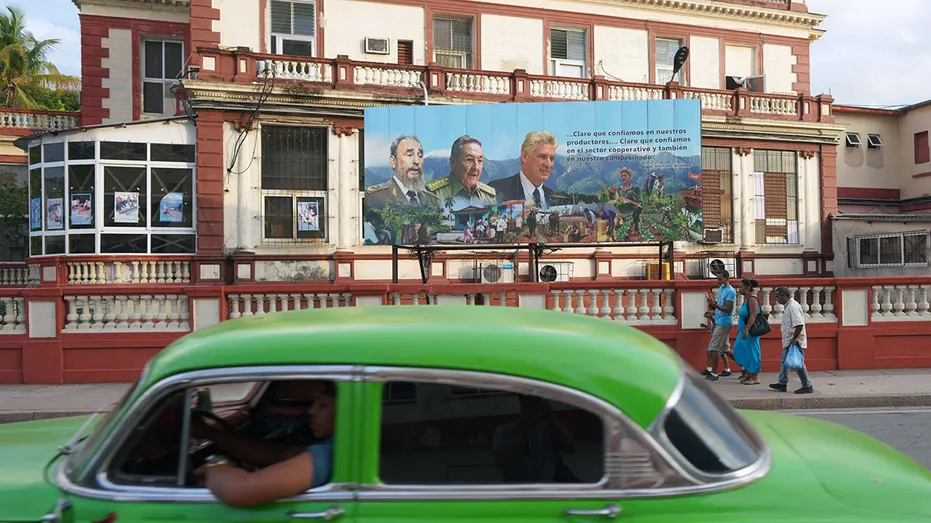
SouthernWorldwide.com – The Trump administration has implemented what experts are calling the most significant expansion of U.S. sanctions on Cuba in decades.
This move aims to apply pressure not only on Havana but also on foreign companies and banks that continue to conduct business with the island’s military-linked economic empire. Supporters believe this is the first broad application of Cuba-related secondary sanctions against foreign firms.
Signed by President Donald Trump on May 1, the new framework, established under an executive order, extends pressure beyond U.S. companies for the first time. It threatens foreign firms with sanctions exposure if they continue operations in key Cuban economic sectors linked to Grupo de Administración Empresarial S.A., or GAESA.
TRUMP ADMINISTRATION PRESSED TO CLOSE CUBA EMBARGO LOOPHOLE AS OIL SET TO RUN OUT WITHIN DAYS
Proponents of these measures argue they close a loophole that previously allowed foreign investors to support Cuba’s communist regime, while the long-standing U.S. embargo primarily restricted Americans.
Conversely, critics contend that these measures risk exacerbating the severe humanitarian crisis on the island without effectively weakening the government. They express concern that the impact will disproportionately affect ordinary Cubans.
“For the first time ever in a truly unprecedented fashion, that’s the same logic that the administration is now applying to Cuba,” stated one expert, highlighting the novel approach of these sanctions.
The sanctions specifically target GAESA, a vast conglomerate with military ties that analysts estimate controls between 40% and 70% of Cuba’s economy. This includes significant holdings in tourism, mining, retail, ports, and financial services.
A recent report from the Foundation for Defense of Democracies, authored by Meizlish and Connor Pfeiffer, asserted that foreign companies operating in Cuba are, in effect, contributing to the sustenance of the regime’s military and political leadership.
TRUMP DECLARES NATIONAL EMERGENCY OVER CUBA, THREATENS TARIFFS ON NATIONS THAT SUPPLY OIL TO COMMUNIST REGIME
Under the new authorities, the State Department sanctioned GAESA and several related entities in May. This action opens the door for potential penalties against foreign companies and financial institutions that continue dealings with them after a wind-down deadline of June 5.
Meizlish argued that previous sanctions regimes were ineffective because they isolated American companies while foreign entities continued to finance the Cuban state. This allowed the regime to circumvent U.S. restrictions.
“There’s a lot of Spanish firms, for instance, that have invested millions of dollars in luxury hotel properties, villa properties in Cuba that partner with GAESA, all funding this military enterprise at the expense of the Cuban people,” he explained. He pointed to specific examples of foreign investment.
He also noted Canadian involvement in Cuba’s nickel and cobalt sectors, asserting that foreign investment in these areas has generated substantial revenue for the Cuban regime.
However, critics of the policy warn that the economic repercussions could disproportionately harm ordinary Cubans, exacerbating their already difficult living conditions.
William LeoGrande, a seasoned Cuba expert at American University, described the May 1 measures as a significant escalation. He emphasized that they specifically target foreign businesses, moving beyond restrictions solely on Americans.
LeoGrande reiterated that the new sanctions represent a major escalation because they extend beyond American entities and aim to deter foreign companies from engaging with GAESA by threatening sanctions exposure. This creates a significant risk for international businesses.
While acknowledging that the measures could reduce revenue for the Cuban government, LeoGrande argued that the broader population is likely to bear the brunt of the economic impact. He expressed concern about the unintended consequences.
CUBA’S ENTIRE ELECTRICAL GRID COLLAPSES, LEAVING WHOLE ISLAND WITHOUT POWER
“This would potentially deprive the Cuban government of funds, but the impact will fall mainly on ordinary citizens because it means the government has fewer resources to import food, medicine and fuel,” he stated. This highlights the potential for severe shortages.
The debate over these sanctions unfolds as Cuba grapples with its most profound economic and humanitarian crisis in years. The situation has become increasingly dire for its citizens.
The World Food Programme reports a worsening food insecurity situation, compounded by fuel shortages, rampant inflation, and declining access to imported goods. Additionally, U.N. officials have warned that widespread electricity shortages and blackouts are severely disrupting essential services, including hospitals, vaccination programs, and food distribution networks across the island.
LeoGrande also cautioned that tougher sanctions could inadvertently contribute to another migration crisis, similar to past events. He expressed concern about a potential exodus of Cubans seeking better opportunities elsewhere.
NICARAGUA BLOCKS PATHWAY USED BY CUBAN MIGRANTS TO REACH THE US
“Another unintended effect is that by making living conditions in Cuba even more desperate, tougher sanctions could trigger a mass migration like we saw in 1980 or 1994,” LeoGrande warned. He drew parallels to historical patterns of Cuban migration.
On background, a U.S. official rejected the argument that American sanctions are the primary cause of Cuba’s humanitarian crisis. The official presented a counter-narrative to the prevailing criticisms.
The official further stated that U.S. law explicitly permits the export of food, medicine, and medical equipment to Cuba. They accused the Cuban regime of hoarding “billions in overseas bank accounts instead of investing in electricity, infrastructure and the daily needs of its people,” implying a misallocation of resources.
This ongoing debate mirrors long-standing arguments surrounding U.S. sanctions on countries such as Iran and Venezuela. Supporters of these policies view economic pressure as a vital tool for weakening authoritarian governments. In contrast, critics argue that such regimes often persist, while civilian populations bear the brunt of the economic damage, leading to widespread suffering.
Meizlish argued that sanctions should not be evaluated solely on their immediate effectiveness in toppling governments. He suggested a broader perspective on their impact and purpose.
“The problem isn’t that the embargo went too far,” he contended. “It’s that it didn’t go far enough.” This statement implies a belief that stronger, more comprehensive measures are necessary to achieve desired outcomes.