SouthernWorldwide.com – The Trump administration’s latest approach to Iran involves a delicate balance, granting immediate relief from oil sanctions while deferring critical nuclear discussions to future negotiations. This strategy, acknowledged by officials, carries inherent risks, particularly given their expectation that Tehran might not fully adhere to any future agreements.
A senior U.S. official candidly stated during a press briefing, “We come in with the full expectation that they will lie, and they will cheat.” This sentiment underscores the administration’s belief that any definitive accord will necessitate a robust verification and enforcement system capable of identifying any breaches.
The current framework establishes a 60-day negotiation window. It hinges on the assumption that Iran can be dissuaded from violating its commitments through stringent monitoring and enforcement measures. Administration officials emphasize that any granted sanctions waivers can be revoked if Iran fails to comply. However, critics argue that the U.S. is relinquishing valuable leverage before the most challenging nuclear issues have been resolved.
TRUMP ADMINISTRATION UNVEILS SWEEPING TERMS OF PROPOSED IRAN AGREEMENT
According to the memorandum of understanding revealed by administration officials, the Treasury Department is set to immediately issue waivers. These waivers will permit Iran to export crude oil, petroleum products, and their derivatives. Additionally, Iran will gain access to associated banking, insurance, and transportation services.
However, the agreement does not immediately compel Iran to dismantle its nuclear program, surrender its enriched uranium stockpile, or cease enrichment activities. Instead, the deal stipulates that the U.S. and Iran will negotiate the “disposition” of Iran’s enriched uranium stockpile. A minimum methodology identified for this process is down-blending on-site, supervised by the International Atomic Energy Agency.
Administration officials defended this approach as an initial nuclear concession, asserting that the U.S. continues to advocate for more stringent measures. One senior U.S. official remarked on the call, “Of course, that’s a flaw, and we will push for more than that. But the fact that they’re conceding to that is a major, major win for the United States of America.” He further elaborated, “They’re saying, ‘We will destroy the enriched stockpile, and this is how we’re going to do it at a minimum.'”
Down-blending would reduce the enrichment level of the material but would not remove it from Iran’s possession.
President Trump has defended this framework as a necessary step to avert prolonged conflict, disruptions to shipping lanes, and potential market shocks. Speaking at the G7 summit in Évian, France, Trump stated, “If we didn’t do this deal, we could have dropped more bombs for another three weeks, two weeks, four weeks, two years.” He added, “You would never have the Hormuz Strait open. … Your market would have, instead of going up, would go down at levels that nobody ever saw before, maybe except for 1929.”
TRUMP DEFENDS WAR DEAL IN MARATHON PRESSER, USING SEMANTICS ON WHY IRAN IS GETTING $300 BILLION
“I did not want to see economic catastrophe,” Trump emphasized.
The framework garnered support from Senator Lindsey Graham, R-S.C., a prominent figure known for his strong stance against Iran. After consulting with special envoy Steve Witkoff, Graham expressed his belief that the 60-day agreement would prove “beneficial.”
“Whether or not the United States can reach an acceptable, verifiable deal with Iran regarding its nuclear program and other issues is yet to be determined, but I see little downside to trying,” Graham commented.
Conversely, other critics voiced concerns that the deal offers sanctions relief before Iran has committed to any concrete actions regarding its nuclear program.
Broader sanctions relief, a withdrawal of U.S. forces, and a $300 billion reconstruction fund are also part of the potential final agreement, contingent on both sides reaching a deal within the 60-day timeframe.
Those who previously opposed the military action now argue that this memorandum represents the most favorable outcome the U.S. can achieve following the conflict and blockade.
According to Kelanic, Trump is effectively “buying off Iran to return to something approaching the pre-war status quo” by offering immediate sanctions waivers and unfreezing assets linked to the reopening of the Strait of Hormuz.
She posited that these immediate waivers are a necessary price for Trump to demonstrate his commitment to diplomacy, especially after authorizing strikes during ongoing negotiations.
“This is like earnest money, right?” Kelanic questioned. “It’s like upfront cash that shows that he really means it. It’s a costly signal that Trump essentially forced himself to have to make by breaking off negotiations and bombing Iran in the middle of them.”
Iran has characterized the memorandum as a test of Washington’s willingness to act first, rather than merely offer assurances.
Iran’s foreign ministry spokesman, Esmaeil Baqaei, stated during a press briefing on Monday, “Unfortunately, it must be acknowledged that Iran’s deep mistrust of the United States stems from a long history of wrongdoing by American leaders.” He added, “The United States still has a long way to go before it can earn the trust of the Iranian people.”
The memorandum leaves the core nuclear mechanics to be resolved within the 60-day period, alongside critical issues such as ballistic missile production and proxy funding.
“What we have in this deal already suggests that if there is a deal in 60 days on the nuclear issue, that deal is going to be weaker than the JCPOA,” Misztal remarked, referring to the Obama-era Joint Comprehensive Plan of Action.
Under the JCPOA, Iran was mandated to significantly reduce its uranium stockpile, including by removing excess material from the country. Misztal noted that the new agreement’s minimum standard of on-site down-blending suggests that Iranian uranium may remain within Iran.
“That means, first of all, no uranium is leaving Iran, which happened under the JCPOA,” he pointed out.
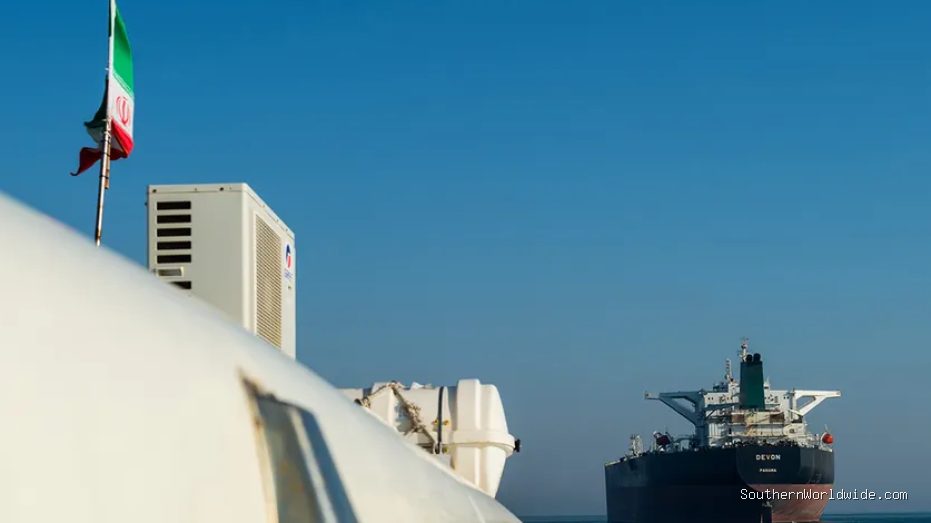
The agreement also guarantees toll-free commercial transit through the Strait of Hormuz for 60 days, during which Iran, Oman, and Gulf states will engage in discussions for a long-term framework governing administration and maritime services in the waterway.
Behnam Taleblu, senior director at the Foundation for Defense of Democracies, expressed concern that this provision might grant Iran a role in regulating a vital international waterway, especially after its demonstrated ability to disrupt global shipping.
“I mean, not just charge a toll, but regulate the crucial international waterway,” Taleblu stated. “There can be no doubt over the fact that the Strait of Hormuz needs to be open and open to all, not just whomever Iran and Iran plus its friends can pressure others into.”
“If there is no guarantee of freedom of navigation, the Islamic Republic is going to salami slice the resolve of the Gulf countries and basically try to throw its weight around in this strait again.”
The agreement also calls for the U.S. and its regional partners to develop a reconstruction and economic development plan for Iran valued at a minimum of $300 billion. U.S. officials have emphasized that this provision does not involve American taxpayer funds. However, critics argue that any funding source could free up resources for the Iranian regime to allocate to other priorities.
“It doesn’t matter if it’s Chinese money or American money or [United Arab Emirates] money,” Taleblu asserted. “The more they have access, the less they have to compete over resources and more they can fund what they want to fund.”
Should negotiations falter within the 60-day period, President Trump has indicated the possibility of reintroducing military pressure.
“If we think that they’re just dragging us along and kind of bulls—-ing us, then we’ll be very quick to pull the plug,” a senior administration official commented.