SouthernWorldwide.com – The United States, alongside other nations forming the Shield of the Americas, has strongly condemned what it terms “ongoing efforts” to undermine the democratically elected government of President Rodrigo Paz in Bolivia amidst significant civil unrest.
A joint statement, issued by 13 participating nations, specifically denounced the road blockades as “cynical efforts” aimed at disrupting the delivery of essential supplies such as food and medicine to the Bolivian populace.
The declaration emphasized that the will of the majority, as expressed through the ballot box, should not be supplanted by mob rule. It served as a clear rejection of attempts to reverse the progress made by Bolivia after two decades of what the statement described as corrupt administrations.
Furthermore, the statement called for accountability for individuals or groups financing protests with illicit funds derived from drug trafficking and transnational criminal activities. It also urged those with legitimate grievances to engage in dialogue with the government, rather than allowing their causes to be exploited by those seeking to regain power.
The countries that co-signed the statement include Argentina, Bolivia, Chile, Costa Rica, the Dominican Republic, Ecuador, El Salvador, Guyana, Honduras, Panama, Paraguay, and Trinidad and Tobago, in addition to the United States. This collective stance underscores a regional concern over the political stability and democratic processes in Bolivia.
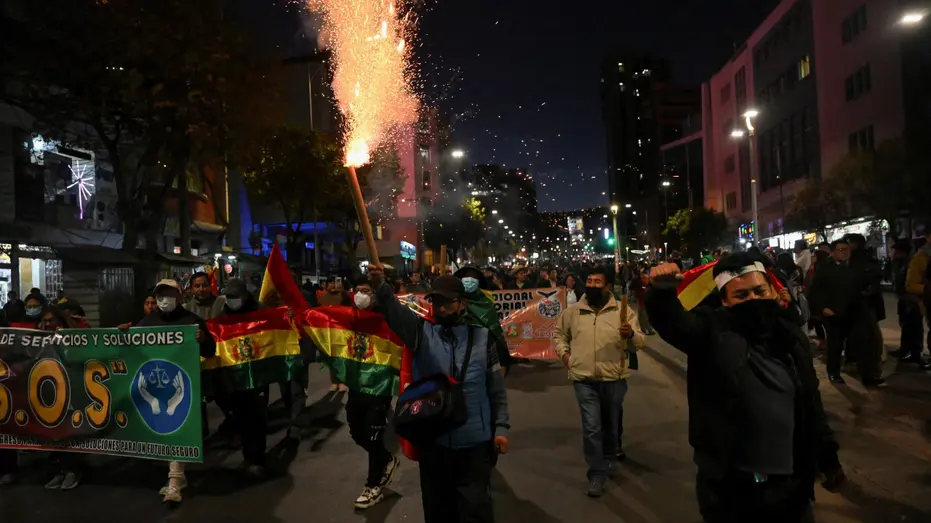
The condemnation arrives as Bolivia’s capital, La Paz, has experienced several weeks of intense social unrest. Large-scale protests have led to the blockage of streets in major urban centers, fueled by widespread discontent over economic inflation and escalating fuel prices.
Earlier in the week, Bolivian Defense Minister Marcelo Salinas submitted his resignation, a development that occurred amidst the ongoing crisis. This resignation marks a significant shift in the government’s leadership during this turbulent period.
Upon assuming office, President Paz had championed a land reform bill intended to bolster the agribusiness sector. However, this initiative drew criticism from Indigenous farmers who expressed concerns about potential evictions. Additionally, Paz’s administration eliminated fuel subsidies, leading to a sharp increase in fuel prices, reportedly by nearly 90%.
The surge in fuel costs was met with considerable public backlash. Motorists reported that the gasoline supplied was of poor quality, causing damage to their vehicles, which further exacerbated the public’s frustration.
The Trump administration has publicly attributed the mass unrest to instigation by drug traffickers. This assertion suggests a belief within the U.S. government that criminal elements are actively exploiting the situation for their own illicit gains.
Meanwhile, former President Evo Morales, a prominent figure from the Movement for Socialism (MAS) party, has called for early elections. Morales, who served as Bolivia’s first Indigenous president for an unprecedented 14-year period, expressed his view that Paz has limited options, suggesting either a “suicidal decision like militarization” or holding elections within the next 90 days.
For nearly two years, Morales has been residing in the coca-growing region of Chapare, evading an arrest warrant. He faces charges of human trafficking, stemming from allegations of sexual misconduct with a minor. Morales vehemently denies these accusations, asserting they are politically motivated.
In a related development, War Secretary Pete Hegseth stated on Thursday that the War Department and the Americas Counter Cartel Coalition (A3C), a recently formed multinational alliance, unequivocally reject any attempts to depose President Rodrigo Paz Pereira, who is currently six months into his term.
“The United States is watching,” Hegseth declared via a post on X. “Bolivia must not allow itself to fall prey to the old status quo of narco-terrorist dominance in the region.” He further affirmed the commitment to supporting A3C partners like Bolivia in deterring narco-terrorists from profiting from “death and destruction in our hemisphere.”