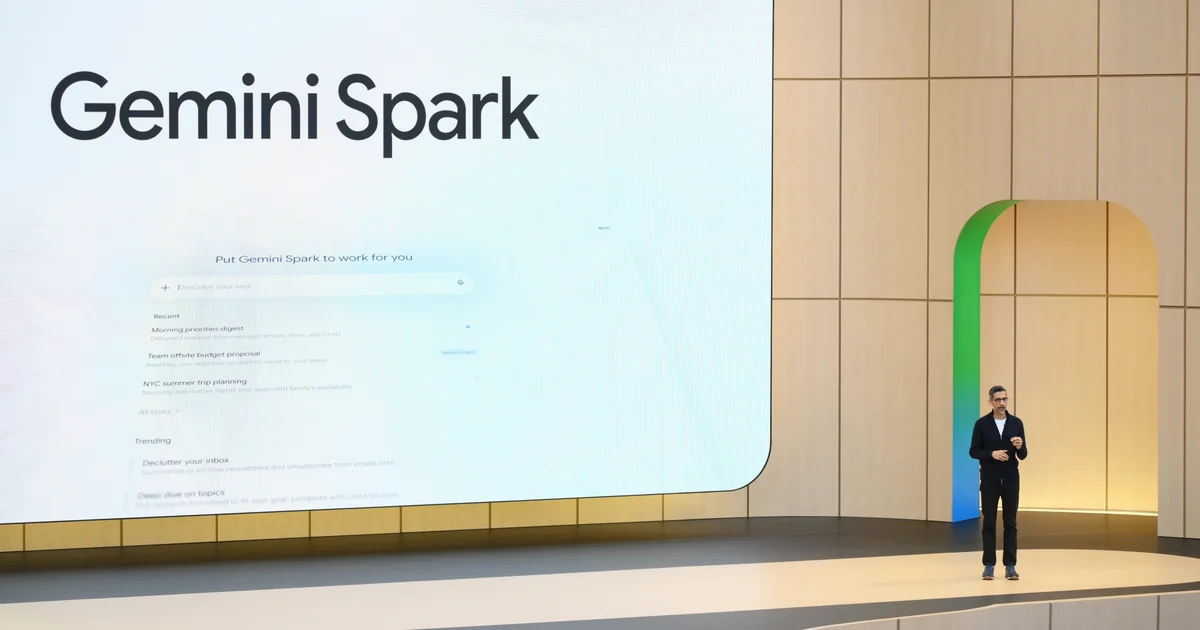
SouthernWorldwide.com – Google’s new AI agent, Gemini Spark, is poised to revolutionize how consumers interact with artificial intelligence, according to tech experts.
This development marks Google’s direct response to the buzz surrounding OpenAI’s autonomous AI agent, OpenClaw. The announcement came during a showcase of Google’s latest AI features designed to perform tasks on behalf of users.
“We are witnessing a significant shift where AI is evolving from a conversational tool to one that can actively perform actions for you,” explained Clarence Lee, a tech entrepreneur and lecturer at Cornell University’s SC Johnson College of Business.
Lee likens an AI agent like Gemini Spark to a personal assistant capable of handling various tasks, from drafting emails to making travel arrangements. “It’s akin to having a dedicated team you can delegate responsibilities to,” he added.
For an AI agent to perform optimally, it must possess a deep understanding of its human user. This sentiment was echoed by Karan Girotra, a professor at Cornell University specializing in operations, technology, and innovation.
“You provide it with an objective, and it takes the necessary steps to achieve that objective on your behalf,” Girotra stated. “Its effectiveness hinges on its intelligence, context awareness, and the information it has access to regarding those actions.”
This is precisely where Google appears to hold an advantage over its competitors. Gemini Spark’s integration with Google’s widely adopted suite of digital tools, including Gmail and Google Calendar, grants the AI access to crucial contextual information about the user.
“Its connection to Gmail and other applications means it possesses more personal insights about you than many other systems, allowing personal intelligence to be a key feature of the agent,” Girotra elaborated.
What can Gemini Spark do?
Google revealed that Gemini Spark is currently undergoing testing and is slated for release next week to Google AI Ultra subscribers. This premium subscription costs $100 per month and offers the highest level of access to Google’s AI capabilities.
Read more : New Obesity Treatment May Preserve Muscle Mass During Weight Loss
“Spark signifies a major transformation for Gemini, moving it beyond an assistant that answers questions to an active collaborator that executes real tasks for you, guided by your instructions,” Google stated in a recent blog post.
Gemini Spark seamlessly integrates with Google applications such as Gmail, Docs, and Slides. By accessing your inbox, it can analyze your emails to provide updates from your children’s schools or remind you of important deadlines. Furthermore, it can consolidate meeting notes into a concise document highlighting key takeaways.
Beyond the Google ecosystem, Gemini Spark can interact with external services like Instacart and OpenTable, according to the Alphabet-owned company. This allows users to instruct Gemini Spark to, for instance, book a dinner reservation or purchase groceries.
AI at your own risk
As with any advanced technology, privacy remains a significant consideration. The more tasks an AI undertakes, the more information it can access. This poses potential risks, especially as AI equips hackers with powerful new tools or becomes a prime target for advertisers.
For example, connecting an agent to Instacart means it learns your food preferences, while granting it access to your emails could expose sensitive personal data.
Google has emphasized that Gemini Spark will require explicit user permission before executing actions with significant implications, such as making purchases or sending emails.
Despite these concerns, Cornell’s Lee advises a cautious approach to adopting AI agents. He recommends initially entrusting them with simpler, low-risk tasks.
“When you first hire an assistant, you’re unsure of their capabilities, so you test them with minor duties before giving them access to sensitive information like your credit card details,” he explained. “You might start by having them draft emails or compile a grocery list. I suggest users begin with such tasks.”