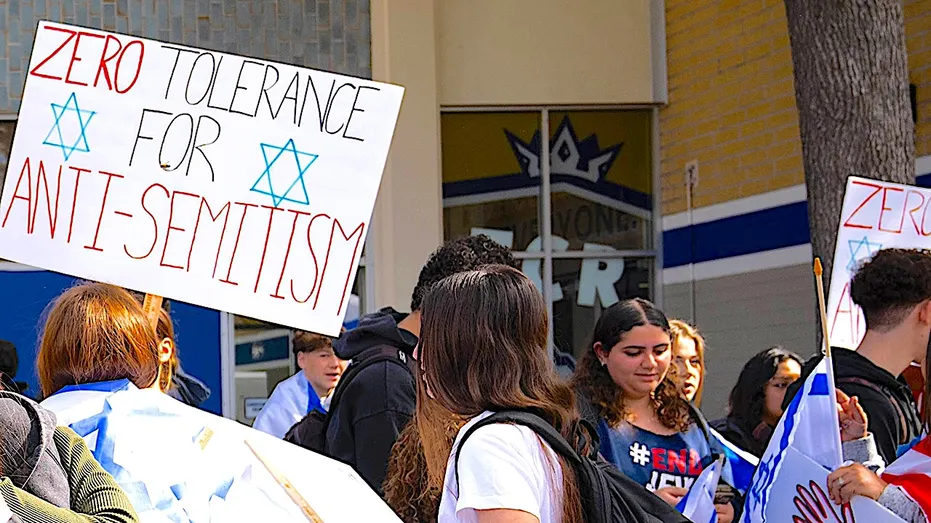
SouthernWorldwide.com – In February, during the Super Bowl, a message addressing antisemitism reached a massive audience, one of the largest in American history. The message was clear, direct, and impossible to ignore. For a fleeting moment, the nation’s attention was drawn to a pervasive issue that Jewish communities have been grappling with for years.
People watched the ad. They discussed it amongst themselves. They shared it widely.
And then, as quickly as it appeared, that moment of national focus passed.
Now, as the academic year draws to a close, students are beginning to pack away their belongings and sign yearbooks. For many, summer signifies a period of relaxation and rejuvenation. However, for Jewish teenagers, a more pressing question lingers as they depart from school for the break.
FROM HOMEROOM TO HATE: HOW JEWISH STUDENTS ARE FACING A NEW KIND OF PRESSURE IN PUBLIC SCHOOLS
What will be different when I return next year?
Across the nation, Jewish students continue to confront and navigate instances of antisemitism. Some are subjected to hateful remarks, such as being called “baby killers” by their peers. Others are told that Hitler “should have finished the job.” Many discover swastikas scrawled on school walls. Additionally, some face online harassment, threats in school hallways, mockery for their support of Israel, or feel targeted simply for expressing their Jewish identity.
Simultaneously, a contrasting reality is unfolding within these same educational institutions.
As the leader of NCSY and the Jewish Student Union, I have observed that in over 550 middle and high schools throughout the United States, students are actively choosing to participate in voluntary Jewish clubs and programs. These initiatives foster a distinctly different and more positive experience.
Jewish teens come together not only with one another but often with non-Jewish classmates who express genuine curiosity about Judaism, Israel, and Jewish life. These gatherings provide a space for students to forge friendships, engage with complex questions, and connect with their Jewish identity in a manner that feels both authentic and profoundly meaningful.
These positive interactions are not characterized by fear. Instead, they are defined by curiosity, openness, and a palpable sense of pride.
This is the essence of true resilience.
It is crucial to be unequivocal on one point. The creation of entirely safe environments for Jewish students within schools is paramount. Educational institutions, communities, and policymakers bear a significant responsibility to directly confront and address antisemitism. This imperative work cannot be overlooked or set aside.
However, the cultivation of long-term resilience is achieved through a different approach.
A young person who possesses a deep understanding of their heritage, who has actively experienced their traditions, and who feels a strong connection to a broader community, inherently carries a level of confidence that is not easily undermined. This profound confidence is not the result of a single conversation or a widely publicized event. Rather, it is developed gradually through meaningful relationships, shared experiences, and consistent engagement with aspects of life that hold genuine significance.
This is the core of our mission. Our focus is not on equipping teenagers with the rhetorical skills to win arguments. Instead, we aim to empower them to build a sense of identity that is so robust and so deeply ingrained that it cannot be diminished by a casual remark in a hallway or a sensational headline online.
A student who has experienced the profound joy of Shabbat, who has cultivated friendships across diverse communities, and who feels a deep connection to their ancestral heritage, possesses an emotional and psychological fortitude that external hostility cannot erode.
When students return to school following challenging experiences, the surrounding environment may not have undergone significant alteration. However, the students themselves have transformed. They return more grounded, more connected, and more assured of their own identities.
They no longer depend on a singular moment to define who they are.
This crucial distinction holds significant weight, particularly in the current climate.
The pertinent question is not whether the Super Bowl advertisement was impactful. The true question is whether we are prepared to translate that awareness into actions that foster enduring change.
The decisions being made at this very moment will shape the landscape of the upcoming academic year. Parents are actively engaging with school administrators. Educational leaders are reviewing existing policies and procedures. Community organizations are diligently planning for the months ahead. These ongoing dialogues will ultimately determine the environment that students will re-enter in the fall.
The time to act is now. Which schools are initiating new Jewish Student Union clubs? Which summer programs are actively preparing teenagers for the challenges and opportunities they will encounter upon their return to campus? Which parents are actively encouraging their children to participate in Jewish extracurricular activities, foster Jewish friendships, and deepen their connection to their identity before the commencement of the next school year?
This vital work rarely garners national headlines. It does not receive airtime during major events like the Super Bowl. Yet, it is precisely this kind of foundational work that determines whether a Jewish teenager enters school feeling isolated or supported, hesitant or proud.
If we are genuinely committed to addressing antisemitism, then our efforts cannot be confined to mere statements and awareness campaigns. We must proactively invest in the relationships, communities, and experiences that instill in young people the confidence to stand tall as Jews, long before they encounter hostility in a classroom or a hallway.
By the conclusion of the summer break, Jewish students will return to their schools. They will swiftly ascertain whether the adults in their lives treated this issue as a fleeting concern or as a profound and ongoing responsibility.
They are observing. And they will know.