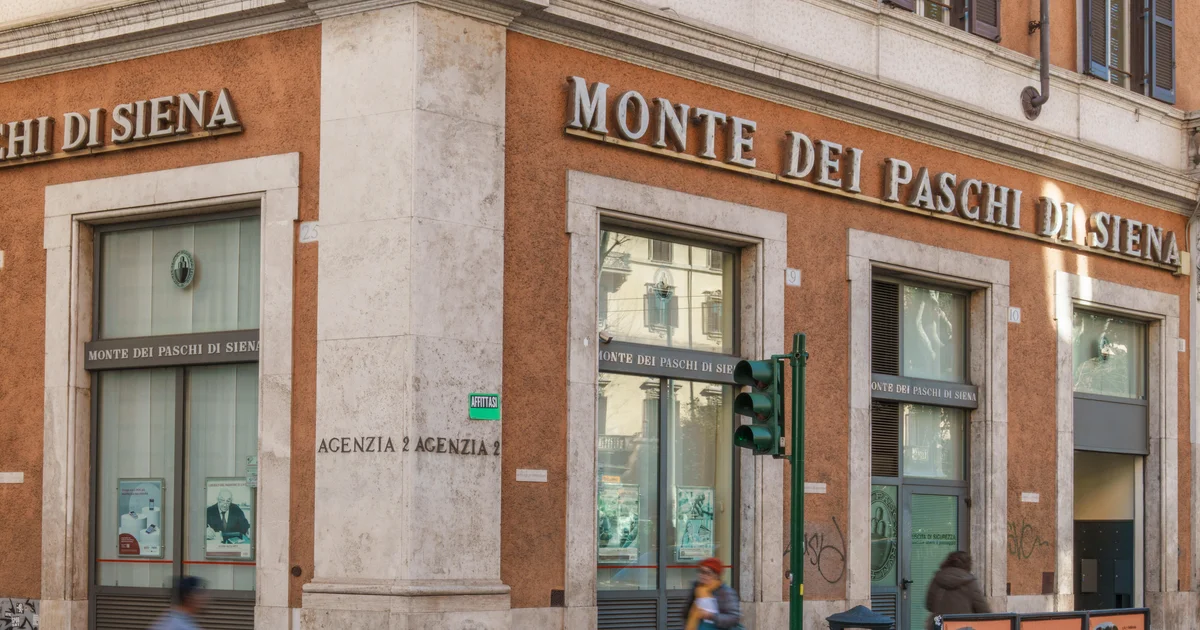
SouthernWorldwide.com – A significant financial development is unfolding as a bidding war has erupted for the ownership of the world’s oldest bank, Italy’s Banca Monte dei Paschi di Siena (MPS).
Established in 1472 by the Republic of Siena, MPS was originally founded to offer credit to its less fortunate citizens. Over more than five centuries, this Tuscan lender has grown substantially, becoming one of Italy’s largest banking institutions and a critical component of the nation’s financial infrastructure.
The competition intensified rapidly, with two major suitors emerging within a mere 24-hour period. On Monday, Intesa Sanpaolo, Italy’s largest bank, submitted an unsolicited bid valued at 31 billion euros, approximately $36 billion, for MPS.
This offer followed closely on the heels of a proposal from Banco BPM, which is Italy’s third-largest bank based on its assets. Banco BPM had described its offer as a “merger of equals,” indicating a desire for a combined entity rather than a direct acquisition.
Intesa Sanpaolo has stated that its proposed acquisition would result in the creation of the second-largest banking group within the Eurozone, trailing only Spain’s Banco Santander.
While Banco BPM did not publicly disclose the financial details of its offer, the bank did indicate that the combined entity would possess a market capitalization of around 50 billion euros, or $58 billion. This would position it as Italy’s second-largest lender.
Banco BPM’s proposed merger has attracted considerable attention, not only from a financial perspective but also from a political standpoint. A key shareholder in Banco BPM is the French banking giant Crédit Agricole, which holds approximately 20% of the bank’s shares.
Critics have raised concerns that a merger could grant Paris an indirect pathway into a strategically vital Italian financial institution. This has led to apprehensions regarding the future control of MPS’s extensive assets.
One of the most significant holdings of MPS is its 13% stake in Generali Insurance. Generali is recognized as one of Italy’s largest private holders of government bonds, making this stake a crucial factor in the potential takeover or merger discussions.
The implications of a potential acquisition extend beyond the banking sector, holding considerable significance for Italians due to MPS’s substantial holdings in government debt and other strategic assets.
Although no senior Italian government officials have publicly voiced opposition to MPS falling under foreign control, concerns about Crédit Agricole’s influence over Banco BPM have been a recurring theme in political and financial discussions.
Reports from The Financial Times suggest that some individuals within the Italian government are resistant to the proposed BPM-MPS merger. This resistance stems from the prospect of increased French influence over key Italian financial assets, including government debt.
This issue is particularly sensitive for Prime Minister Giorgia Meloni’s nationalist government. The administration has adopted an increasingly interventionist stance, aiming to protect companies deemed nationally important from foreign influence.
According to Reuters, Prime Minister Meloni and her close allies have previously worked to prevent foreign investors from increasing their control over Generali. This reflects a broader objective to maintain domestic influence over strategically important sectors of the Italian economy.
The ongoing bidding war for Banca Monte dei Paschi di Siena highlights the complex interplay of financial ambition, national interest, and strategic asset control within Italy’s evolving economic landscape.