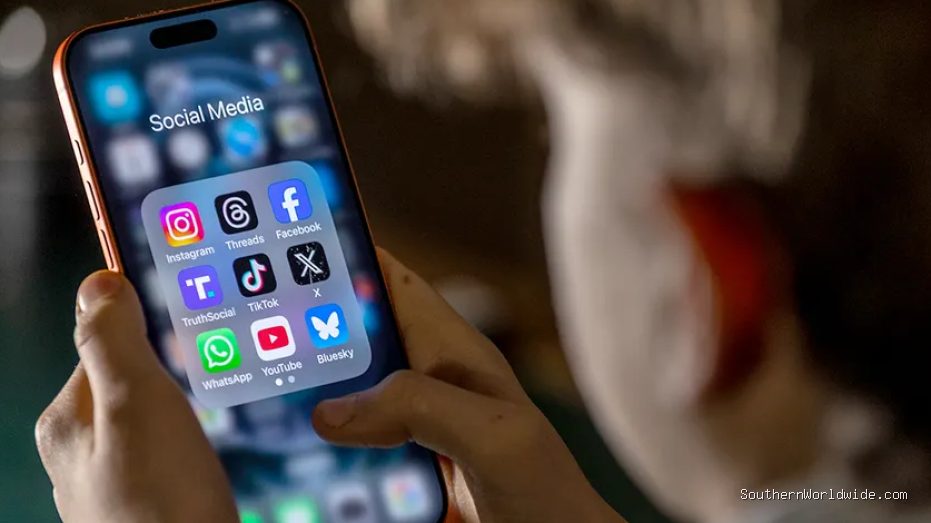
SouthernWorldwide.com – United Kingdom Prime Minister Keir Starmer has announced a significant policy shift, signaling the UK’s intention to ban children under the age of 16 from accessing major social media platforms. This move targets prominent tech giants like TikTok, Snapchat, and YouTube, with substantial penalties planned for companies failing to enforce the age restriction.
The proposed regulations are slated to be implemented early next year. The ban will encompass platforms such as Instagram, Facebook, and X. However, messaging services like WhatsApp and Signal, along with YouTube Kids, will be exempt from these restrictions.
Prime Minister Starmer acknowledged the potential for resistance from technology companies and admitted that some teenagers might attempt to bypass the new rules. Nevertheless, he emphasized the government’s duty to intervene and protect young users.
“Every parent can see it with their own eyes. Social media is making children unhappy,” Starmer stated to reporters. He further shared that he has personally heard from families who are desperately seeking change, and he is committed to acting in their best interest. Starmer himself is a parent to two teenagers.
This initiative positions the UK at the forefront of a growing global effort to regulate children’s engagement with social media. Australia has already taken a similar step, becoming the first nation to prohibit children under 16 from creating social media accounts. Other countries, including Canada, Brazil, and Indonesia, have either introduced or are considering comparable age-based limitations.
France, Spain, Denmark, Thailand, and South Korea are also among the nations exploring or developing similar strategies to safeguard young people online.
Under the proposed British framework, social media platforms could face substantial fines, potentially in the millions of pounds, if they do not implement reasonable measures to prevent minors under 16 from accessing their services. Starmer clarified that the enforcement efforts will focus on the technology companies themselves, rather than on the children.
This decision follows a comprehensive public consultation process that garnered an impressive 116,000 responses. The feedback came from a diverse group, including parents, children, and representatives from the tech industry. This response rate was the second-highest for a government consultation in recent history, surpassed only by one concerning same-sex marriage in 2012.
Official figures indicate that over 90% of the respondents supported the proposed ban on under-16s.
In response to the announcement, a spokesperson for YouTube expressed concern, warning that a broad social media restriction could inadvertently “push kids out of such curated, supervised, beneficial experiences and towards anonymous, less-safe services.”
The U.S. Embassy in London has also weighed in, advising that any regulations should be carefully defined and should not compromise free speech protections. Additionally, the embassy voiced concerns regarding the potential for increased burdens on American technology companies.
Prime Minister Starmer indicated his intention to discuss this critical issue with global leaders, including President Donald Trump, at the G7 summit scheduled to commence in France on Monday.