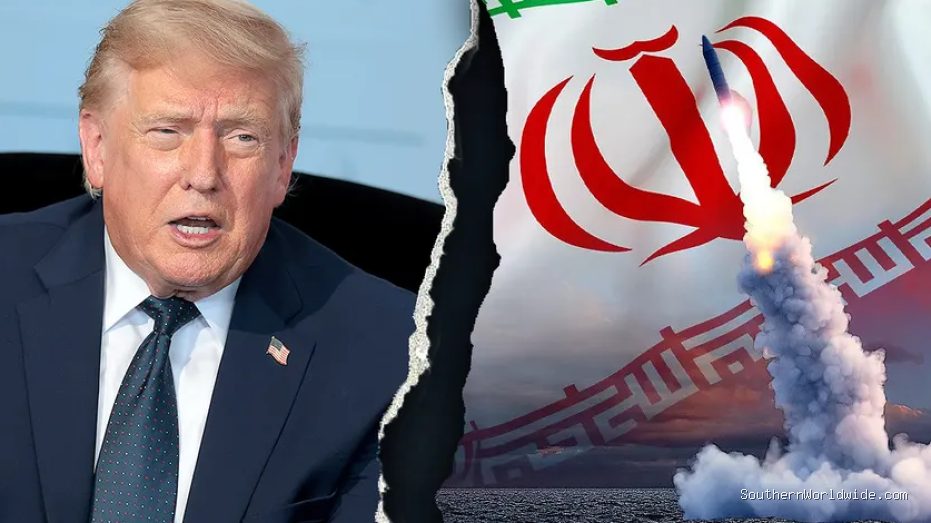
SouthernWorldwide.com – President Donald Trump’s new framework for a deal with Iran is facing scrutiny from nuclear experts who express concerns that the agreement could grant Tehran excessive control over its uranium stockpile. These experts warn that the deal might proceed without first ensuring the location, security, and verification of this material by inspectors.
The core of the concern lies in the reported U.S.-Iran memorandum of understanding (MOU). This document suggests that both parties will determine the fate of Iran’s enriched uranium stockpile through a process yet to be negotiated. The MOU specifically mentions on-site “downblending” as the minimum acceptable method for handling the material, under the supervision of the International Atomic Energy Agency (IAEA).
Downblending involves diluting enriched uranium to a level less suitable for nuclear weapons. While the MOU does not explicitly state that Iran will maintain a civilian nuclear program, it does indicate that discussions will occur regarding enrichment and other aspects related to Iran’s “nuclear needs” in the final agreement.
TRUMP NUCLEAR TALKS FACE DEFINING QUESTION: WHAT HAPPENS TO IRAN’S URANIUM STOCKPILE?
These expert warnings emerge as the MOU has already been signed. However, planned follow-up talks in Switzerland, intended to initiate technical negotiations, were postponed on Friday.
This delay leaves crucial nuclear details unresolved, even as the agreement enters a 60-day period for negotiating a final deal. An official stated that the U.S. has reached understandings with Iran concerning its uranium stockpile, and the new deal represents the initial step in translating these understandings into tangible outcomes.
These outcomes are expected to include advancements in managing enriched uranium stockpiles, the dismantling of nuclear sites, an enrichment ban, and access for inspections. The official further noted that the U.S. has already engaged in productive discussions with Iran on these matters, and with the MOU now formally in place, negotiators are poised to work towards rapid progress.
US-IRAN TALKS POSTPONED IN SWITZERLAND AMID ISRAEL-HEZBOLLAH TENSIONS; HORMUZ REMAINS A KEY ISSUE
“They have promised not to enrich. They have promised that they would allow inspectors in to destroy that highly enriched stockpile. And then, of course, it’s not usable anymore. You take it somewhere else,” Vance stated, referencing past assurances. “They promised a number of things, and that’s why the deal contemplates a number of benefits if they do those things. But it doesn’t do anything if they don’t actually meet those promises.”
HOW DOES TRUMP SOLVE KEY ‘NUCLEAR DUST’ HANG-UP IN NEGOTIATIONS TO END IRAN WAR?
DeVore expressed a more cautious approach to quantifying Iran’s potential weapons capability. He explained that such an estimate is highly dependent on the sophistication of the weapon design itself.
He elaborated that the same uranium stockpile could potentially be used to construct fewer basic weapons or be stretched further if Iran were to develop a more advanced nuclear program. DeVore pointed out that on-site downblending, if adequately verified, would aim to render Iran’s approximately 1,000 pounds of 60% enriched uranium unsuitable for further enrichment.
However, DeVore cautioned that this material would still require additional processing to be converted into weapons-grade uranium. He also stated his belief that Tehran currently lacks the capability to perform such processing, especially considering that key facilities were reportedly destroyed in strikes last year.
TOP SENATE REPUBLICAN RIPS INTO TRUMP’S IRAN DEAL, SAYS $300B MAKES OBAMA DEAL LOOK LIKE ‘A PITTANCE’
DeVore also drew a comparison to the Obama-era JCPOA, arguing that it provided inspectors with excessive notice and insufficient freedom to investigate suspicious locations. He contended that any new agreement must prevent a scenario where Iran can delay, limit, or direct inspections before the IAEA can conduct them on the ground.
During those negotiations, DeVore noted, the risk was that the minimum verification standards sought by defense and intelligence officials could become the starting point for diplomats. This, he feared, could result in a final deal that falls short of what experts deem necessary.
“Once you say, ‘This is the minimum we need,’ then that becomes the starting point, so anything agreed to is less than that,” DeVore concluded. “That’s what I fear.”