SouthernWorldwide.com – Over two decades ago, as a Pentagon strategist preparing for the 2003 Iraq War, a critical question loomed: what happens after the initial victory?
While military planners concentrated on defeating Saddam Hussein’s regime, my concern lay with the aftermath. Despite access to high-level planning and classified assessments, I felt too many assumptions were being made about the peace that would follow the fighting.
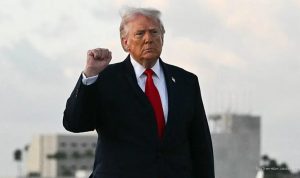
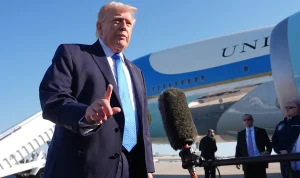
This same question resurfaced on Sunday when President Donald Trump announced on Truth Social that the United States and Iran had reached a memorandum of understanding to end nearly four months of war. He authorized the immediate reopening of the Strait of Hormuz and the lifting of the U.S. naval blockade, with a formal signing ceremony scheduled for Friday, June 19, in Geneva, hosted by Pakistan’s Prime Minister Shehbaz Sharif.
The cessation of hostilities and the return of diplomats to the negotiating table are significant developments. Oil futures dropped by 4%, and equity markets rallied on the news, indicating a positive immediate reaction.
WHAT COMES NEXT IN THE IRAN WAR? WHAT THIS CEASEFIRE WILL AND WON’T DO
However, history consistently shows that ending a war and establishing lasting peace are distinct achievements.
Trump deserves credit for bringing the conflict to this juncture. He was scheduled to arrive at the G7 summit in Evian-les-Bains on June 15, running through June 17, with considerable momentum. Last year, he departed the G7 in Canada early due to the escalating conflict. This year, he arrives having announced its tentative conclusion.
TRUMP IS REALIGNING WORLD ENERGY MARKETS AND THE IRAN STRIKES ARE ACTUALLY HELPING
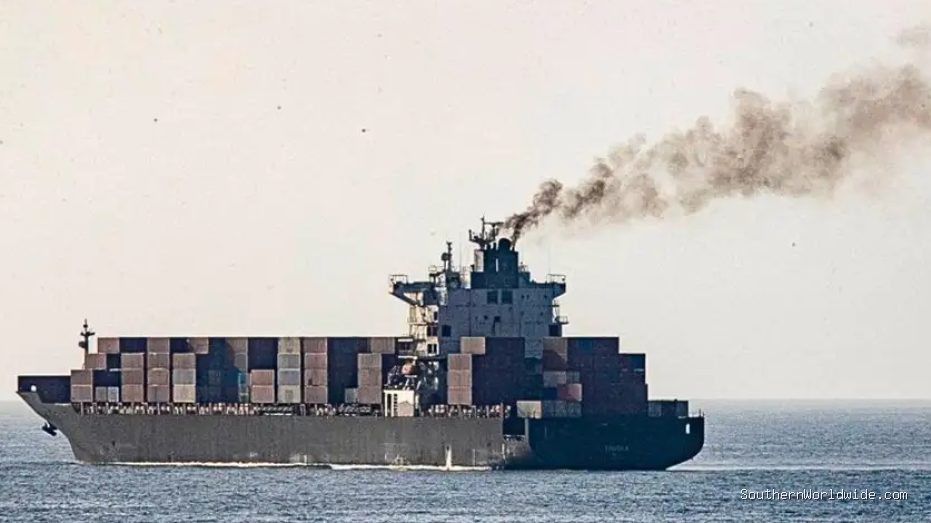
The economic implications were severe. The Strait of Hormuz had been effectively closed since late February, disrupting approximately 20% of global petroleum supplies, around 20 million barrels per day. U.S. inflation reached 4.2% in May, the highest in three years, largely driven by the energy shock caused by Iran’s actions.
The International Maritime Organization reported at least 46 attacks on international shipping in and around Hormuz since the conflict began. Reopening the strait offers the most immediate economic relief.
German Chancellor Friedrich Merz welcomed the agreement, emphasizing its determined implementation. He stressed the need for permanent and unrestricted free navigation through the Strait of Hormuz and called for Iran to verifiably cease its military nuclear plans. Even allies who had reservations about the military campaign cannot credibly dismiss the progress made.
Trump has scheduled bilateral meetings at the G7 with Macron and leaders from Egypt, Qatar, the UAE, and India – the regional partners whose quiet cooperation was instrumental in this agreement. Qatar and Pakistan served as primary mediators, with Saudi Arabia providing critical support. This coalition represents a genuine diplomatic accomplishment.
Nevertheless, Americans should view this agreement for what it is: a strategic pause.
TRUMP’S IRAN WAR NOW COMES DOWN TO ONE BRUTAL QUESTION: WHAT COMES NEXT?
This is not a criticism; a strategic pause may be precisely what is needed. However, a pause is not a definitive solution.
The Memorandum of Understanding (MOU) extends the ceasefire for 60 days, including in Lebanon, during which nuclear negotiations are to take place. A senior administration official confirmed that Iran has committed indefinitely to not procuring or developing nuclear weapons, a pledge that, if verified and enforced, surpasses the Obama-era Joint Comprehensive Plan of Action. Sanctions relief is contingent on compliance, and these terms appear strong on paper.
Even before the ink was dry, contradictions emerged. Iranian state media disputed U.S. officials on the terms for Hormuz, suggesting Iran reserves the right to impose transit fees. The international shipping industry expressed concerns about resuming transits through the strait despite the announced deal. The actual MOU text remains confidential, with European allies relying on diplomatic conversations rather than the document itself.
NETANYAHU’S ISRAEL GRAPPLES WITH TRUMP-IRAN DEAL AS DETAILS REMAIN UNCLEAR
The situation in Lebanon presents the most immediate complication. Israel was not a party to the negotiations. Defense Minister Israel Katz announced that the IDF would not withdraw from Lebanon, Syria, or Gaza under any deal terms. Prime Minister Benjamin Netanyahu reportedly informed Trump directly that Israel does not consider itself bound by the Lebanon provisions. Hezbollah launched drones into northern Israel on Sunday, even as the deal was announced.
The agreement does not resolve the crisis; it pauses it and creates an opportunity for resolution.
ANY NEW IRAN DEAL SHOULD BE JUDGED BY RESULTS, NOT VICTORY-LAP RHETORIC
What should Americans be observing?
Firstly, will Hormuz remain genuinely open, not just unblockaded, but trusted by commercial shipping and utilized by tankers at normal volumes? Iran’s conflicting statements on tolls, the necessity of mine clearance, and the shipping industry’s reluctance suggest the reopening will face challenges.
Secondly, will Iran accept verifiable, permanent limits on its nuclear activities, including the decommissioning of enrichment infrastructure and full inspector access? Trump stated the deal would eliminate Iran’s enriched uranium stockpile, but his Sunday announcement omitted any mention of the nuclear program, a significant gap.
MARK LEVIN: DEAL OR NO DEAL?
Thirdly, will regional violence actually decrease, or will it simply shift to different fronts? Israel’s declared refusal to honor the Lebanon provisions highlights the kind of discrepancies that have led to the collapse of agreements in the past.
Fourthly, will this agreement extend beyond the 60-day window to produce a second, binding accord? Many ceasefires last for weeks, but far fewer lead to lasting settlements. The 2015 Joint Comprehensive Plan of Action, which Tehran ultimately circumvented, serves as a relevant precedent. Hope is warranted, but naiveté is not.
MORNING GLORY: WHAT WILL DONALD TRUMP’S LEGACY BE AS A WARTIME PRESIDENT?
Success will not be measured by a signing ceremony in Geneva, favorable market reactions, or a social media post. True success lies in addressing the underlying causes of the conflict to reduce the likelihood of future wars.
As I learned during my time at the Pentagon, military campaigns can achieve remarkable results. The more challenging task is always securing the subsequent peace. President Dwight D. Eisenhower understood this after the Korean War, and we learned it painfully after taking Baghdad in April.
President Trump may eventually regard this agreement as one of his most significant foreign policy achievements. I sincerely hope he can.
He was set to arrive at the G7 today with considerable momentum. The question that will define his legacy is not whether he ended the shooting, but whether the framework established in the next 60 days proves more resilient than Tehran’s ambitions, Israel’s independent judgment, and the region’s long history of undermining diplomatic frameworks.
The shooting may be stopping, but the real test is just beginning.